Every fall, teachers are looking for fresh ways to keep students engaged while still covering important science, literacy, and vocabulary skills. Between changing routines, seasonal excitement, and packed lesson plans, it can be challenging to find activities that are both hands-on and meaningful. The good news? Fall is full of natural science opportunities that make learning feel exciting. And. . . I’ve got just the tool to keep your fall activities and lessons organized along the way!
Organize Your Fall Activities with Ease
From colorful leaves to changing weather, fall naturally lends itself to meaningful science investigations. At the same time, it’s the perfect season for building vocabulary, practicing descriptive writing, and strengthening observation skills. Instead of teaching each skill separately, why not bring them together in one engaging project?
One of the biggest challenges is organizing all of these seasonal activities into lessons that feel connected instead of scattered. If you’ve ever found yourself jumping from one fall craft or worksheet to another, my Fall Lapbook is the perfect solution.
Inside, you’ll find 15 different activities to explore leaves, seasonal changes, and more! It is a great way to usher in a new season and learn about all the great things about the autumn season. Let’s dig into some of my favorite fall activities for kindergarten.
First Off, What is a Lapbook?
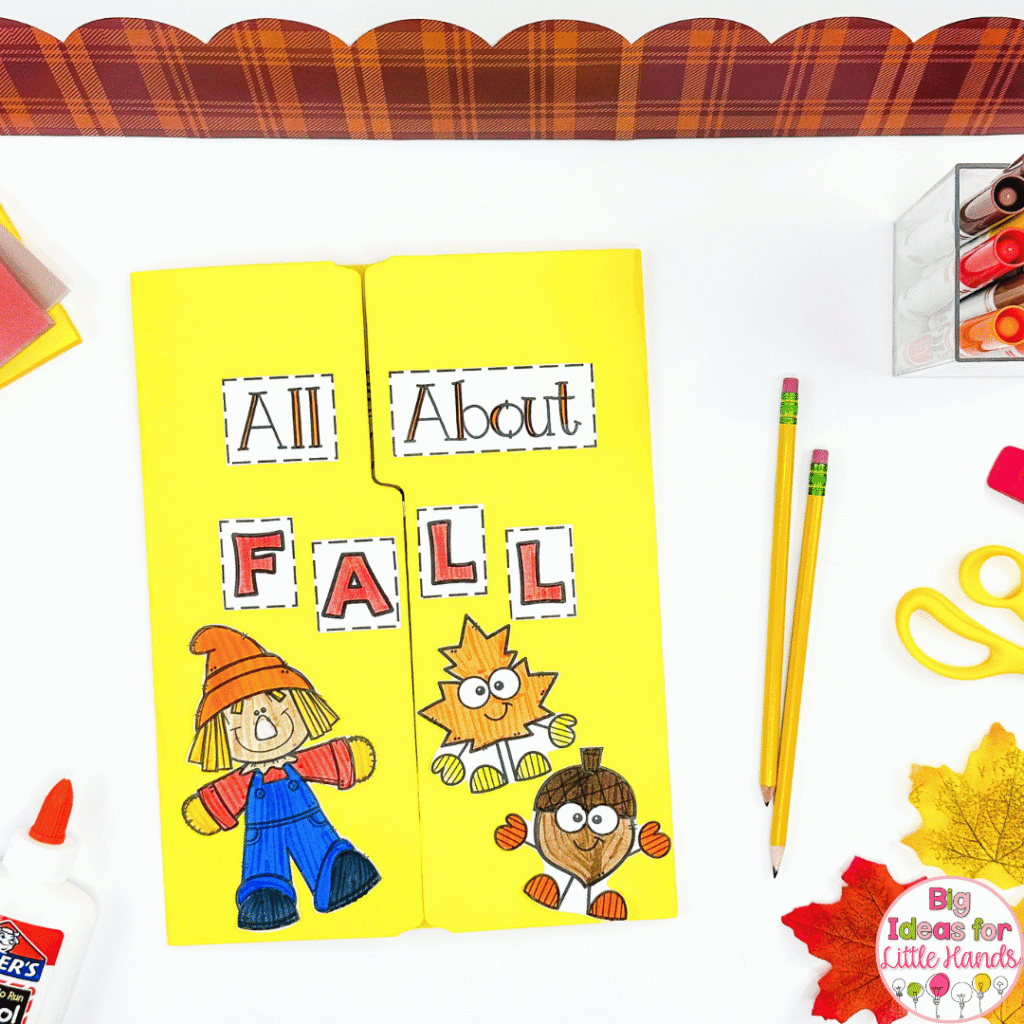
If you aren’t familiar with lapbooks, they are a wonderful, hands-on project to use with students. Lapbooks are similar to interactive notebooks; however, instead of keeping one notebook for the entire year, each lapbook is created for just one unit.
Instead of using a few scattered pages in a notebook, everything you need is neatly tucked inside a file folder. Using foldables and other paper manipulatives, students will document their learning with this hands-on tool.
Lapbooks are easy enough that your kindergarten students can do them with just a little help! In addition to all the great learning, students also practice other skills such as following directions, fine motor scissor work, coloring, and gluing as they learn to put together the different lapbook components.
Inside, the lapbooks display all sorts of information such as vocabulary, labeled diagrams, lists, charts, graphs, and more. You and your students can really get imaginative with your lapbooks and make them your own! I am going to show you some of my favorite Fall science lapbook ideas. I hope you enjoy them as much as I do!
Quick and Easy Lapbook Prep
You might be wondering, “How do I get a lapbook started?” Lucky for you, it is super simple with minimal prep work! Each student will need a file folder. To create the lapbook, you will open the file folder and then fold each side into the center, using the middle fold as a guide. It’s as easy as 1-2-3!
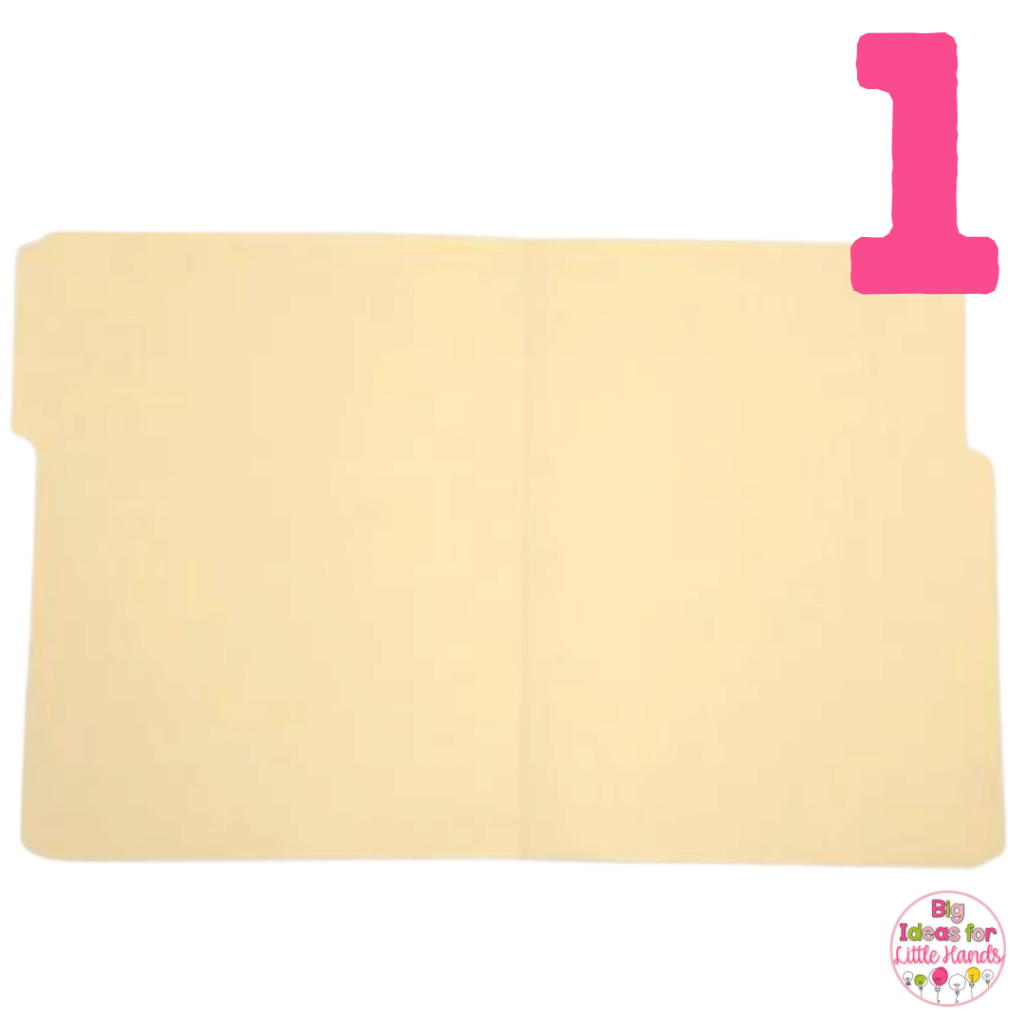
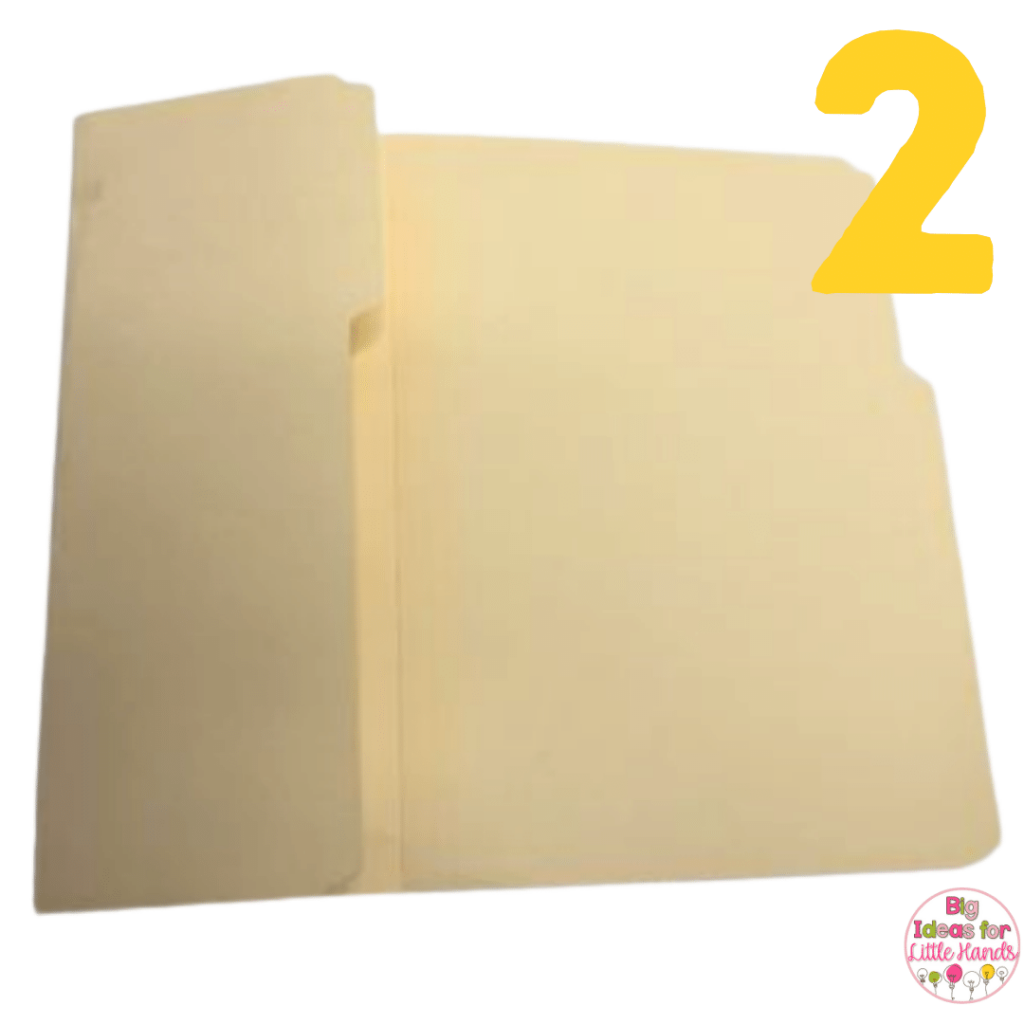
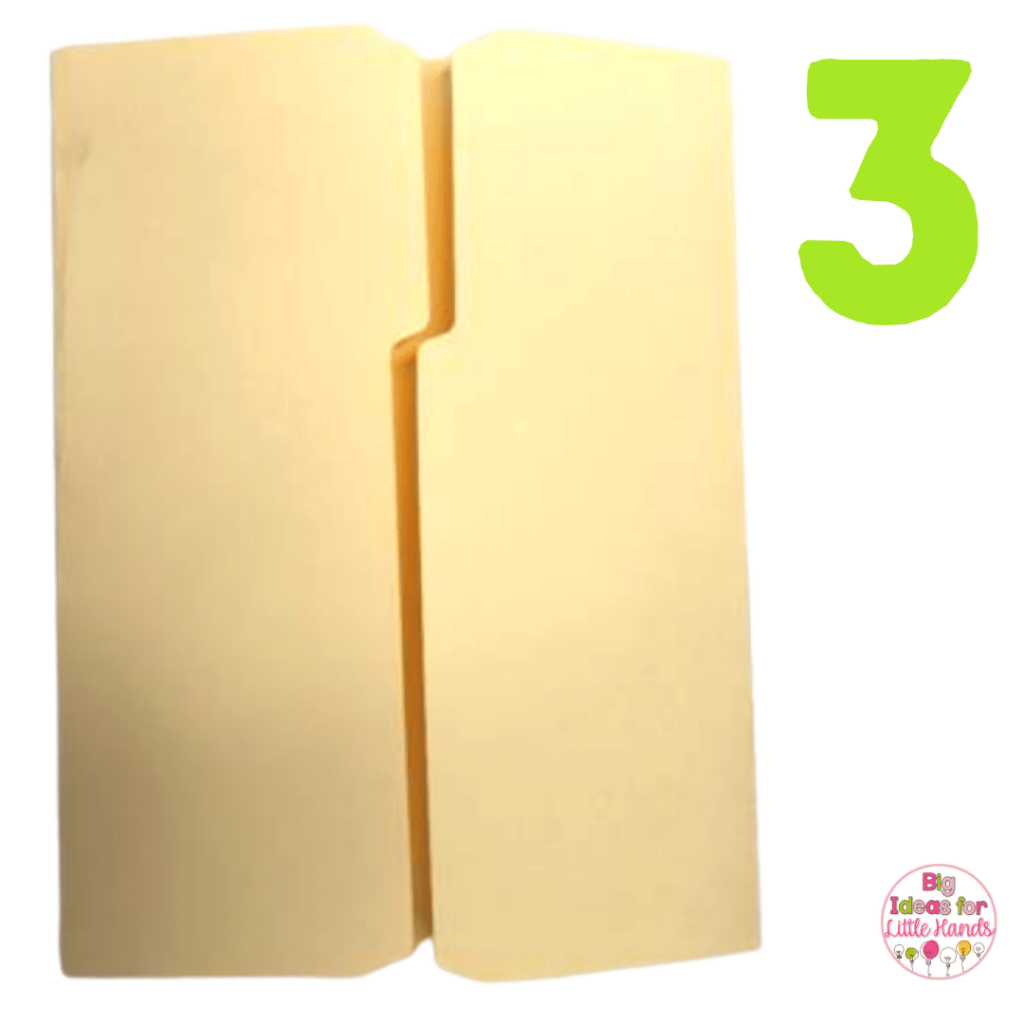
While you can also use the file folder as is, you might need to adjust the placement of some items to make sure they all fit. Once you’ve prepped the file folders, just copy the fall science activities and get busy!
A Closer Look at Fall Lapbooks
Before we dive into the specific activities, let’s take a closer look at the whole project itself. Below is a video showing how students will complete the fall lapbook. Take a peek to see some of the activities inside and how easily it comes together!
One of the best things about this Fall Lapbook resource is the versatility. With 15 different activities included, you can pick and choose the ones that will work best for you and your students. Now, let’s take a peek at some of the fun fall activities inside this resource!
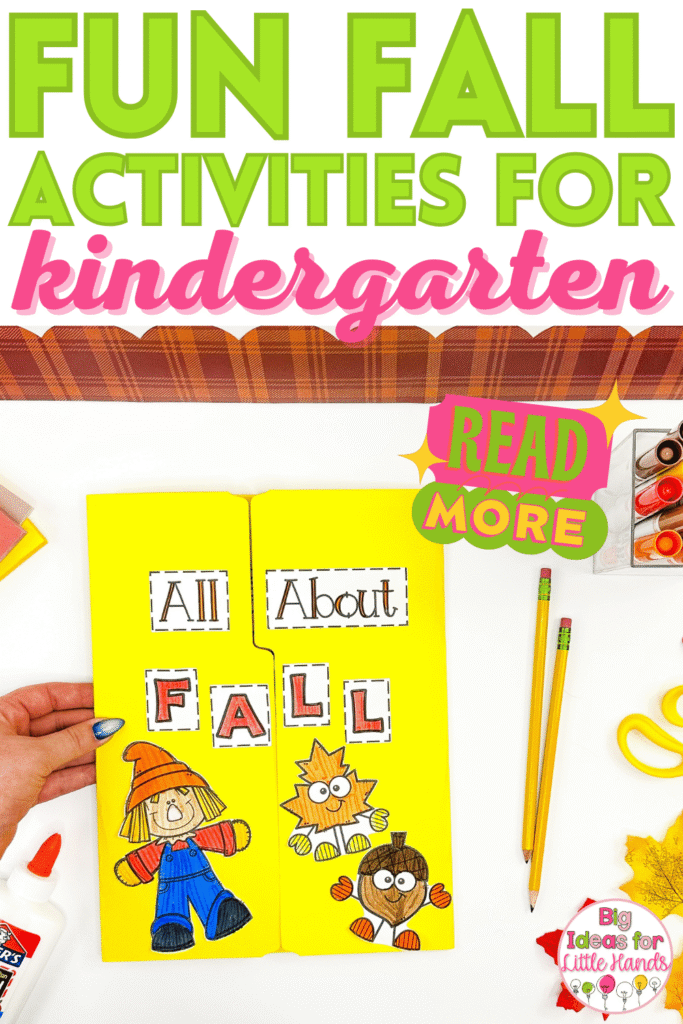
All About Fall
When learning about the autumn season, it’s great to highlight all the fun that fall has to offer. It is a season of chilly days, falling leaves, fun holidays, sports, and other outdoor activities.
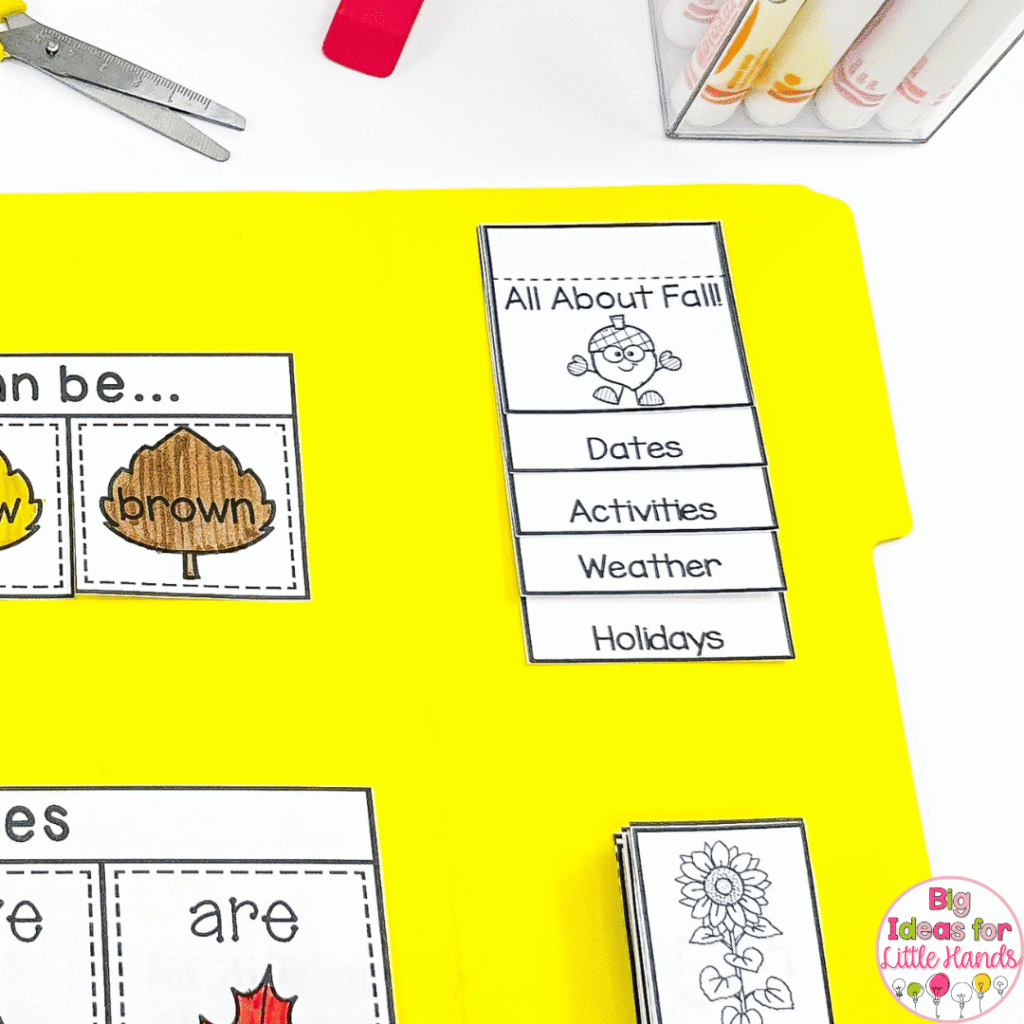
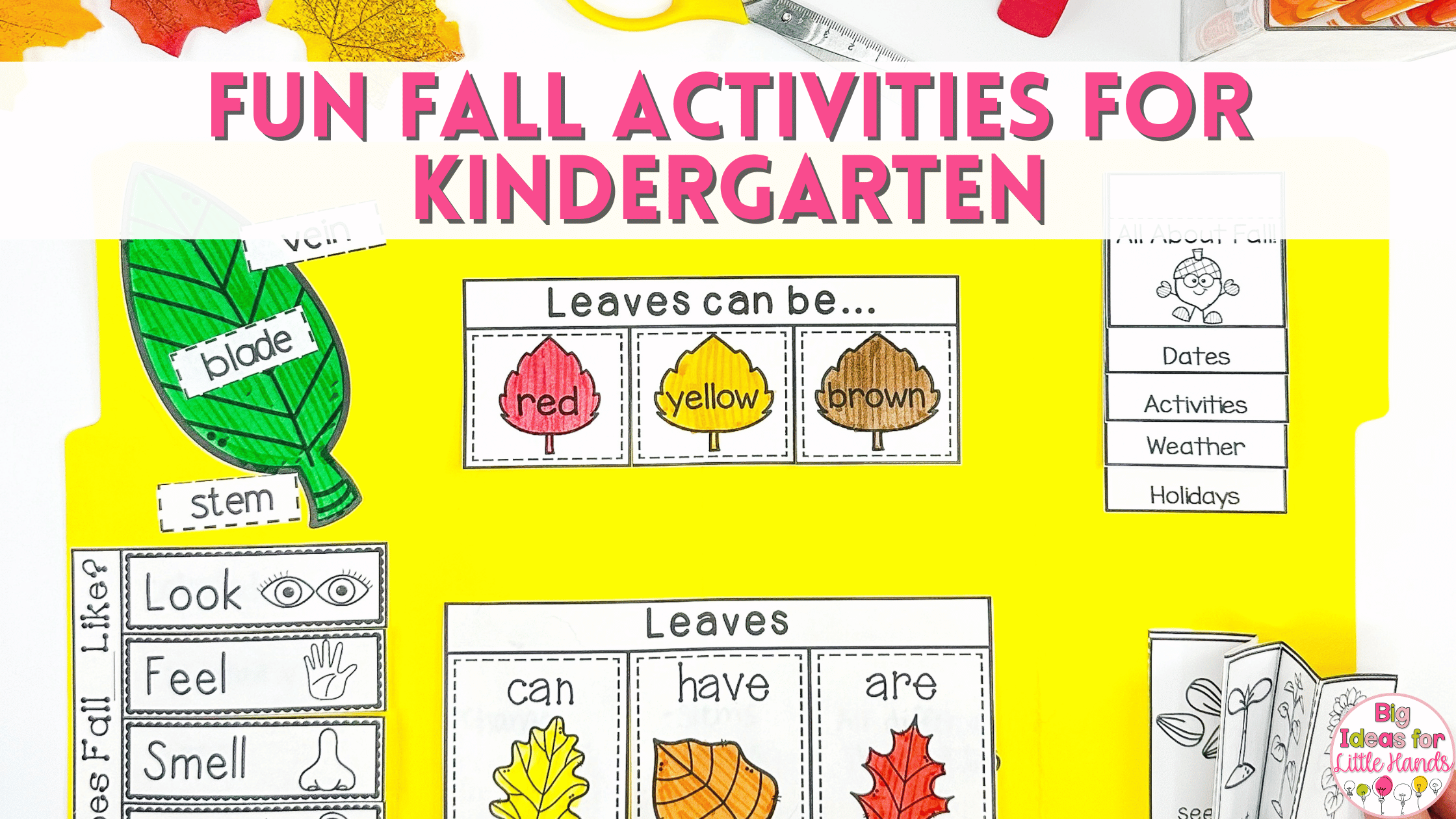
Students love to learn what they get to look forward to with each new season, so this All About Fall mini-book is a perfect part of your lapbook. There is a section for dates, activities, weather, and holidays that all happen during the fall season.
Students can also personalize the mini-book by adding dates and activities they have planned. Maybe one of your students has a fall birthday that you can add to the special dates page. Or maybe the class has a special field trip planned to the pumpkin patch that you can add to the activities page.
By personalizing the mini-book, students can really get a great understanding of the fall season where they live. After all, it is a little different everywhere. My fall weather in the south will be drastically different from that of you in the north. Make it fit you and your students!
Fall Vocabulary
Next, I like to introduce students to fall-themed vocabulary. This is a great way to get them learning fall-themed words that we will use with our other activities.
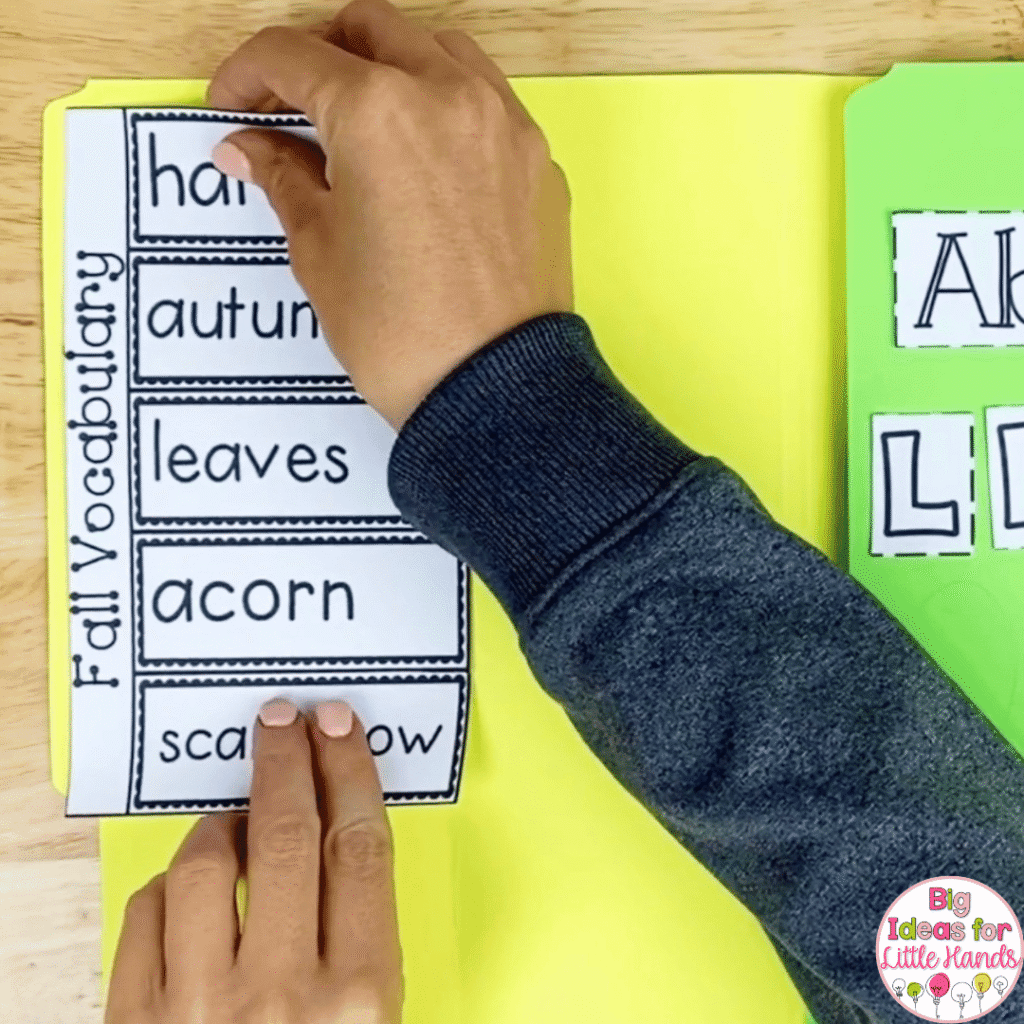
Teacher Tip: Even though we have young students, don’t be afraid of teaching them higher level vocabulary words. They will pick them up and start using them if you teach them.
These lift-the-flap books get students familiar with different fall vocabulary words in a fun and engaging way. There are 5 different vocabulary words highlighted in this section: harvest, autumn, leaves, acorn, and scarecrow. This is cut-and-paste matching project helps students learn new vocabulary words, even if the words may be beyond their reading level.
This resource also includes a picture matching vocabulary activity that students love. This is perfect for pre-readers and can be done in addition to the original activity or on its own. Choosing the right activities for your students is easy with these differentiated activity options.
Fall Writing Prompts
Once students have been introduced to fall vocabulary words, you can incorporate them into writing activities. Before we begin with an actual writing prompt, I like to have the children organize their thoughts and what we have learned so far with graphic organizers.
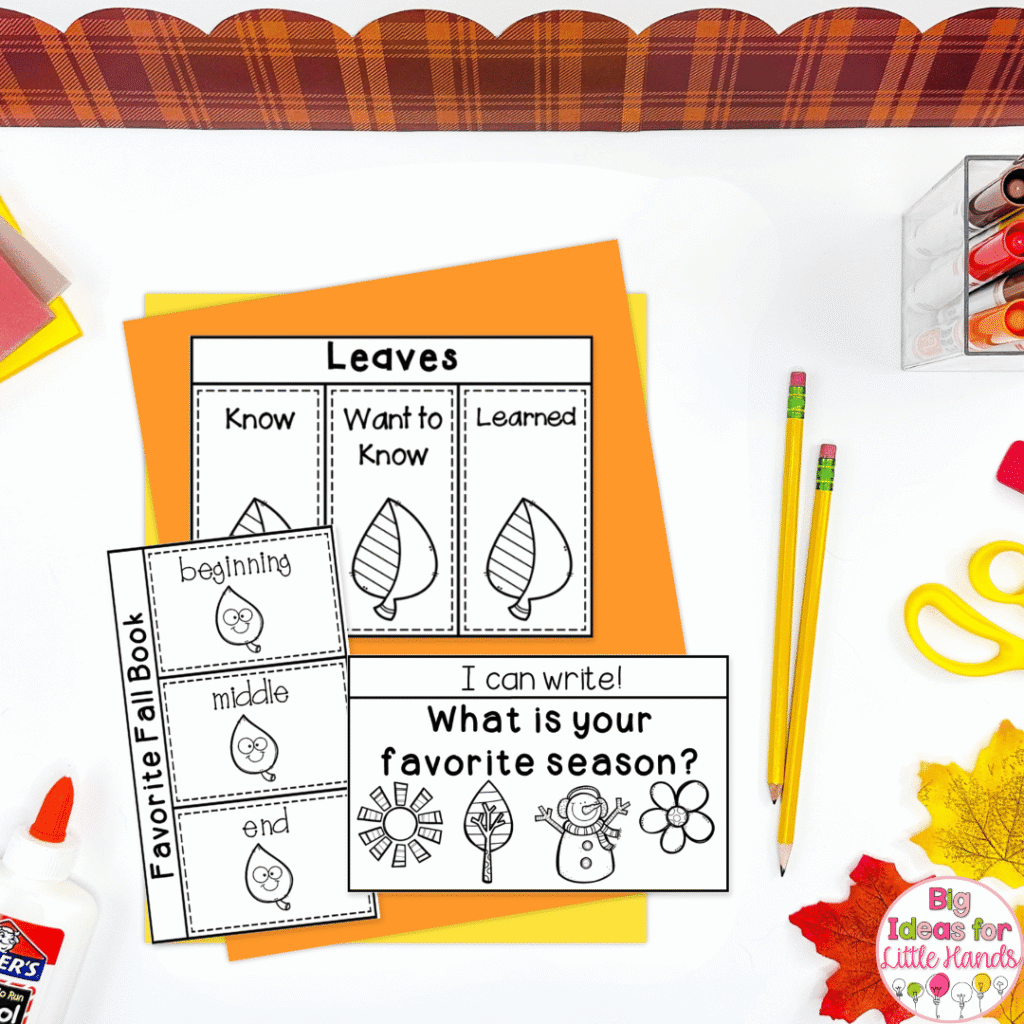
There are a few included in this resource, such as one that highlights Fall Favorites or a KWL chart. Both are a great starting point for students as they get ready to write!
Next, students can write a story using fall vocabulary words or write a sentence for fall favorites. You can also have students be word detectives and find these words in books, read-alouds, around the school, or in other lessons.
The Fall Lapbook also includes other writing activities that students can complete and add to their lapbook. These writing prompts are perfect for adding as a center activity or to the writing center. Then, once completed, students can add them to the lapbook. I love to see the individuality in these writing activities, as every child usually has a different story or perspective to share!
All About Leaves
The science activities in this fall lapbook are, of course, based on leaves. There are so many changes that happen to trees during this season, and many of those changes are observed through the leaves. Your students will love digging into the science of fall through leaves.
Types of Leaves Identification Cards
You can’t talk about Fall without talking about the beautiful falling leaves. Autumn is a time of change when leaves turn beautiful colors and begin to fall. But many young students don’t realize just how diverse leaves can be. They simply see basic leaf drawings in children’s books or look at the tree as a whole.
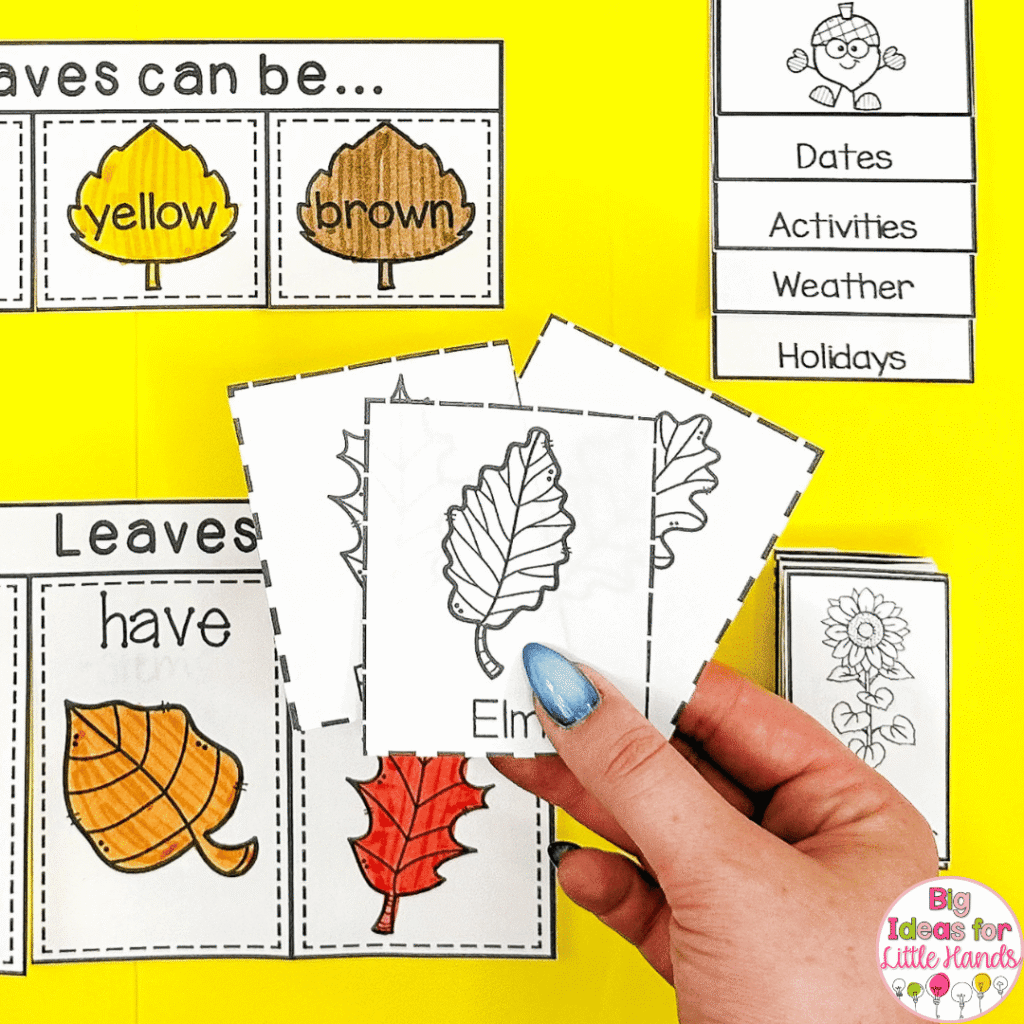
Teaching students about the different types of leaves is a great starting point. As students learn that different types of trees have different leaves, you can also introduce many new descriptive words. You could point out that the maple leaf is spiny, or that the poplar leaf is smoother.
This is also a great activity for teaching about the power of observation in science. As they learn about the leaves from seven different trees, students can create a leaf card to add to the Leaf Types pocket inside their lapbook. You will be surprised how quickly students recognize the leaves they have learned about outside at recess or on their walks home.
In addition to just basic leaf types, you can talk about how leaves change, what they look like, what makes them different, and why they fall off in preparation for the winter. There is also a page about leaf facts and describing each leaf! These are hands-on projects that students will love and will learn so much from!
My Leaf Investigation Tabbed Booklet
Once students have some background knowledge on leaves, it’s time to dive into their very own leaf investigation. For this activity, I like to have students bring in a leaf or two from home or a local park. This is a surefire way to make sure we have a nice variety of leaves. If this is not possible, then you can bring in some felt colored leaves and let each child choose one, or go on a leaf hunt around the school as a class.
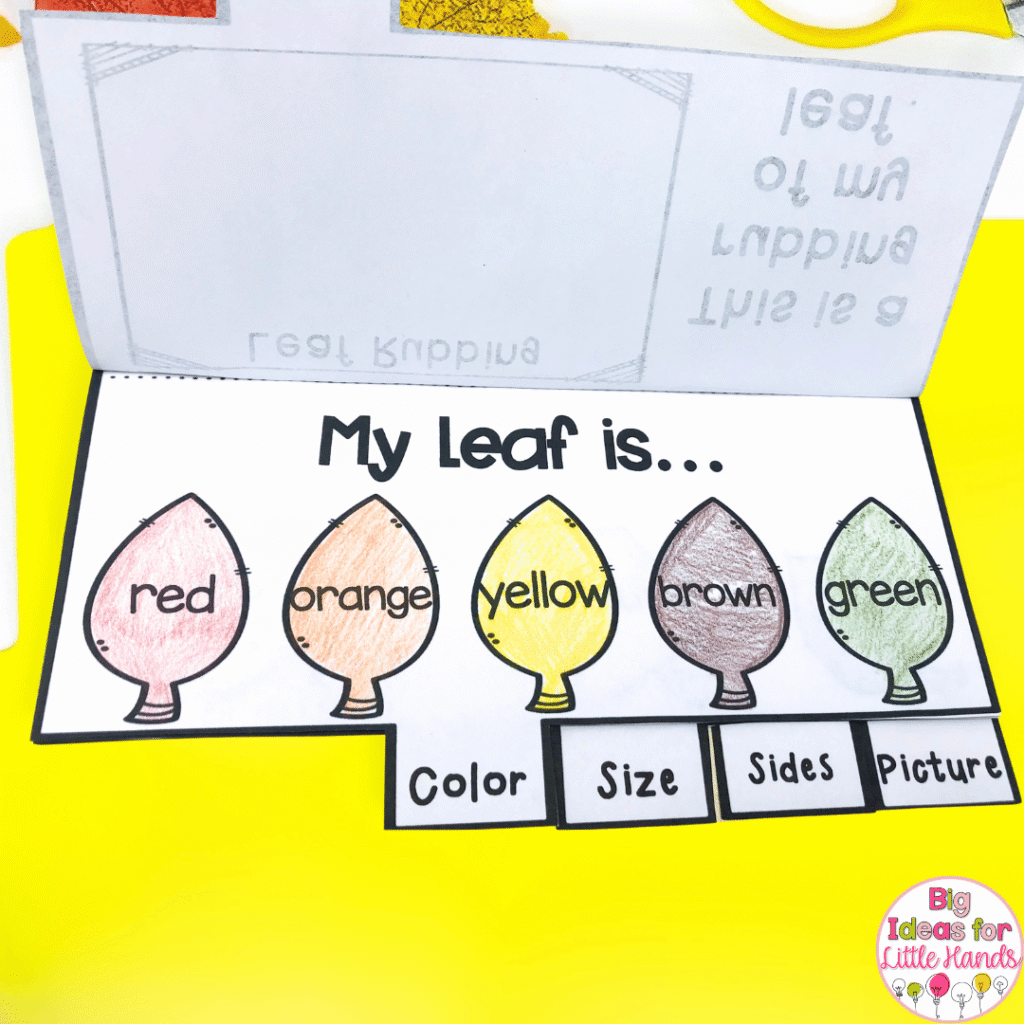
Each student will take a leaf and then put their scientific observation skills to the test. In this leaf investigation, students will work on identifying colors, shapes, and textures. They will determine the size of the leaf and its characteristics. They will also take a leaf rubbing. Students love the leaf investigation because, for many students, it is the first time they have taken a small item and really focused on it.
The Fall Lapbook resource includes everything students will need to guide them through this activity. They also create a tabbed booklet with all of their observations and findings.
Leaf Class Graph
Looking for another fun way to put those leaves to use? I’ve got just the activity! After gathering leaves and investigating them, consider making a whole-class graph. This is a great opportunity to practice sorting, counting, and comparing data together.
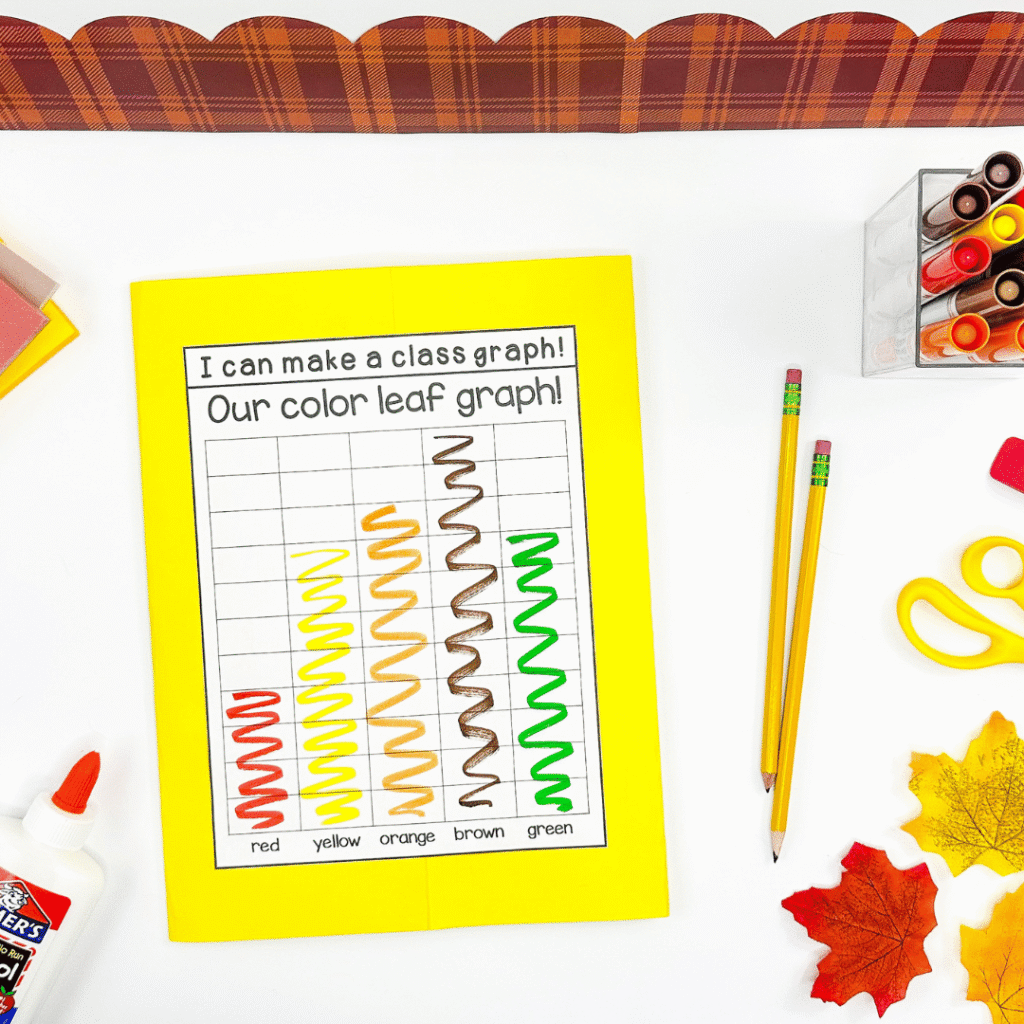
Create a simple anchor chart with different leaf colors, such as red, yellow, orange, brown, and green, listed across the bottom. Have each student place or draw their leaf in the correct column. They can also color a square if you’d prefer.
As a class, count how many leaves are in each category and discuss which color has the most, the least, or if any colors have the same number.
Then, students can use the class data to complete their own graph for their Fall Lapbooks by coloring in the correct number of boxes for each leaf color. This hands-on activity reinforces early math skills while connecting students’ outdoor observations to meaningful data collection.
Once complete, this graph is the perfect size for the back of the Fall Lapbooks. Students will love sharing this with their families and showing which color had the most!
More Fall Activities for Kindergarten
While these are just a few of the fun fall activities in the Fall Lapbook resource, there is so much more! In addition to all of the activities I’ve already talked about, your students will also love these hands-on fall activities for kindergarten:
- Lifecycle of a Sunflower
- Parts of a Leaf
- The Five Senses of Fall
- Leaf Adjectives
- Comparing Seasons
- More Fall Writing Activities
You can complete all of these fall activities for kindergarten or pick and choose what works best for your students. There are so many options included that you can create a fun fall unit your students will love. You can find all of the Fun Fall Activities for Kindergarten in my store on Teachers Pay Teachers.
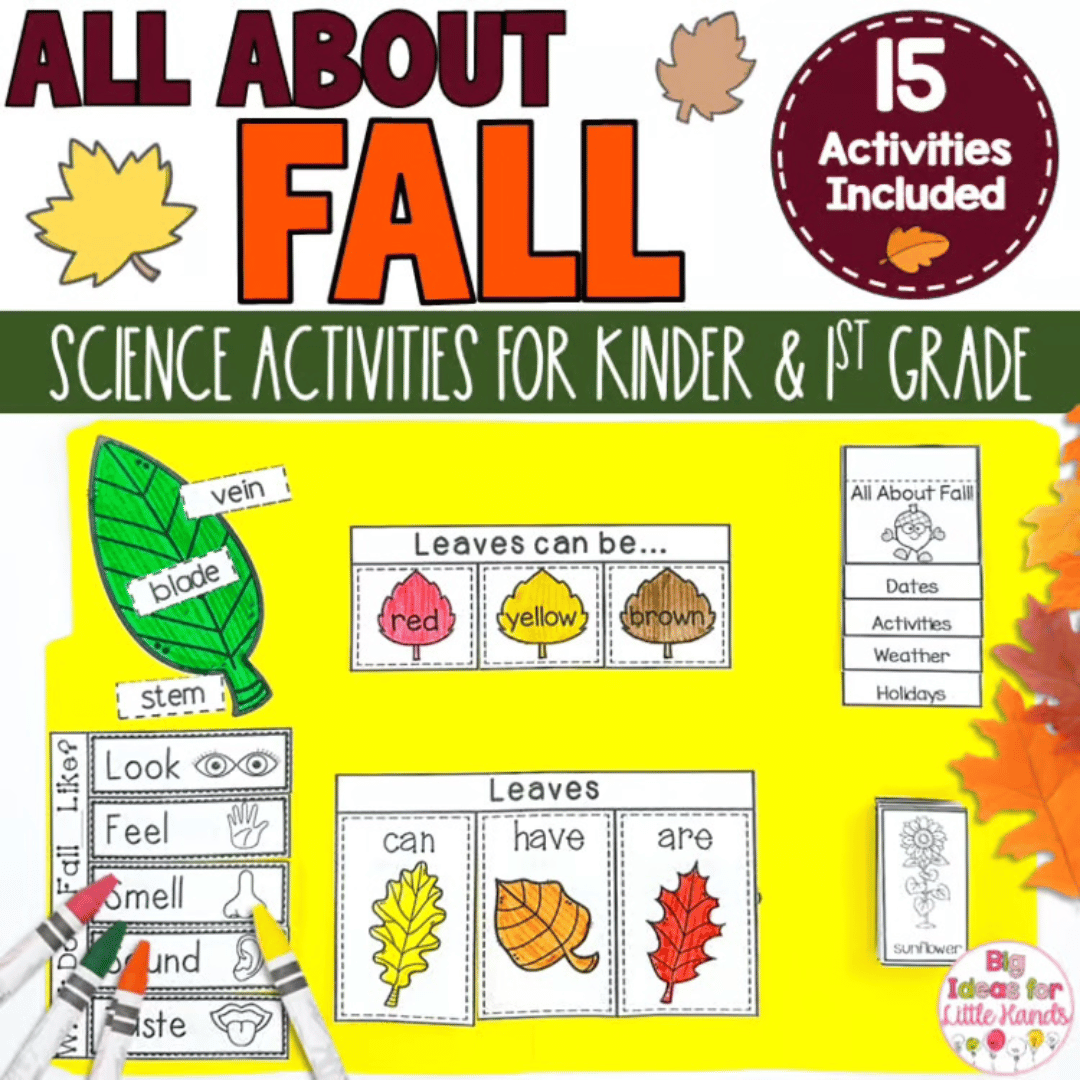
Grab the lapbook today and give these activities a try in your room, and see all of the fun learning take place this fall season!
Looking for More?
Save these Fall Activities for Kindergarten
With the fall season spanning a few months, you never know when you need some new activities to engage your students. Save this to your favorite classroom Pinterest board so you can quickly come back when you need more fall activities for kindergarten.