You know those winter days when your students are more interested in talking about snow, building snowmen, and playing outside than anything you had planned for the day? Instead of trying to compete with all that excitement, why not use it to your advantage? Winter gives you so many natural opportunities to turn that excitement into meaningful learning, especially when you pair great winter books with hands-on learning activities.
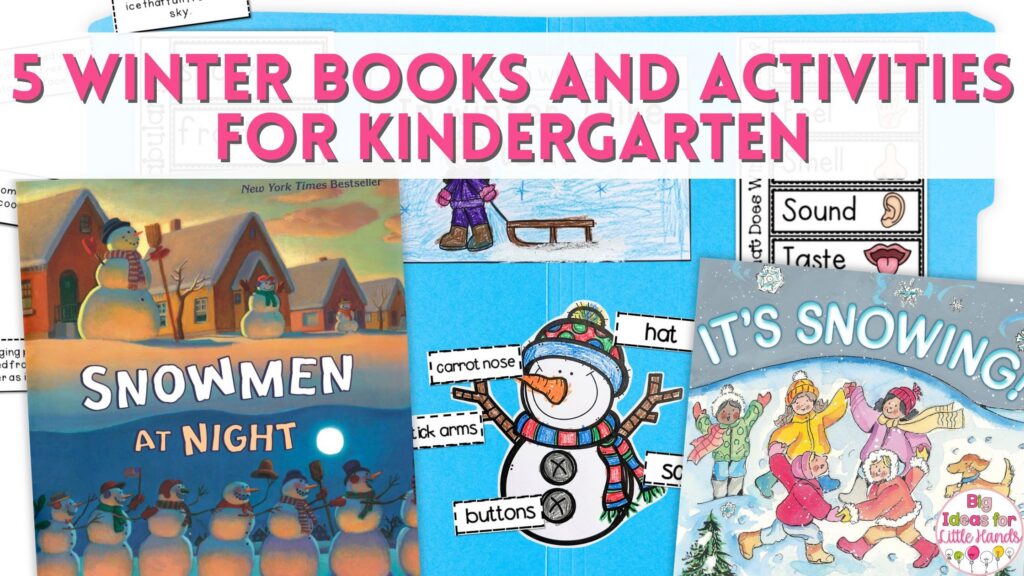
Winter Books and Activities Make Exploring the Season Fun!
Winter is such a fun topic to explore with young learners because there are so many things they naturally want to know. You might already be hearing questions like. . .
- What makes snow?
- Why does ice melt?
- What do animals do when it’s cold?
- Why do we wear different clothes in winter?
A simple winter question can lead to a science investigation, a writing activity, a vocabulary lesson, or even a class discussion. One of my favorite ways to bring all of that learning together is by pairing winter read-alouds with hands-on activities. The book introduces an idea, and the activity gives students a chance to explore it, talk about it, and show what they’ve learned.
Wondering what kind of hands-on activities to include? I’ve got a few that I know you will love!
My Favorite Hands-On Activity: The All About Winter Lapbook
One of my all-time favorite ways to keep all that winter learning connected is with a lapbook. I love using my All About Winter lapbook alongside our read-alouds because they give students a place to collect what they’re learning and make connections from one activity to the next.
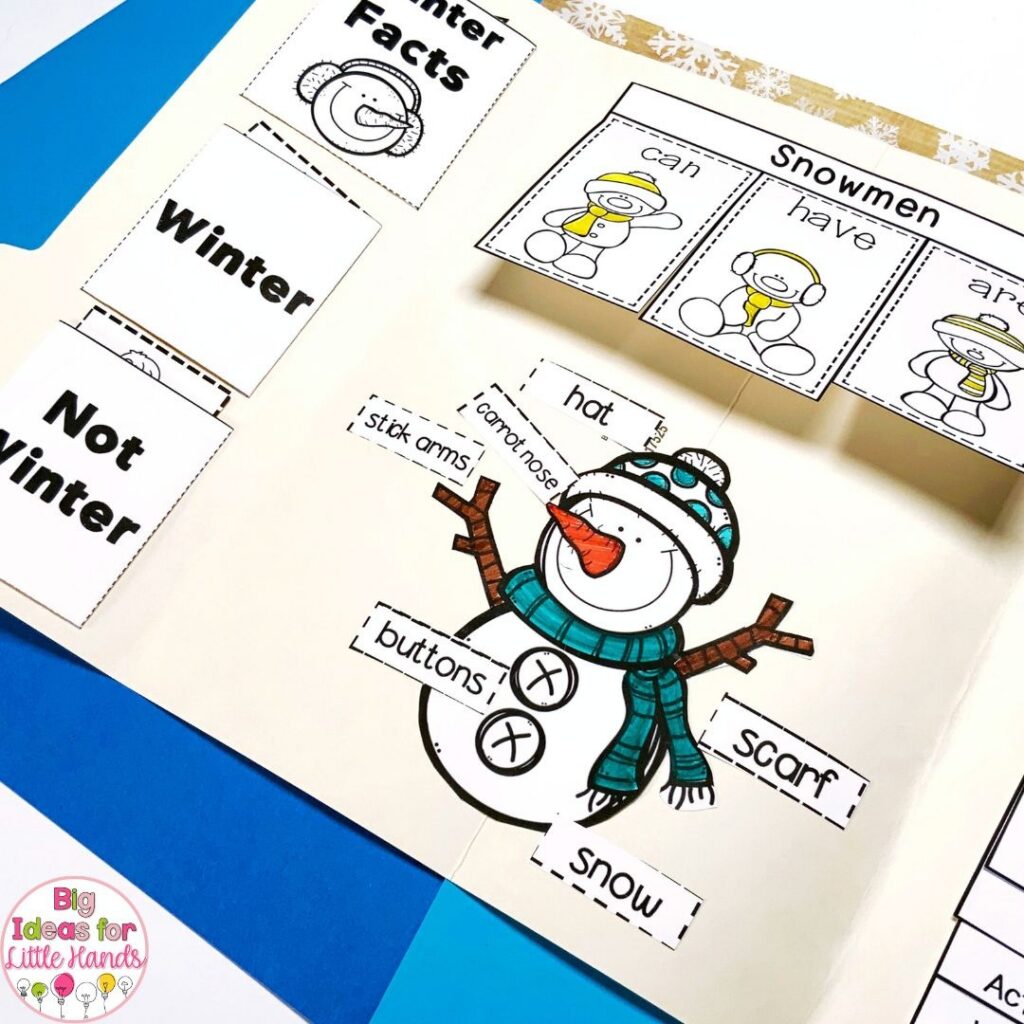
Lapbooks are a little like interactive notebooks, except they’re smaller, focus on one topic, and are typically made from a file folder. They’re a great fit for young learners because students can add new pieces as they learn instead of trying to remember everything from one lesson to the next.
With a winter lapbook, students might record winter vocabulary after a read-aloud, add facts they’ve learned about snow, practice describing a snowman, or sort clothing that belongs in winter. As the unit continues, all of those activities come together in one place.
And that’s one of my favorite things about lapbooks. They’re not just a collection of activities. They give students something they can look back through, talk about, and use to show what they know. By the end of the unit, they also have a hands-on keepsake they can take home and share with their families.
My All About Winter Lapbook is full of activities you can use throughout your winter unit, and I’ll show you how you can pair some of my favorite winter books with the activities below!
1. Sneezy the Snowman by Maureen Wright
Sneezy the Snowman by Maureen Wright is a silly, engaging story that students tend to love. Sneezy is a snowman who is very cold and tries different ways to warm himself up. The problem? Every time he gets too warm, he starts to melt! Students will have fun following along as Sneezy tries to solve his very chilly problem.
Add a Literacy Connection About Snowmen
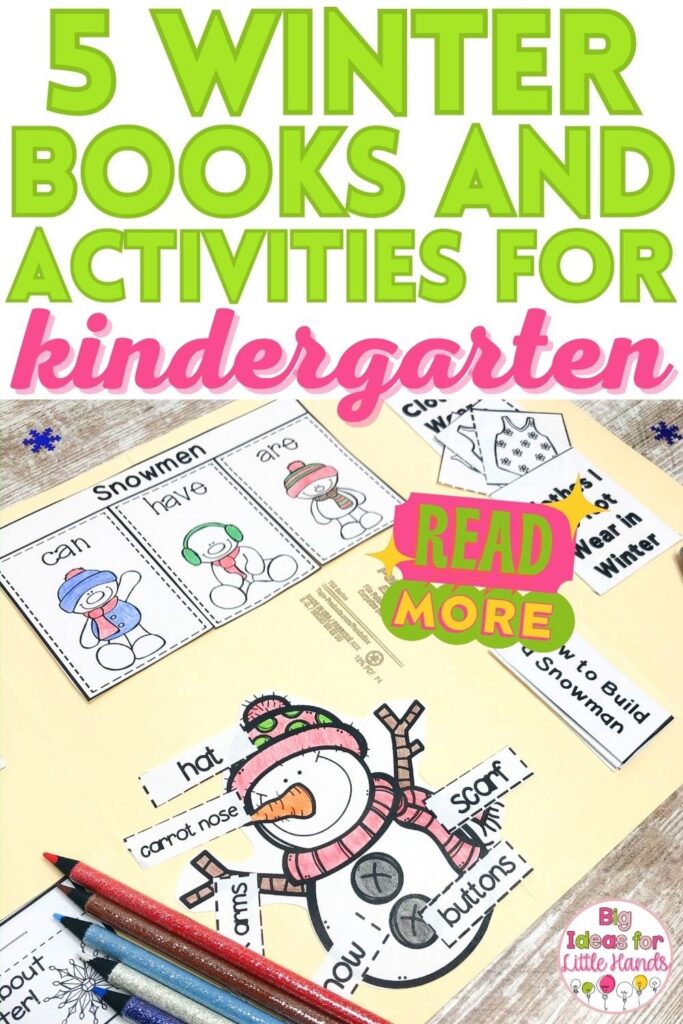
After reading, extend the conversation with a Snowmen Can/Have/Are activity from my Winter Lapbook. Students can think about what snowmen can do, what they have, and what they are, giving them a simple way to practice descriptive language and organize their ideas after the story.
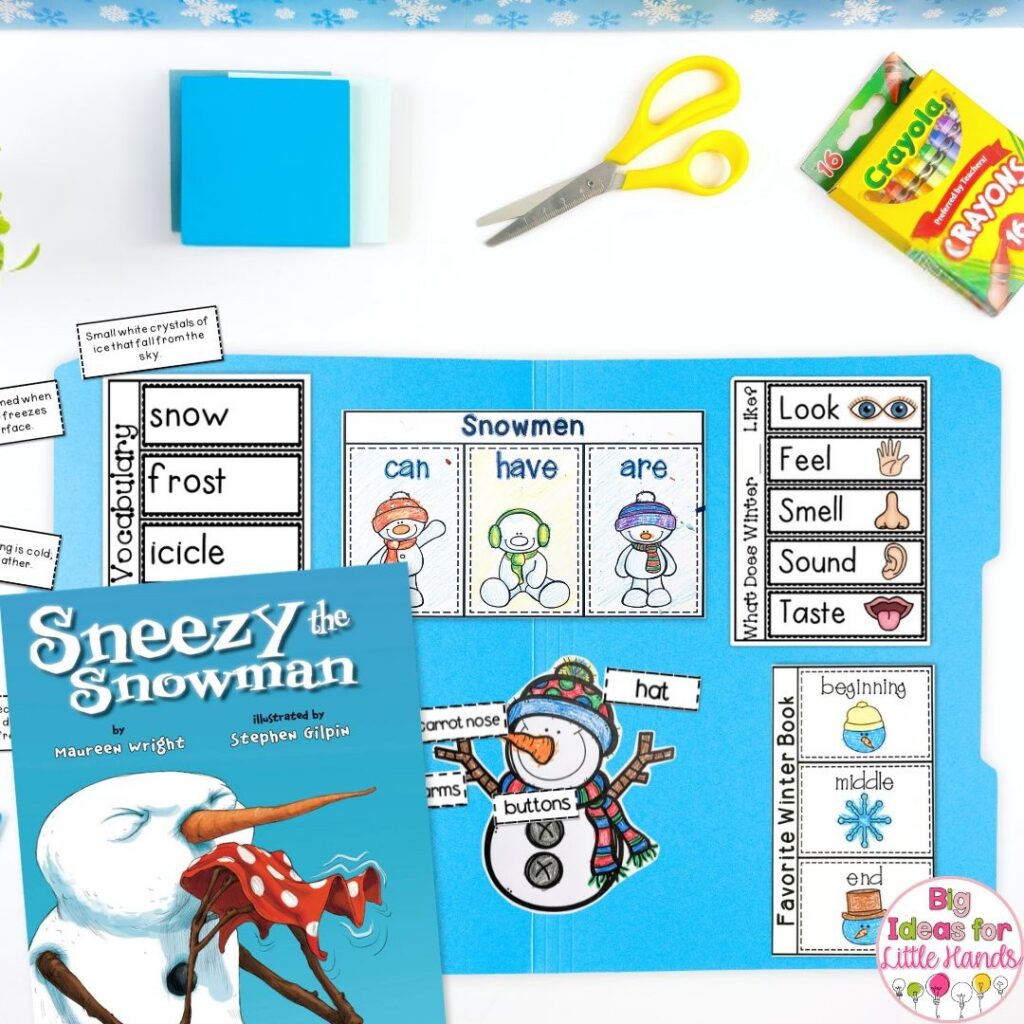
I like to complete this activity together as a class first. I make a larger version of the chart on the whiteboard and invite students to brainstorm ideas for each section while I record their responses. This gives everyone a chance to hear different ideas before choosing their own.
Once we’ve finished our class chart, students choose one to three ideas from each section to add to their own lapbook. They cut and paste the pieces for each section, lift the flaps, and write their ideas directly on the folder.
We don’t try to complete the entire lapbook at once. Instead, we work on a little bit at a time over several days. That makes these activities an easy way to extend your read-alouds and gives students plenty of opportunities to revisit and build on what they’re learning throughout the winter unit.
Bonus Activity: Make a Giant Class Snowman
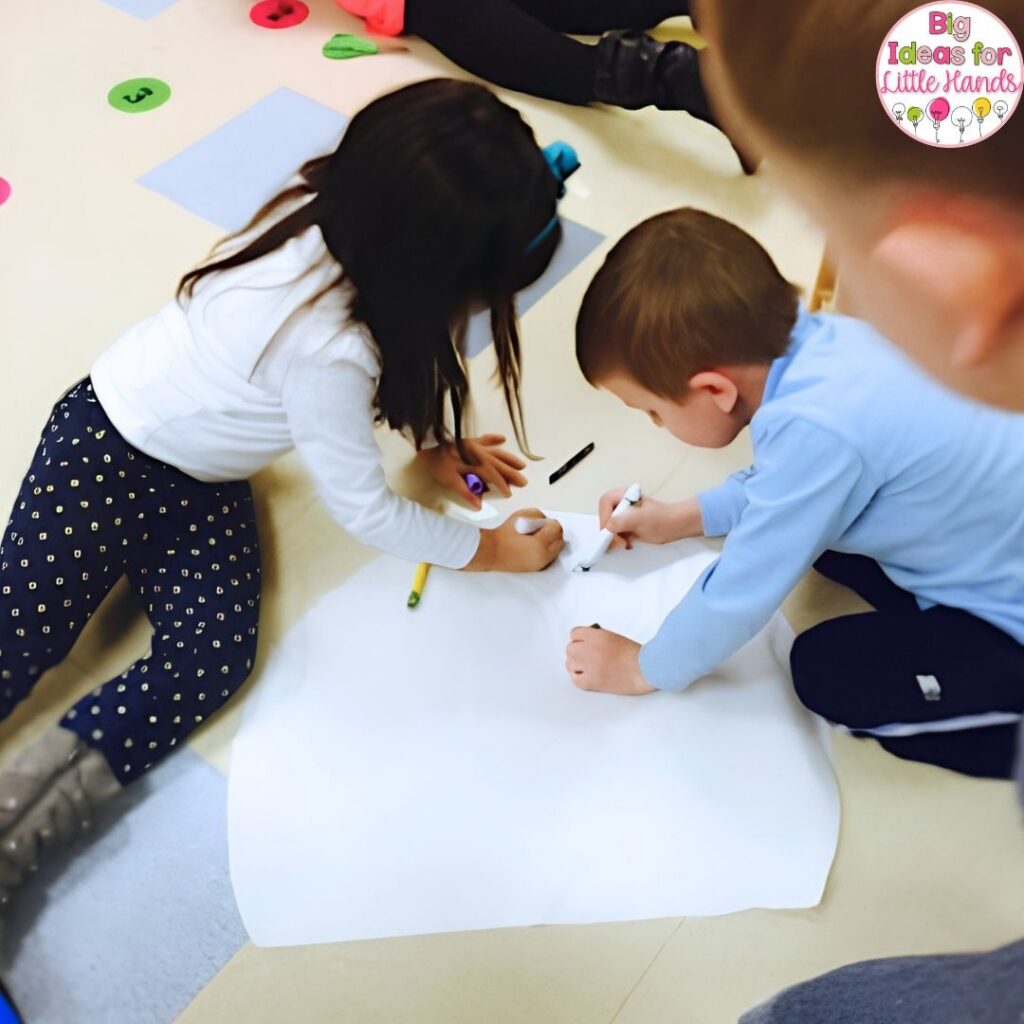
If you’re looking for even more fun, consider turning your students into a team of snowman builders!
Give small groups large pieces of bulletin board paper and assign each group a different part of the snowman, such as the head, body, arms, face, or accessories.
Once everyone has finished, put all the pieces together to create one giant class snowman. Students can work together to name their snowman and decide where to display him.
2. It’s Snowing! by Gail Gibbons
It’s Snowing! by Gail Gibbons is a great choice when you’re ready to move from imaginative winter books into nonfiction. Gail Gibbons explains how snow forms and what happens during a snowfall in a way that gives young learners plenty to observe, discuss, and wonder about.
Discover Winter Facts
After reading, invite students to share something they learned about snow. You might record their ideas on chart paper and talk about which facts were new or surprising. I like to do this as a whole group and draw pictures as I write. This helps prompt and remind the children what you talked about for the next part of this activity… Winter Facts!
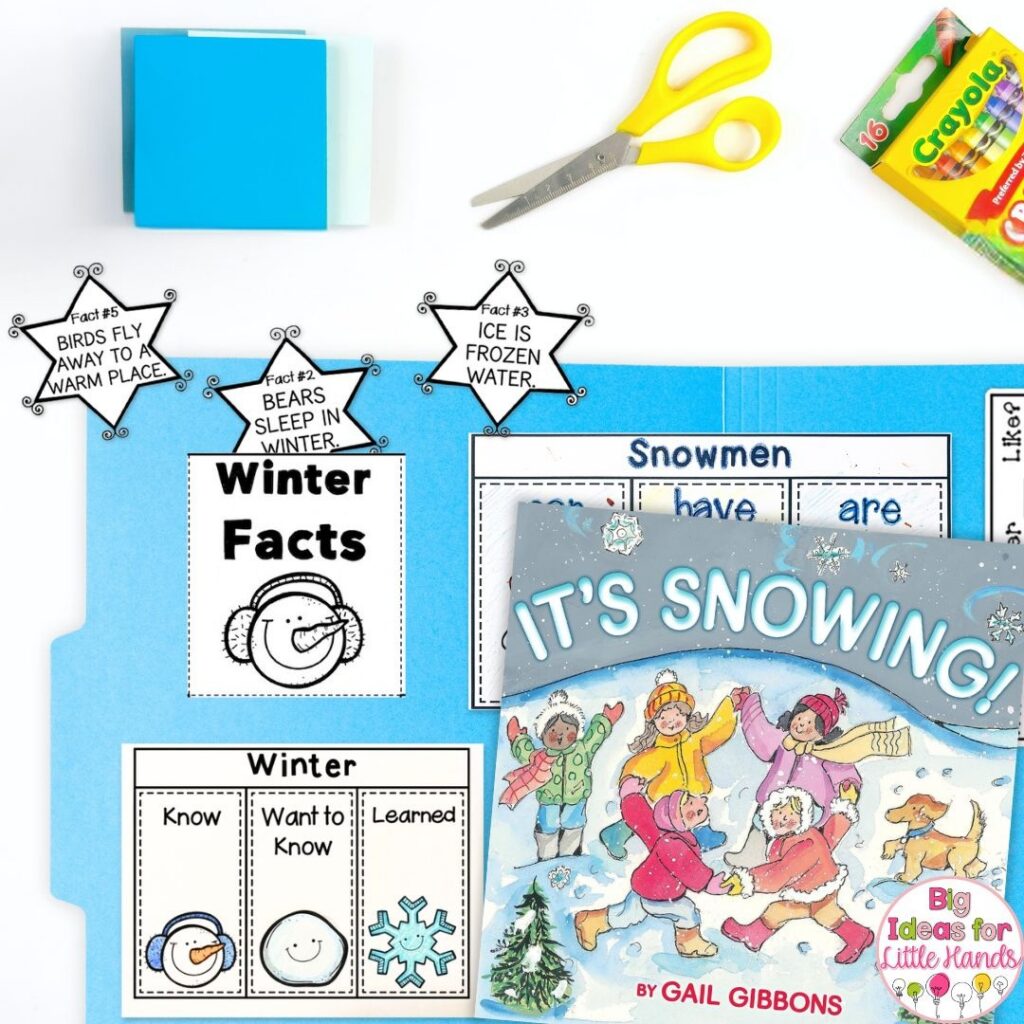
After your whole group discussion, children can fill out their own winter facts section in their lapbook. This gives them a chance to revisit information from the book and turn what they learned into a simple keepsake they can add to their Winter Lapbook.
For younger children who aren’t ready to write independently, you can also have them complete a different activity from the resource, like sorting “Winter” and “Not Winter” pictures to place in pockets in their lapbook.
This is another great benefit of lapbooks, by the way! They are super versatile and easy to customize to whatever book or activity you have in mind!
3. The Snowy Day by Ezra Jack Keats
The Snowy Day is one of my favorite winter books of all time. This story follows Peter as he explores his snowy neighborhood, makes tracks in the snow, builds a snowman, and enjoys a winter day. It’s a wonderful story for encouraging students to notice the details of winter and talk about what happens when temperatures change.
Try an Ice-Melting Investigation
Give students ice cubes and place them in different areas of the classroom. Before you begin, ask students to predict which ice cube they think will melt first and explain their thinking.
Check the ice cubes throughout the activity and let students record or discuss their observations. Talk about what happens when ice gets warmer and introduce science vocabulary such as solid, liquid, melt, warm, and cold.
Winter Vocabulary
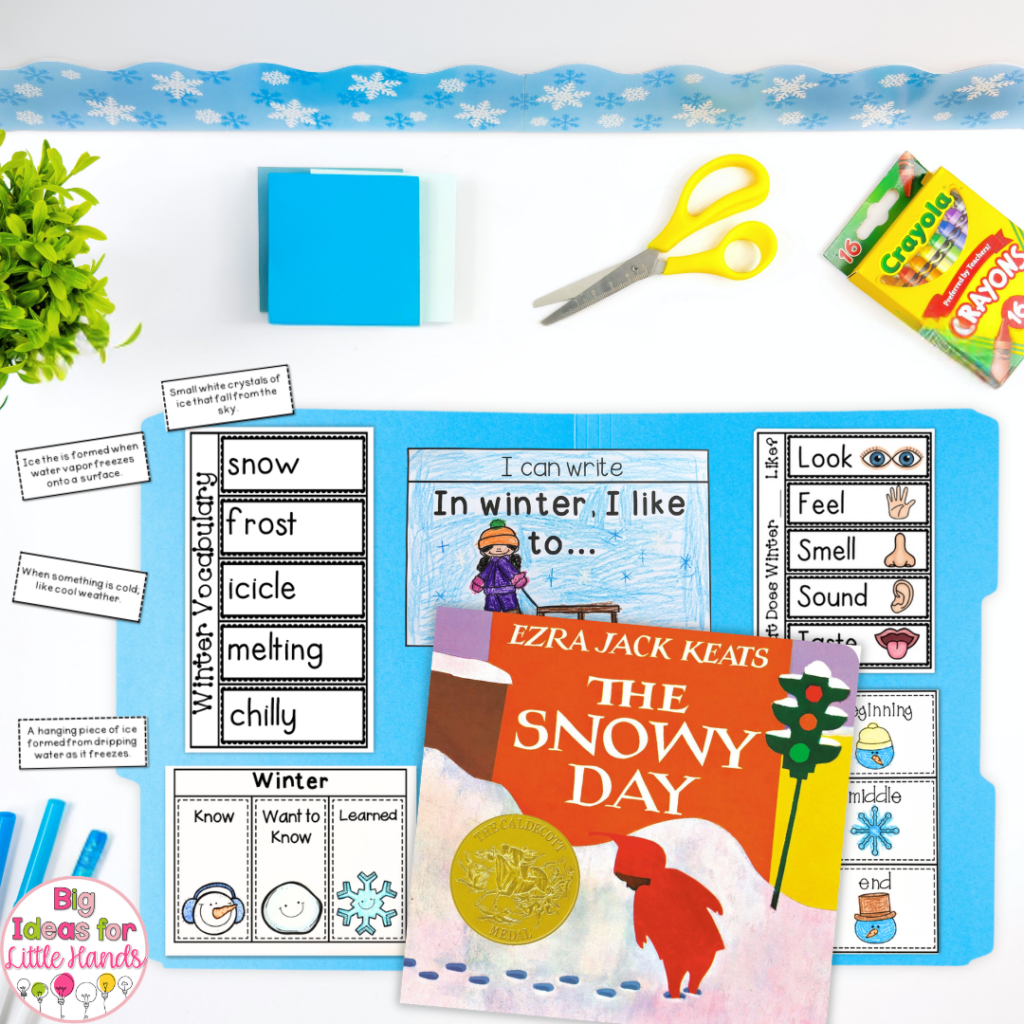
After your investigation, connect the lesson to literacy with a Winter Vocabulary activity. For this activity, students will cut apart definitions and glue them under the correct word flap in their lapbook. I like to read each definition aloud and see if the kids can help me decide which word it goes with.
With words like snow, ice, and melting included, it’s the perfect follow-up for The Snowy Day.
4. Snowmen at Night by Caralyn Buehner
Snowmen at Night by Caralyn Buehner takes students into the imaginative world of what snowmen might do after everyone goes to bed. The story is filled with playful illustrations and silly possibilities, making it a great book for encouraging students to use their imaginations and think creatively.
Label and Describe a Snowman
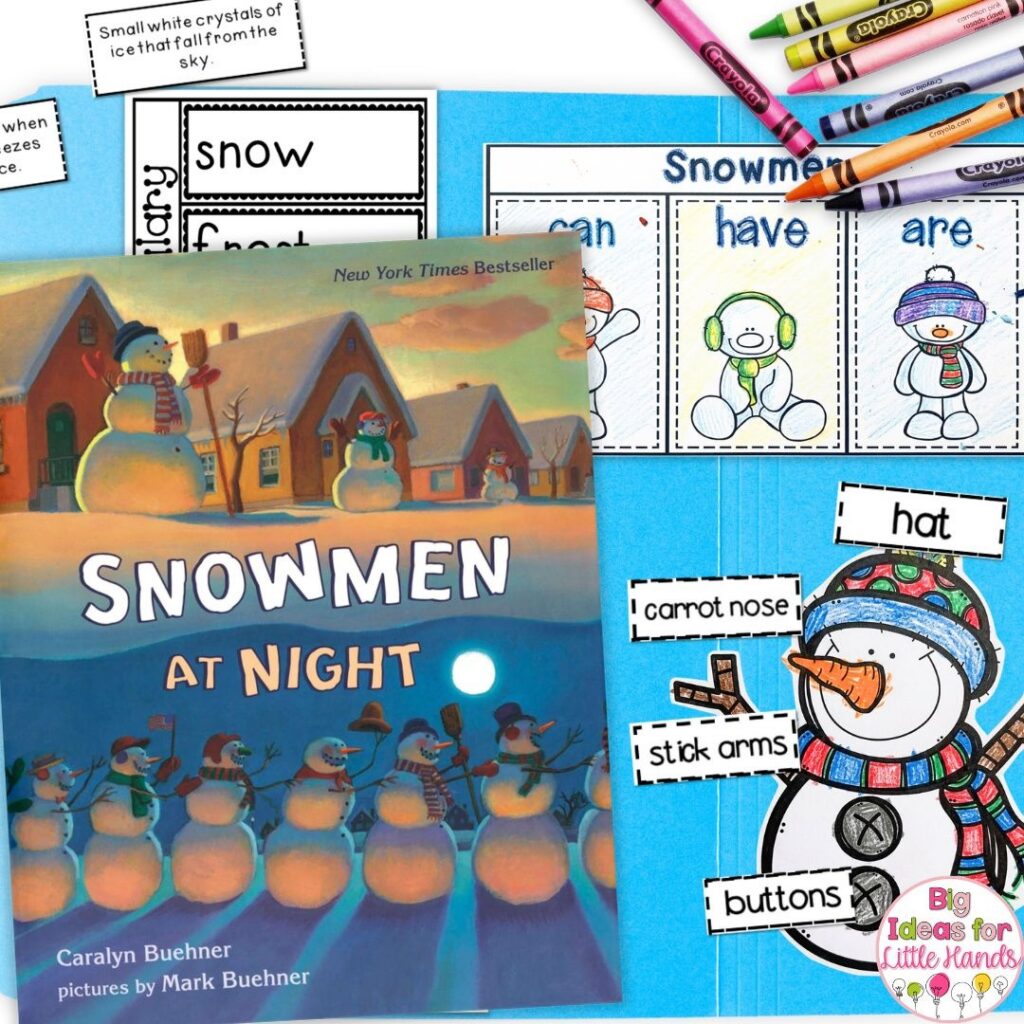
After reading, have students label the different parts of a snowman. Depending on their age and skill level, they might identify the eyes, nose, mouth, buttons, arms, scarf, hat, and other details. My Winter Lapbook resource includes a cute snowman to color and cut out, along with words to cut and paste into the folder to label each part.
Snowman Adjectives
I also like to have students brainstorm words to describe a snowman. Words like cold, white, round, snowy, silly, and sparkly can become a great starting point for the Snowman Adjectives activity from the Winter Lapbook! Students can pick the words they like best and add them to the lapbook
5. The Jacket I Wear in the Snow by Shirley Neitzel
The Jacket I Wear in the Snow by Shirley Neitzel is one of those classic winter books we’ve all read over and over. It’s a fun cumulative story that follows a child getting dressed for a cold winter day. As each layer of clothing is added, students get plenty of opportunities to name clothing items and think about what they need to stay warm.
Sort Winter Clothing
After reading, give students pictures or examples of different clothing items and have them sort them into two groups: clothes you wear in winter and clothes you do not wear in winter.
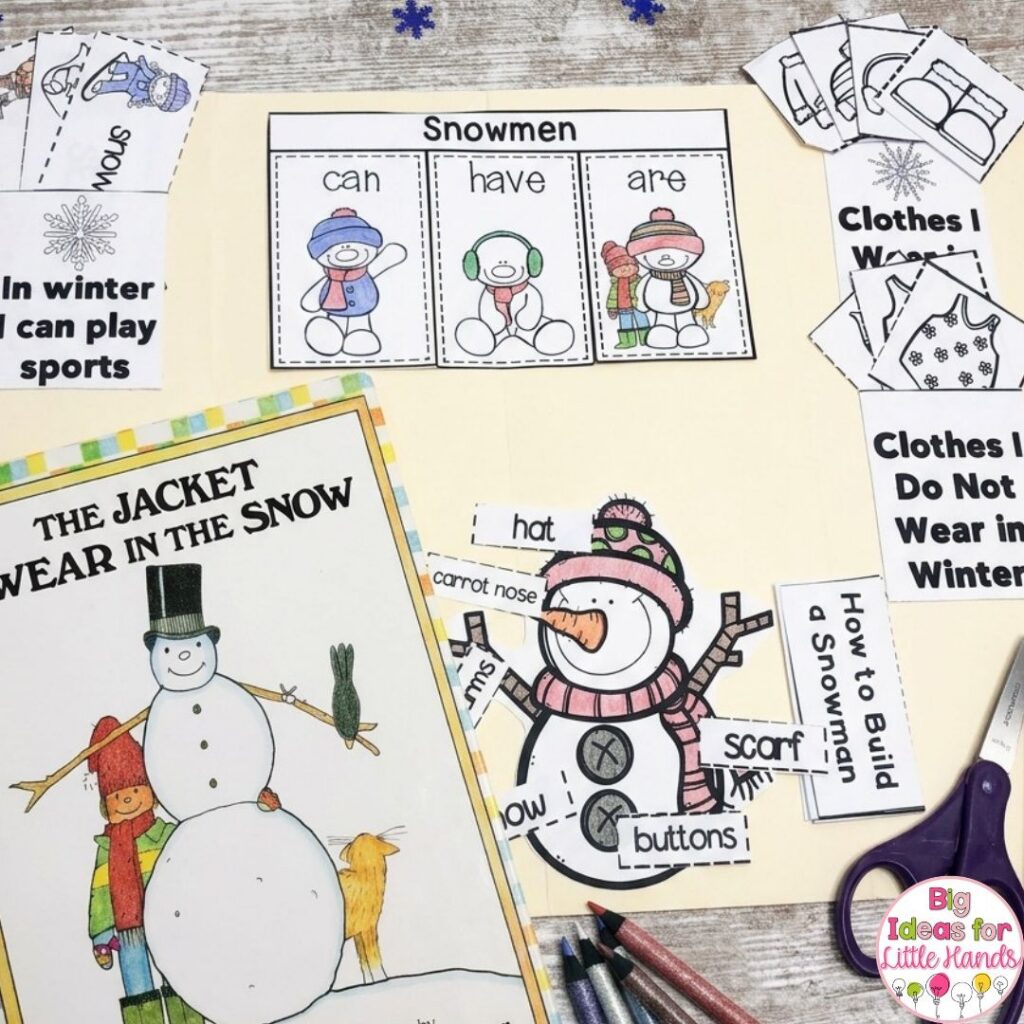
Use the activity to talk about why we wear certain things in cold weather. Why do we need a warm jacket? What do boots protect our feet from? When might we need a hat, scarf, or gloves?
Then let students complete the Clothes You Wear/Do Not Wear in Winter activity from the Winter Lapbook. They will color, cut, and glue the little pockets for each category and then sort the pictures. I also have mine color the pictures before tucking them into the correct pocket.
It’s a simple way to connect the story to real-life winter experiences while building vocabulary and classification skills.
Looking for More Winter Lapbook Ideas?
If you want an easy way to keep your winter learning going, the All About Winter Lapbook is packed with hands-on activities. You can work on it throughout the week and choose activities that fit the books you’re reading and the concepts you’re teaching. There are tons of options, so chances are there are activities for any book you’re using in your classroom!
Students can explore winter science, practice vocabulary, write about the season, sort and sequence, work with adjectives, and even graph their classmates’ winter preferences. Since the activities can be used individually, you don’t have to complete the entire lapbook in one sitting. Some of the activities include:
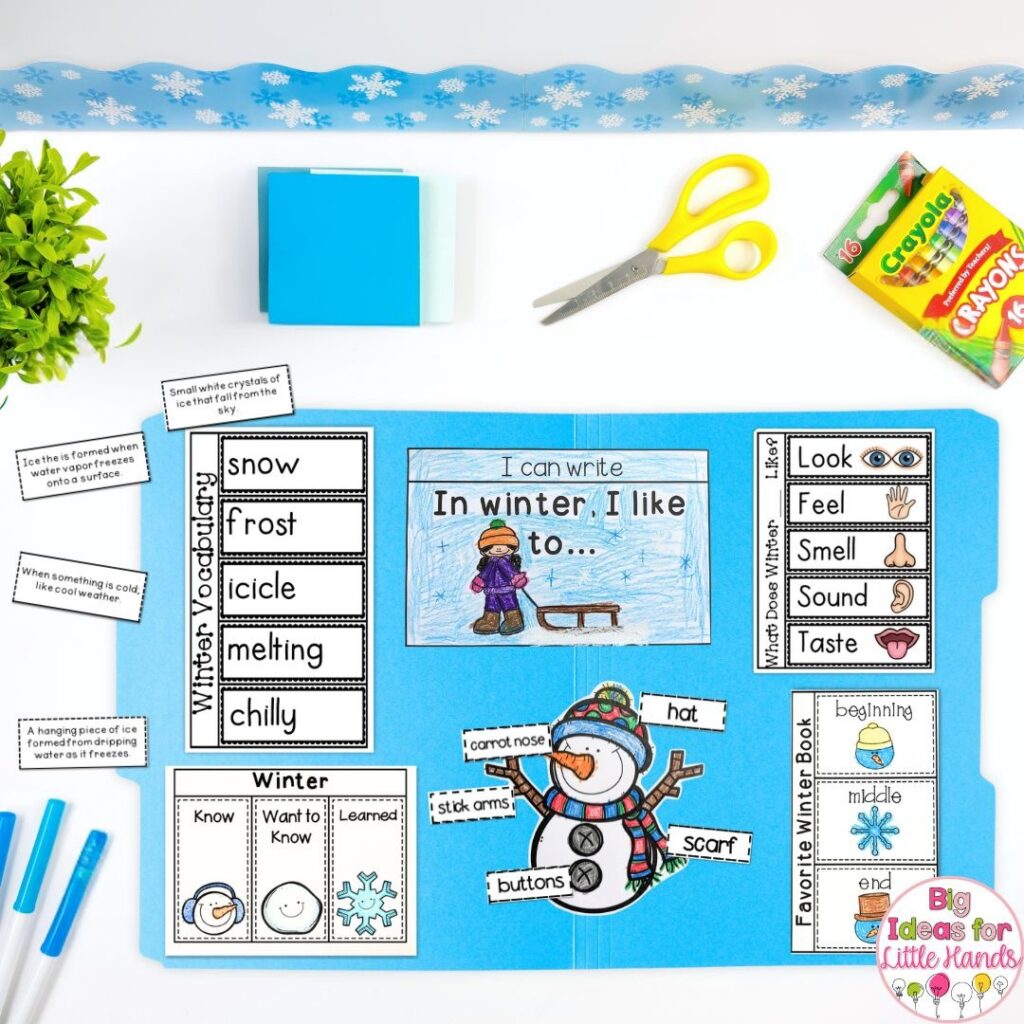
- Snowmen Can/Have/Are
- Label a Snowman
- Winter KWL
- Winter Vocabulary
- Winter Facts
- How to Build a Snowman Sequencing
- Winter Adjectives
- Snowman Adjectives
- Favorite Season Writing
- “In the Winter I Like To…” writing
- Winter Sports
- Clothes You Wear/Do Not Wear in Winter
- Winter/Not Winter Sort
- Compare Wild Winter & Summer
- Winter graphing activities
The lapbook can be used as a file-folder lapbook, interactive notebook, or in whatever format works best for your students. All you need are a few basic supplies, including paper, scissors, glue, and crayons or markers.
Best of all, students end up with something they can bring home and share with their families, making it a fun keepsake from your winter learning!
Make Winter Learning Hands-On
Winter gives you so many natural opportunities to get students talking, wondering, observing, and creating. You don’t need an elaborate lesson for every book, either. Sometimes a good read-aloud followed by one simple hands-on activity is all you need to turn a winter story into a meaningful learning experience.
Whether you’re investigating melting ice after The Snowy Day, building a giant snowman after Sneezy the Snowman, or learning winter facts with It’s Snowing!, these activities give your students a chance to do more than simply listen to a story.
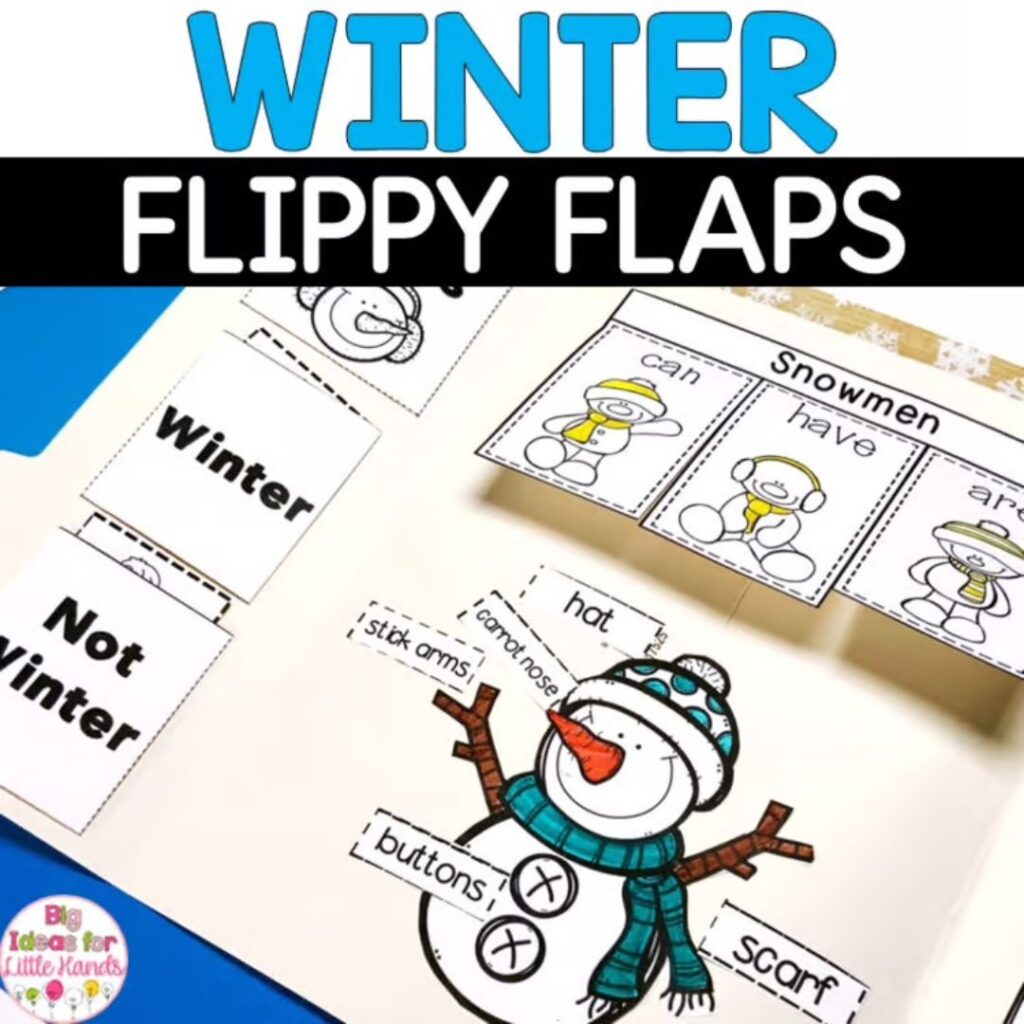
If you’re planning your winter unit, check out the All About Winter Lapbook and choose a few activities to pair with your favorite winter books. It’s an easy way to bring reading, writing, vocabulary, science, and math together while keeping your winter learning hands-on and fun.
Looking for More Lapbook Fun?
Read these posts next for more ideas to use lapbooks in your classroom!
- 10 Winter Lapbook Activities Your Students Will Absolutely Love
- 4 Holiday Lapbook Flippy Flap Activities
- 3 Fun and Engaging Weather Lapbook Activities
Save This Post
Make sure to pin this post on Pinterest so that you can come back to it later!