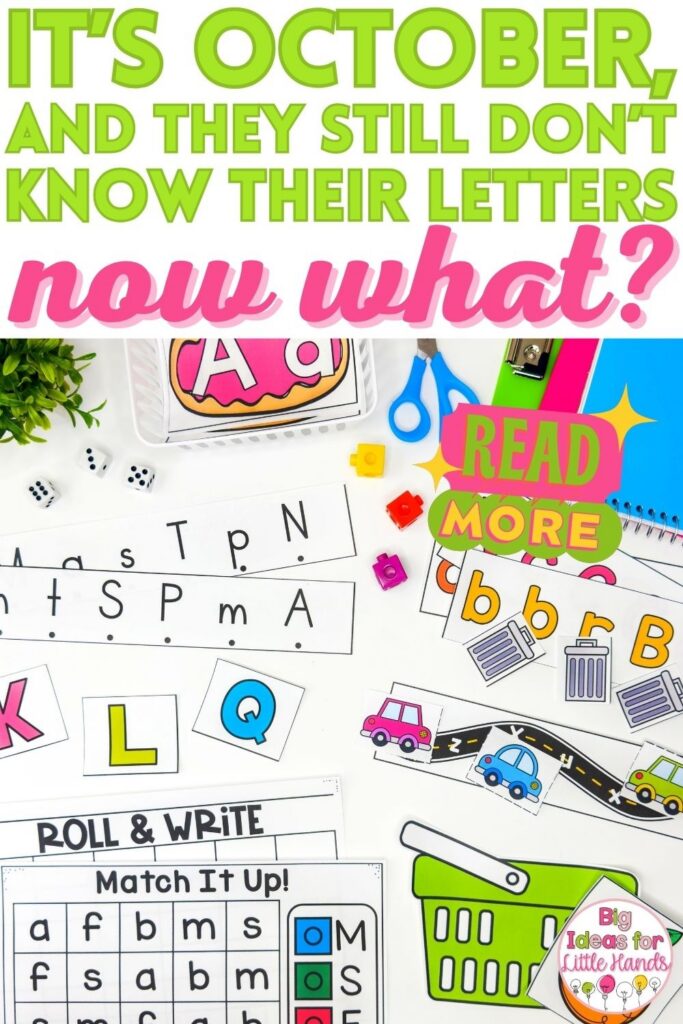
It’s October, and they still aren’t getting it. You’ve taught the alphabet. You’ve sung the songs. You’ve practiced letters and letter names. You’ve pointed to letters on the calendar, read alphabet books, played games, and probably played the alphabet song approximately 7,000 times by now. And yet, when you hold up a letter and ask, “What letter is this?” you still have a few students staring back at you blankly.
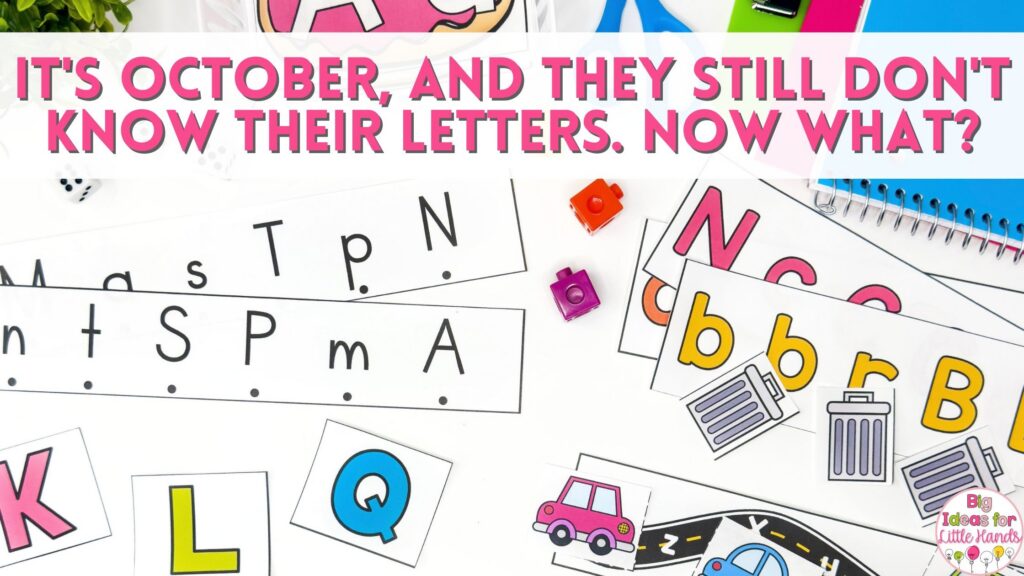
If that sounds familiar, take a deep breath. It doesn’t mean you’ve failed to teach the alphabet, and it doesn’t mean these students can’t learn it. It simply means they need more intentional practice with letter recognition.
When Students Still Aren’t Recognizing Letters
October can be a frustrating time for kindergarten teachers. You may feel like you’ve moved on to other skills because the calendar says you should be. Meanwhile, you have a handful of students who are still mixing up letters, forgetting letter names, or recognizing a letter one minute and forgetting it the next.
It can be tempting to think, “I’ve already taught this!” And you have.
But learning a letter isn’t always as simple as seeing it once, practicing it on a worksheet, and remembering it forever. Some students need many more opportunities to interact with the same letters before that recognition becomes automatic.
The good news is that you don’t need to start your entire alphabet curriculum over again. Instead, you can use short, hands-on activities to give those students more opportunities to see, identify, build, and practice letters in different ways.
So instead of thinking about reteaching the entire alphabet, think about targeted, repeated practice. You can keep moving forward with your class while giving those students extra opportunities to work on the letters they’re still learning.
Start by Finding the Letters They Don’t Know
Before you pull out a stack of alphabet activities, figure out exactly which letters are causing trouble.

You don’t need a complicated assessment. Sit with a student for a few minutes and show them a small selection of uppercase and lowercase letters.
Ask: “What letter is this?” Then keep track of the letters they know and the ones they don’t.
You might discover that a student recognizes most uppercase letters but struggles with lowercase letters. Another student might know unique letters, like s or k, but confuse similar-looking ones, like b and d. Someone else might only recognize the letters in their name.
That information gives you a much better starting point than simply handing the student another full alphabet worksheet. Once you know the trouble spots, you can give individual students repeated practice with the letters they need most while continuing to expose them to the rest of the alphabet.
Give Students More Ways to Build Letters
Sometimes a student needs more than another opportunity to look at a letter. They need to do something with it. Hands-on letter activities can give students a better way to interact with the shape of a letter while also practicing recognition and writing.
Try Building Letters with Bricks
Alphabet Building Bricks Mats are a great option for students who enjoy hands-on activities.
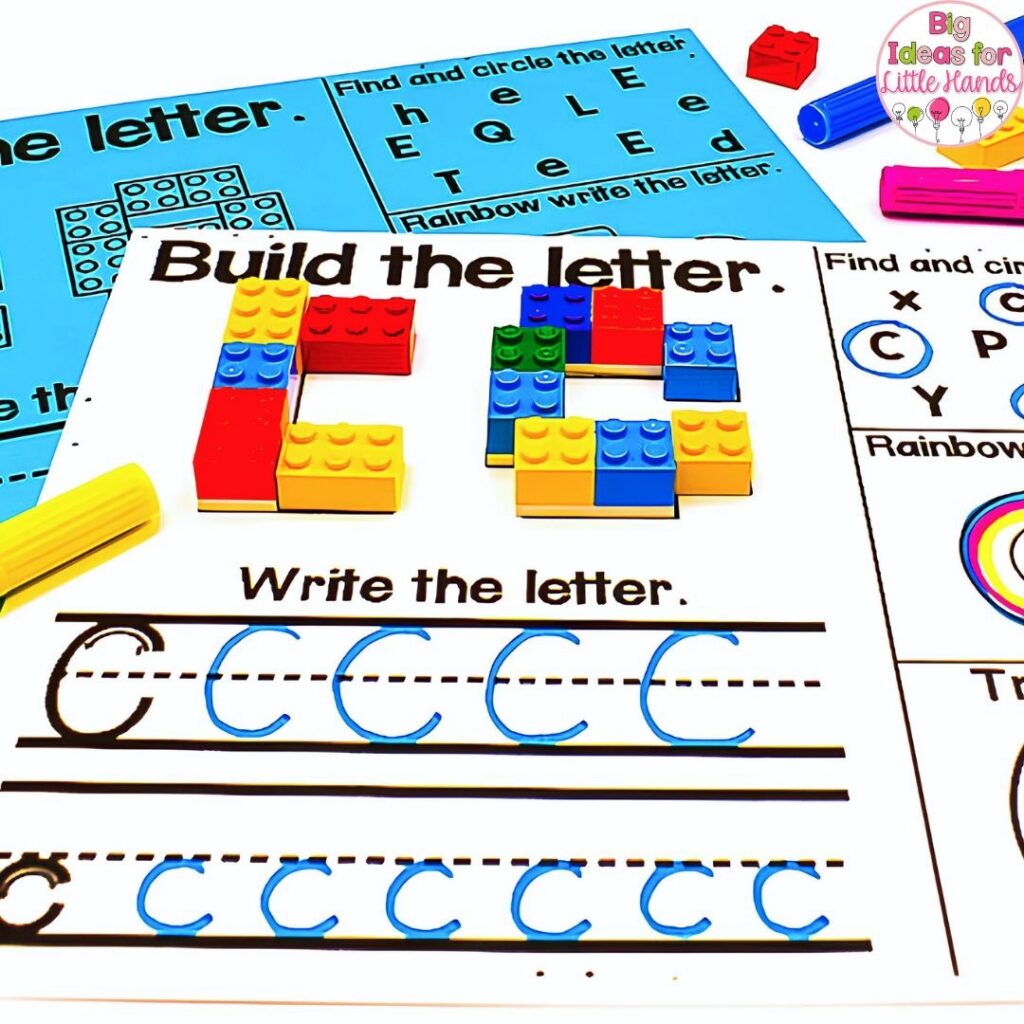
Students use building bricks to create each uppercase and lowercase letter. Then they find and circle the letter, trace and write it, and rainbow write it. This gives students several ways to practice the same letter on one page.
You can put a few mats in a literacy center for independent practice, use them during word work, or keep them in morning tubs. If you laminate the mats or place them in dry-erase sleeves, students can use them again and again.
And for those students who need extra practice, you don’t have to put out all 26 letters. Choose the handful they’re still working on to keep their practice targeted on the letters they need most.
Use Playdough for More Letter Practice
If your students love playdough, put it to work! Alphabet Playdough Mats give students another hands-on way to practice uppercase and lowercase letters.
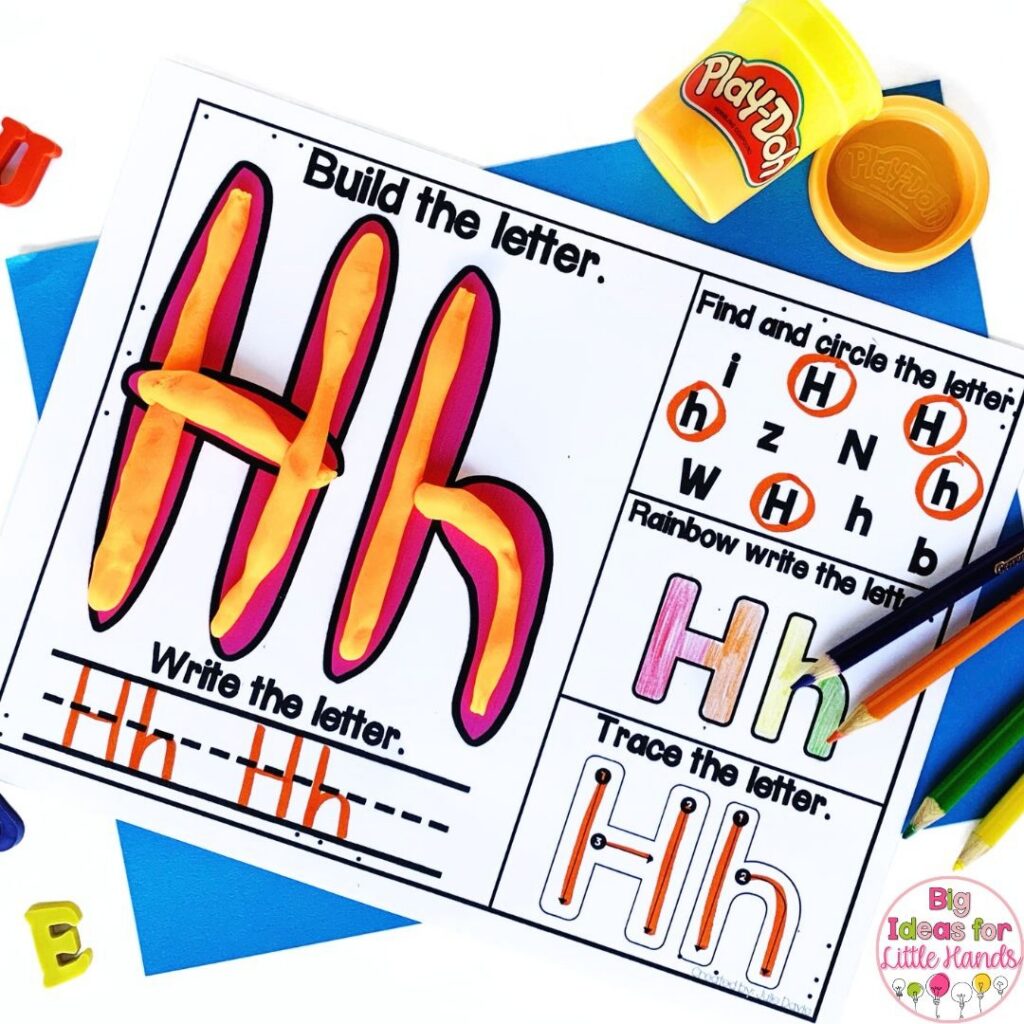
Students build each letter with playdough, find and circle the matching letter, trace and write it, and then rainbow write the letter.
I especially like this kind of activity for students who have difficulty sitting down with a traditional worksheet. They’re still practicing letter recognition and formation, but they’re also using their hands and working with the shape of the letter in a more tactile way.
You can use these mats during literacy centers, morning tubs, small groups, or as an early-finisher activity.
The important part is that you’re not simply asking students to memorize a letter. You’re giving them another opportunity to look at it, build it, identify it, and write it.
Make Letter Practice Feel Like a Game
Let’s be honest. If a student is struggling to recognize letters, giving them the same worksheet every day probably isn’t going to make them suddenly excited about letter practice. Sometimes changing the format is enough to get their attention. Games can make it easy to build extra practice into your day without making it feel like more work.
Add a Halloween Letter Recognition Center
Since we’re talking about October, this is the perfect time to sneak some extra letter practice into your seasonal centers.
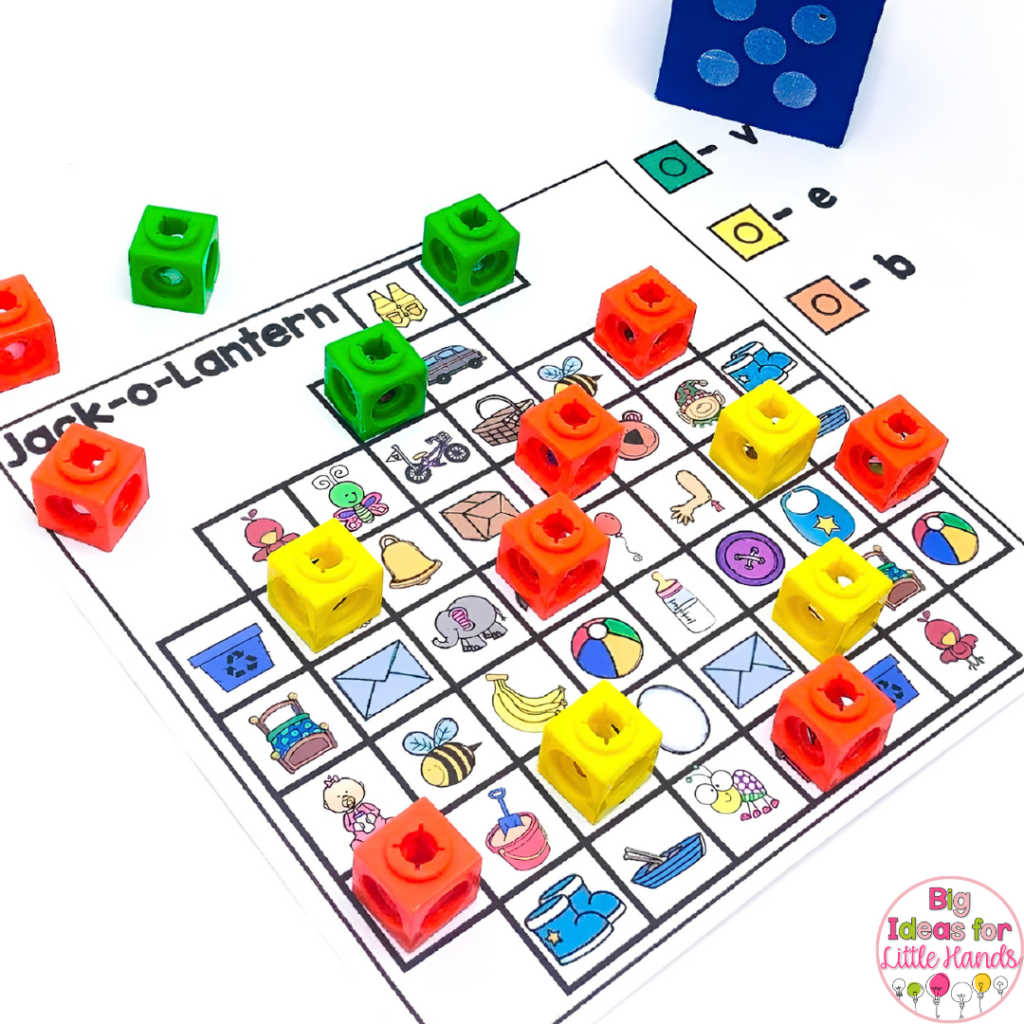
Halloween Snap Cube Centers give students a chance to practice letter recognition while working with snap cubes.
For this letter recognition activity, students read the color code on the mat, determine which letter each color represents, and place the matching snap cubes on the correct letters.
There’s also a beginning-sound version, so you can use the same resource with students who are ready to connect letters to sounds.
This can be especially helpful when you want a student to practice the same skill several times without feeling like they’re doing the exact same activity over and over.
Let Students Practice with a Partner
Not every alphabet practice activity needs to be independent. In fact, a simple partner game can give you a great opportunity to listen to students identify letters while they play.
Play a Quick Alphabet Game
Let’s Make a Square Alphabet Game is a fun way to practice letter recognition with a partner.
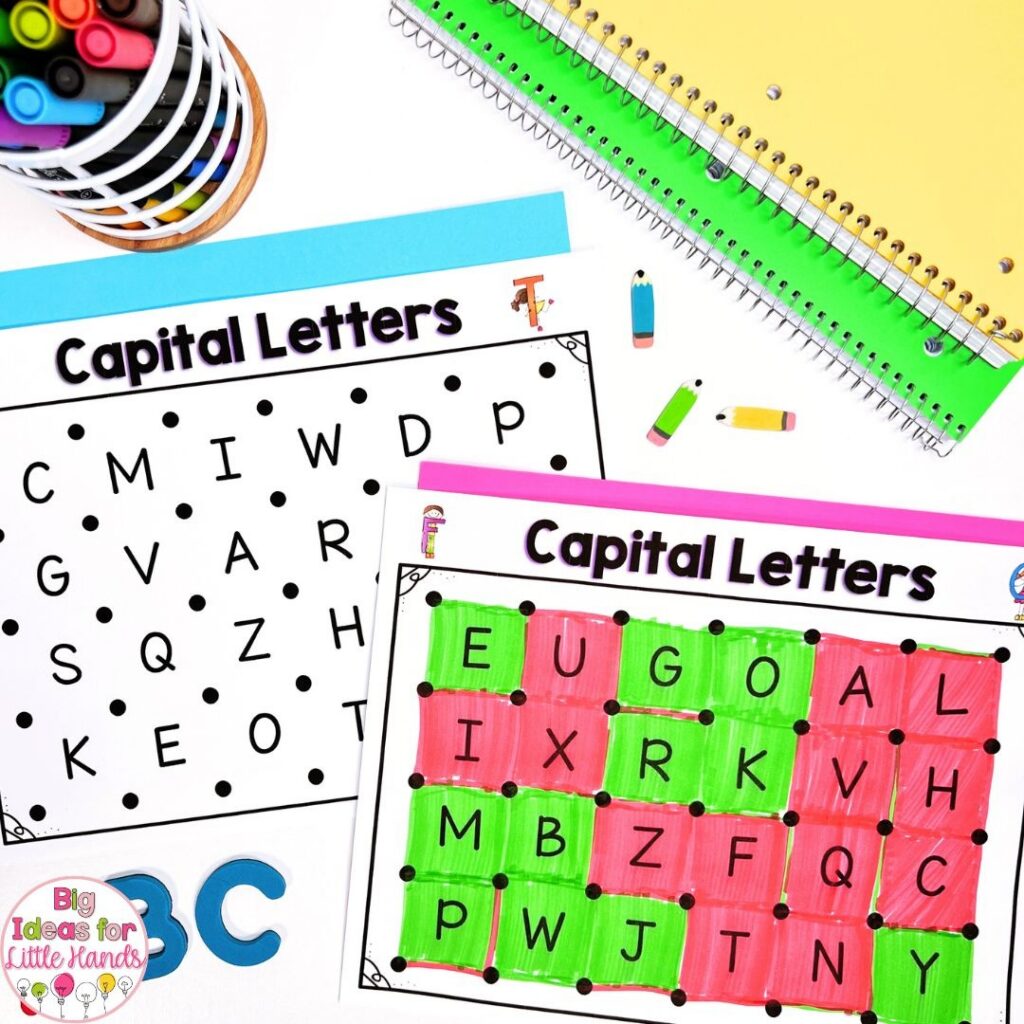
Students take turns drawing lines between dots. When a player completes a square around a letter, they can claim that square if they correctly identify the letter. If they can’t identify it, their partner gets the opportunity to “steal” the square by naming the letter.
I love that this gives you another natural opportunity for students to practice identifying letters without sitting down for another formal lesson. You can use it as a literacy center, an early-finisher activity, or a quick partner activity when you have a few extra minutes.
And because students have to actually say the letter name to claim the square, you’re getting a little informal assessment built right into the game.
Keep Practice Simple During Small Groups
If you know exactly which students need extra letter practice, small groups are one of the best places to provide it. You don’t need a 30-minute lesson. Even five to ten focused minutes can give you a chance to work on the letters that are giving your students trouble.
Try Cover-Up Letter Mats
Cover It Up Alphabet Mats are designed to give students repeated practice with uppercase and lowercase letter recognition.
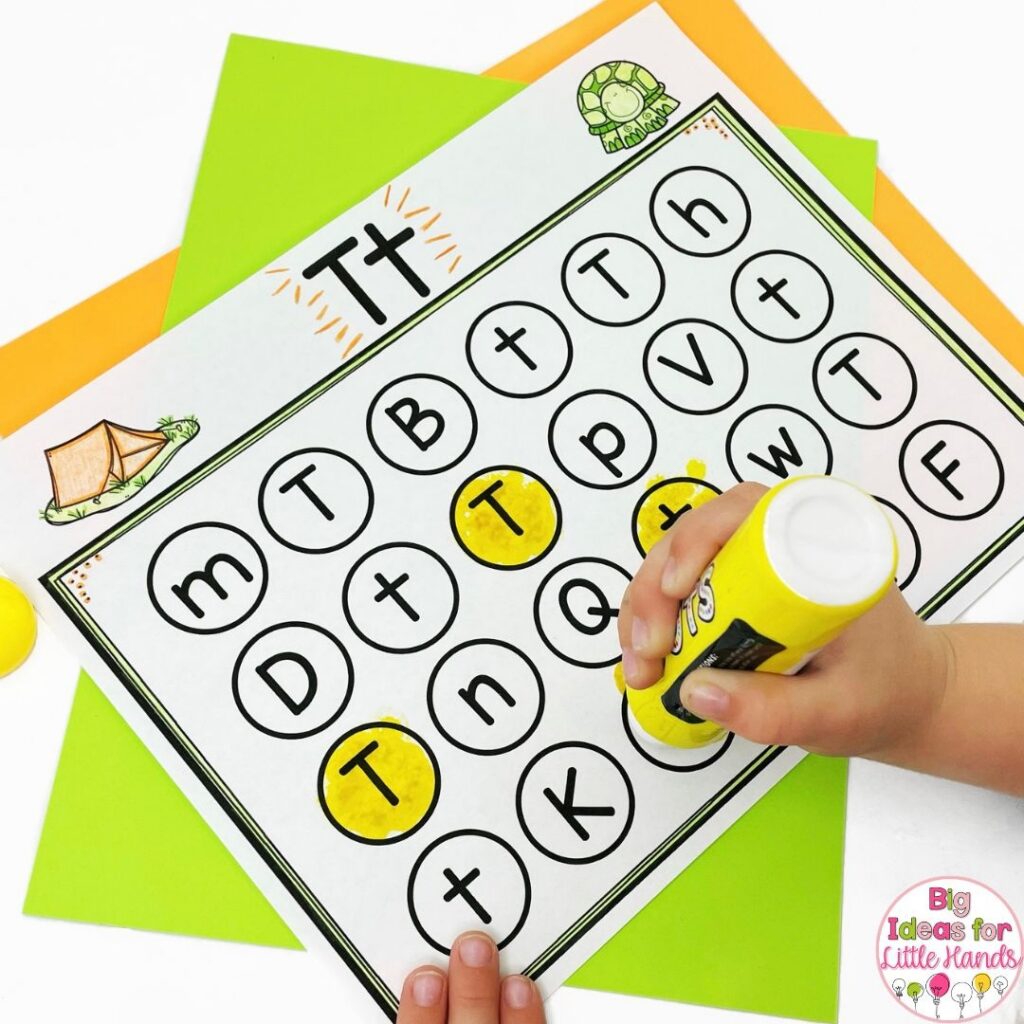
Students cover matching letters with bingo chips or counters as they identify them. You can also have students color the letters or use bingo daubers.
One feature I really like for small groups is that there are multiple versions for each letter, including easy-to-read fonts and pages with different fonts. That gives you some flexibility when you’re deciding what will work best for a particular student.
You can also give each student a different page while still having the whole group work on the same target letter. For example, if you’re working on the letter M, you might give each student a different M page. Then take turns identifying the letter, finding it on the page, and covering it.
It’s simple, repetitive practice without requiring a huge amount of prep.
Use Games for Focused Letter Practice
Sometimes you need something more structured than a center activity. If you have students who need regular, focused letter identification practice, having a collection of small-group games ready to go can make those few minutes much easier to plan.
Add Alphabet Games to Your Small Groups
Small Group Alphabet Games include 16 different letter identification games that can be used during small groups, whole-group lessons, centers, or small-group warm-ups.
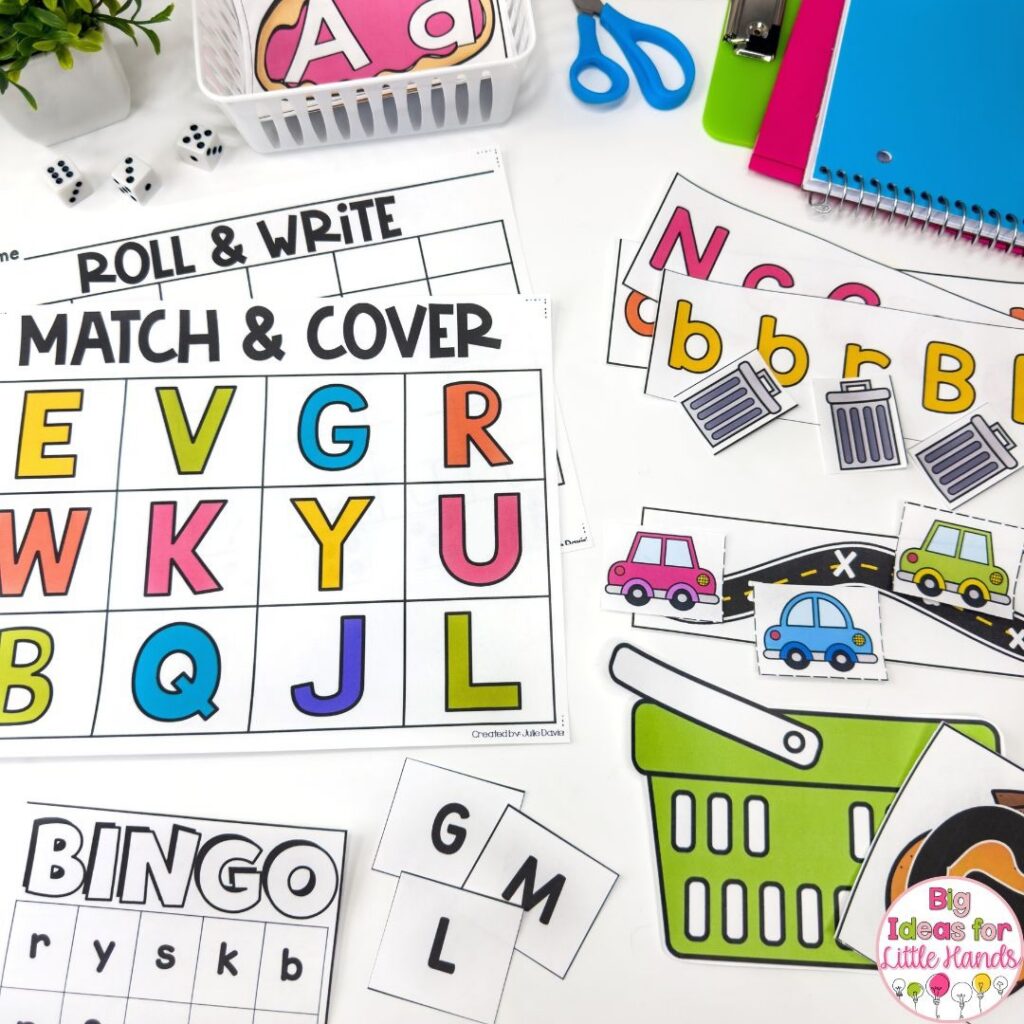
You can choose from activities such as Letter Identification Bingo, Match It Up, Roll & Read, Roll & Write, Feed Me, Let’s Go Shopping, SWAT, and more. The variety matters because you can keep practicing the same letter identification skill while changing the activity.
And these games come with three versions:
- All capital letters
- All lowercase letters
- Mixed capital and lowercase letters
That makes it easier to meet students where they are. For example, if a student is still learning uppercase letters, start there. Once those become more automatic, move to lowercase. Then mix the two, so the student has to identify the letter regardless of how it appears.
You can also use these games with a substitute, classroom volunteer, or intervention group because the activities give you a clear structure to follow.
Don’t Forget to Keep Practicing the Letters They Know
When a student is struggling with a few letters, it can be tempting to practice only those letters. Targeted practice is important, but you don’t want students to lose confidence with the letters they already know.

Try creating a simple rotation. If a student is struggling with b, d, and p, for example, spend some focused time practicing those letters. But mix in letters the student already recognizes, too.
This gives students a chance to experience success while still getting the extra practice they need. You can also change the way you present the letters. Ask students to identify uppercase letters one day, lowercase letters another day, and then mix them together.
The goal isn’t to make every practice session harder. The goal is to give students enough repetition that letter recognition starts to become easier and more automatic.
The Pep Talk I Need Every Year
If you’re reading this in October and thinking, “Okay, but I really do have students who know almost none of their letters,” don’t panic. Go back to the basics!
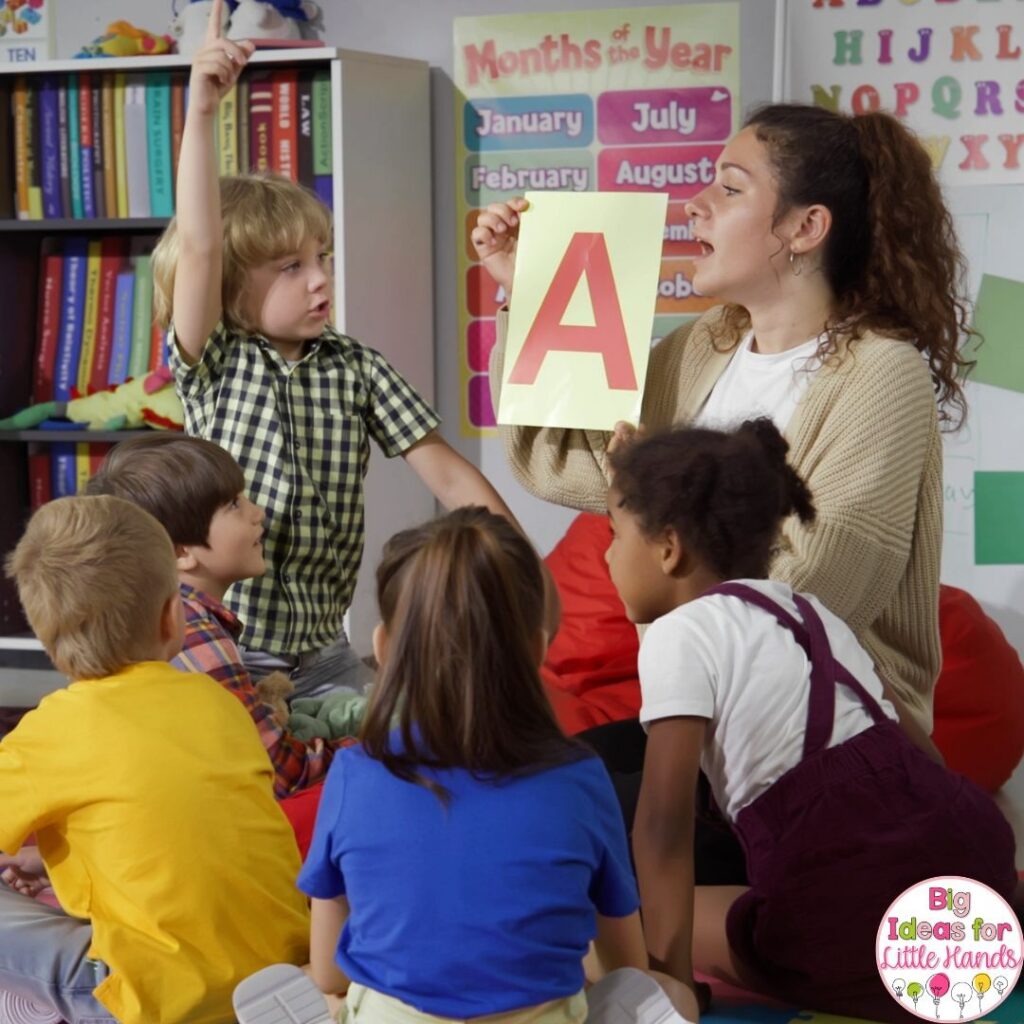
Choose a small number of letters to focus on rather than trying to tackle all 26 at once. Practice those letters frequently in short sessions. Let students build them, trace them, find them, cover them, name them, and play with them.
And keep checking in. You might spend a week focusing on five letters, then reassess. Some students may surprise you with how quickly things start clicking once they’re getting more focused practice.
Most importantly, don’t compare your struggling students to the students who already know the alphabet. They’re not all going to learn at the same pace.
Your job isn’t to make every student know every letter by the exact same date. Your job is to notice what each student needs and give them meaningful opportunities to practice.
Keep Going. They’re Still Learning!
One last reminder. . . If your students don’t know all of their letters yet, you’re not behind. You may simply have a few learners who need more time, more repetition, and more opportunities to interact with letters in different ways.
Keep your practice short. Keep it consistent. Focus on the letters your students actually need to work on, and give them plenty of chances to experience success. And remember, you don’t have to completely start over with the alphabet just because a few students are still struggling. Sometimes a few minutes of intentional practice each day is exactly what they need.
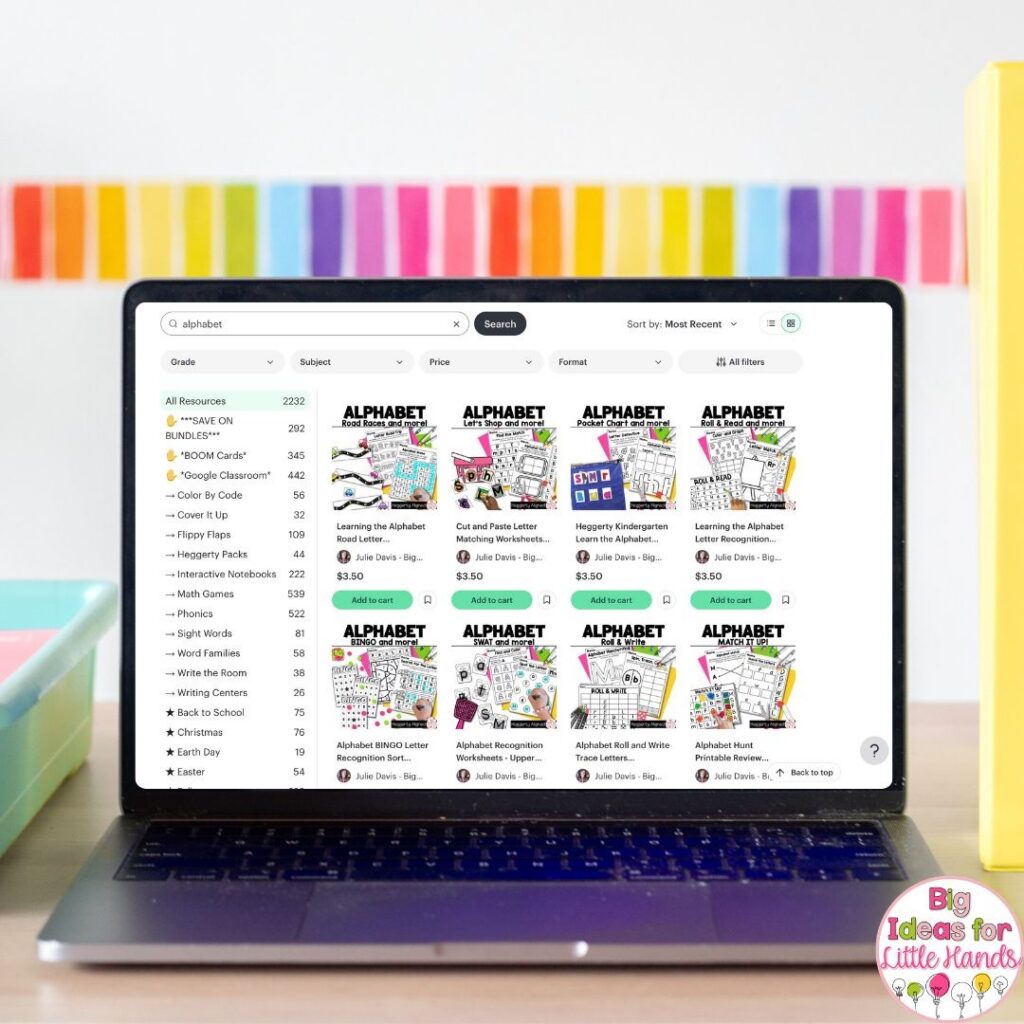
Explore all of my alphabet resources in my store and find a few activities you can keep ready for those students who need just a little more practice.
Looking for More Ideas?
Read these posts next for more fun ways to practice letters in your room!
- 12 Fun Fine Motor Alphabet Activities for Kindergarten
- Building the Bridge from Letter Names to Letter Sounds
- How to Conduct Informal Assessment in Kindergarten Without Adding More Work
Save These Alphabet Practice Ideas
Have a few students who are still working on letter recognition this October? Pin this post so you have a collection of easy alphabet activities to come back to when you need a quick center, small-group activity, or extra practice idea!