There’s just something about a farm theme that gets kindergarteners excited! Mention cows, pigs, chickens, or horses, and suddenly everyone has a story to tell. Maybe they visited a farm with their family, or maybe they have chickens in their backyard! Tons of farm activities tap into that natural curiosity while teaching science, vocabulary, sorting, graphing, writing, and even fine motor skills. But if you’ve ever planned a farm unit, you know how quickly the ideas can pile up. The good news is that your farm activities don’t have to be complicated to be engaging! Let’s talk about simplifying this topic!
Make Planning Your Farm Activities Simple
Tell me if this sounds familiar. . . You want your students to have hands-on experiences, but you don’t necessarily want to spend hours cutting, prepping, and creating a different activity for every skill you need to teach. Same!
This is a constant struggle in the primary classroom, which is why I absolutely love using lapbooks, along with a few other smart teaching strategies when starting a new thematic unit. If you’ve never used a lapbook before, you’re in for a treat! It’s the simplified teaching tool you’ve been looking for!
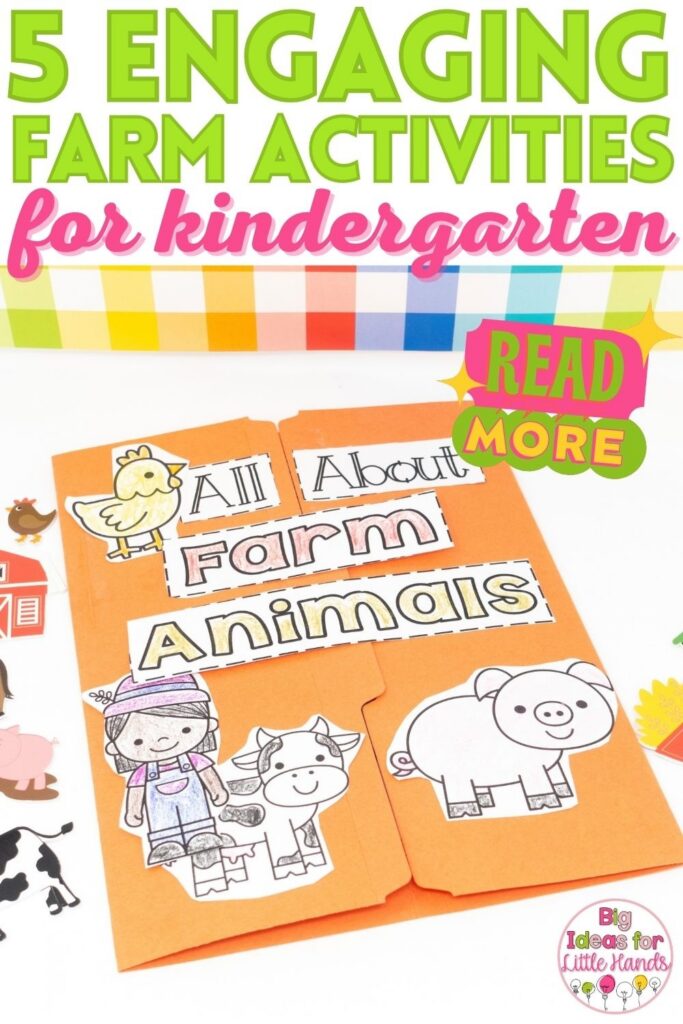
To show you how it works, I’m sharing 5 fun farm activities for kindergarten, including a low-prep, hands-on Farm Animals Lap Book that gives students a chance to learn, create, and show what they know.
So grab your farm books, round up your little learners, and let’s plan a farm-themed day together!
1. Start With a Farm Animal Introduction Video
Ok, first off, this idea isn’t a lapbook activity, but it’s a must in my opinion! I always like starting a new theme with something that gets students interested right away.
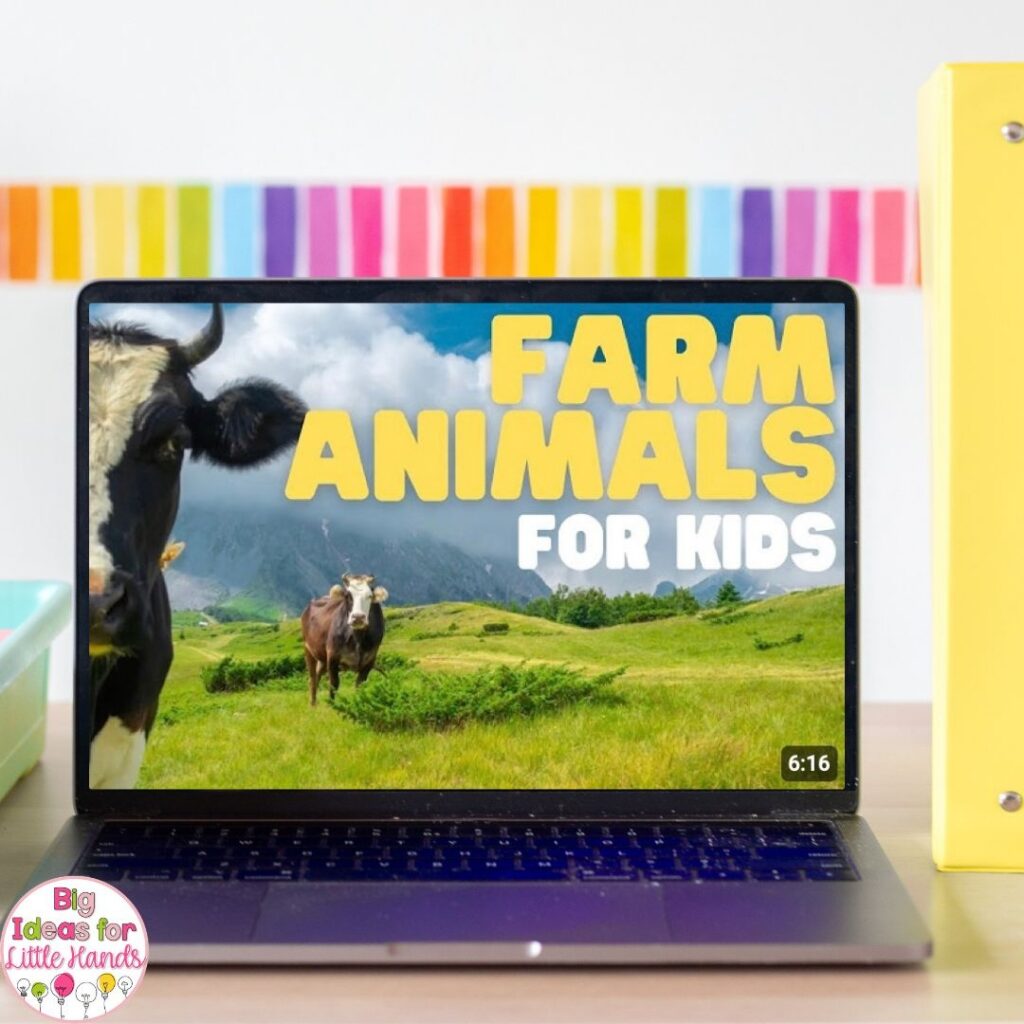
A short farm animal introduction video is a great way to build that immediate buy-in before you start your lessons.
You can find a simple farm animal video on YouTube like this one. This video introduces students to what farms are, the different animals they might find there, and some of what happens on a farm.
This would work well right after your morning meeting when you’re introducing your farm theme for the day. It’s also a great option for those moments when you need to help your class settle back into learning. For example, you could play the video right after recess or after you’ve come back from a special time like P.E. or Library.
After the video, spend a few minutes talking about what students noticed. Ask questions like:
- What animals did you see?
- What do you think happens on a farm?
- Have you ever visited a farm?
- Which farm animal would you most like to see?
You’ll probably get plenty of excited answers, and that’s exactly what you want! This conversation lets you find out what your students already know while introducing vocabulary you’ll use throughout your farm unit.
2. Try a Farm Animal Sorting Game
Now that your students have some farm animals fresh in their minds, it’s time to get them sorting! Here’s where our trusty lapbook comes in! This is one of my favorite kindergarten activities because students practice a real skill while also getting their hands on the materials.
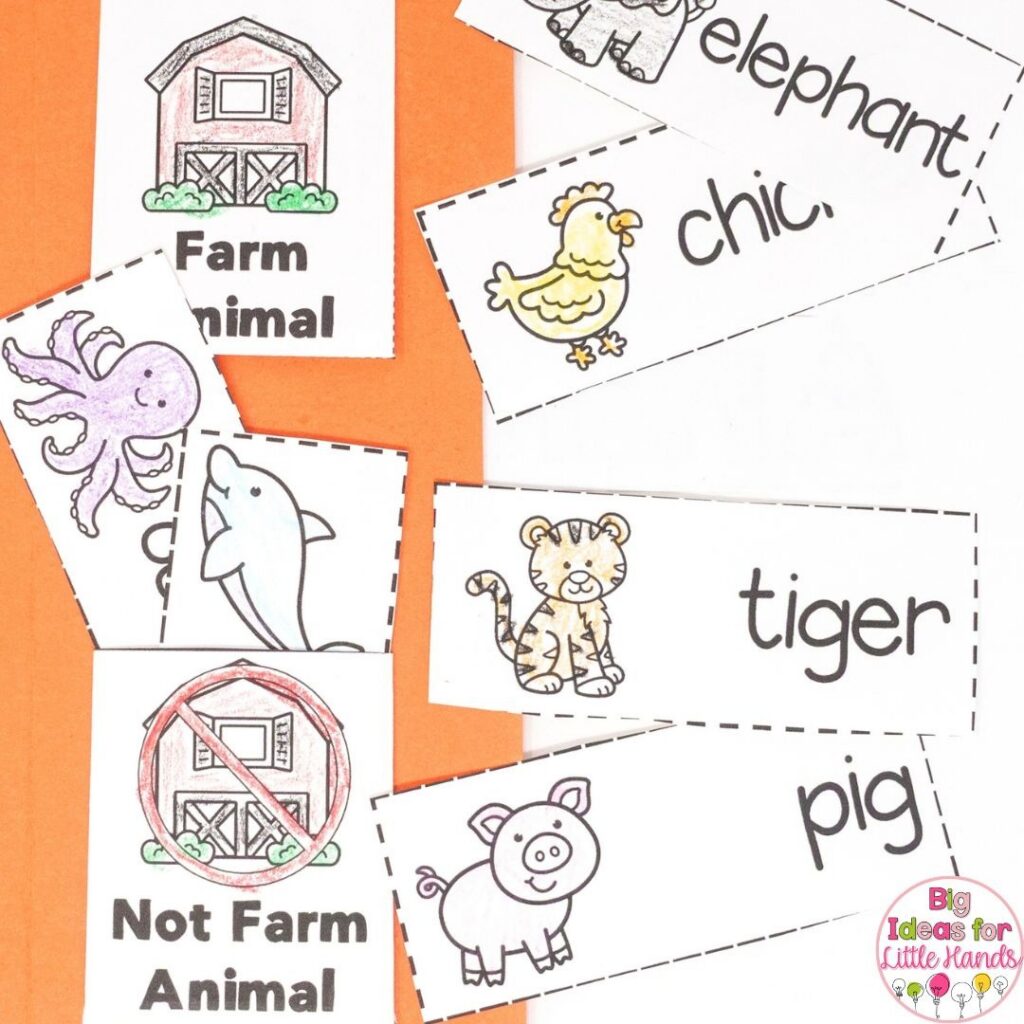
You can start this activity as a whole group or in a small group. Give students a collection of animal pictures and ask them to decide which animals belong on a farm and which ones do not.
As you sort, talk about each animal. Ask whether it lives on a farm, why the student thinks that, and whether they have seen it on a farm before. Questions like this will prompt your little learners to think critically about each animal.
Once students understand the sorting activity, they can complete their own version as part of the Farm Animals Lap Book. Students color and cut out the animals, then sort them into the correct groups. After they glue the pockets into their lap book, they can place each stack of sorted animals into the appropriate pocket.
This activity combines science, vocabulary, following directions, and fine motor practice. Because you’ve already sorted various animals together as a class, students have some background knowledge before they begin working independently.
3. Explore What Farm Animals Give Us
Here’s another great opportunity to get students thinking beyond simply naming farm animals. Ask your class to consider this simple question: What do farm animals give us? You may hear answers like eggs, milk, wool, and even meat. This is a good opportunity to have an age-appropriate conversation about how people use animal products.
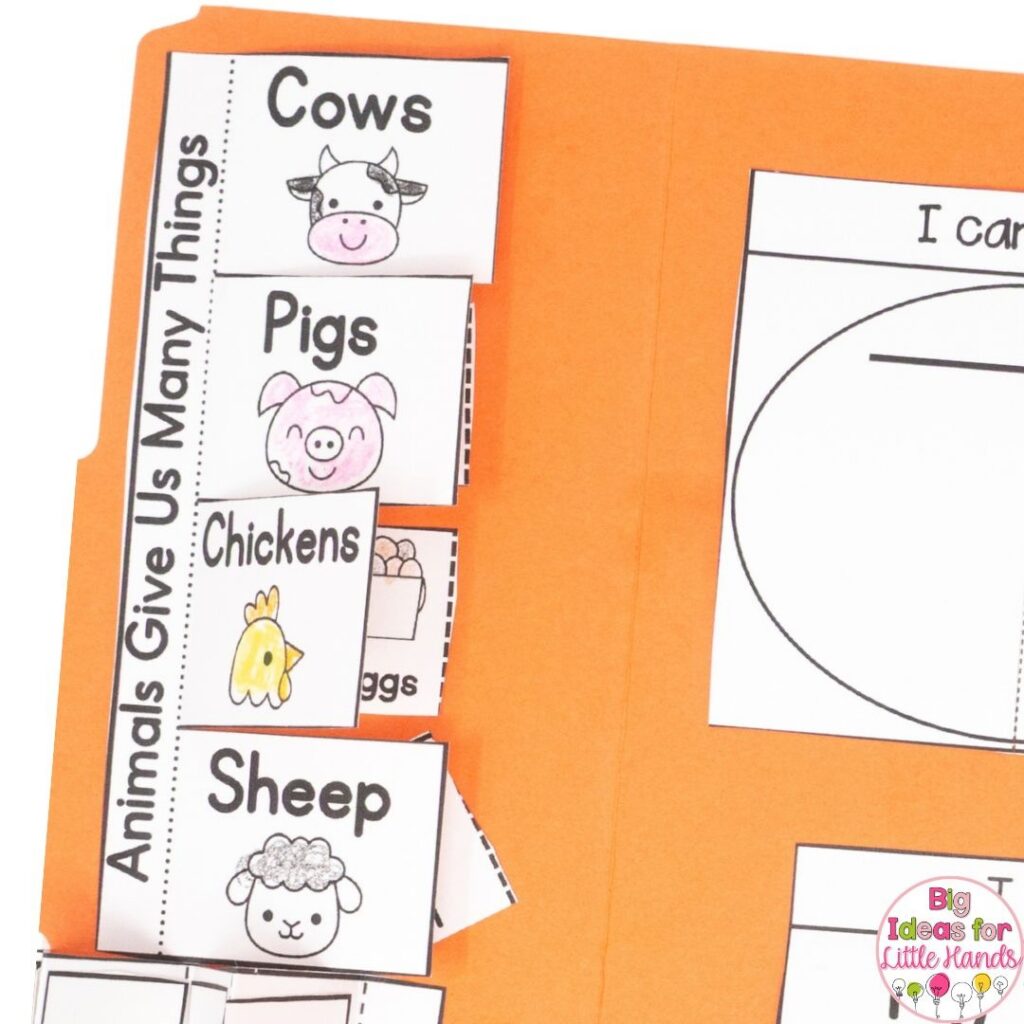
I also like to create a simple anchor chart as we talk, writing down the words and drawing pictures. For example, you might draw a cow and ask students what we get from cows. Then draw a chicken and ask what chickens give us. You can even take it one step further and ask the kids what we do with these goods.
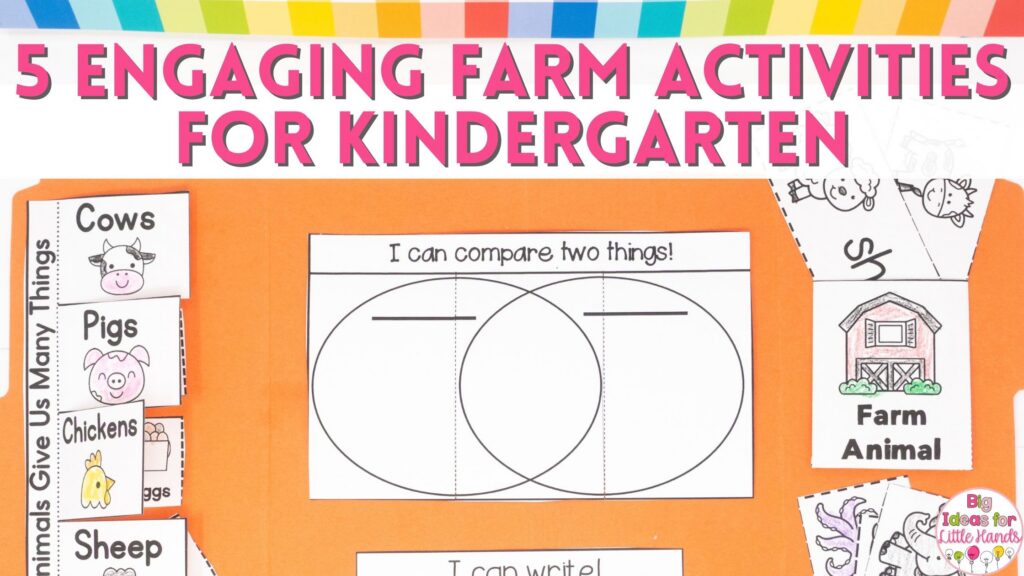
Once students have brainstormed together, they can complete the What Farm Animals Give Us activity in the lapbook to recap what you talked about. Students color, cut, and glue the lift-the-flap pieces into their project. Under each flap, they glue the correct item that comes from that animal.
Because you’ve already talked about the answers as a group, students have the background knowledge they need to complete the activity independently.
I love that this activity becomes something students can open and revisit later. They’re not just completing a worksheet and moving on. They’re creating something they can use to remember what they learned. In fact, that’s the best thing about lapbooks in general, if you ask me!
4. Graph Your Favorite Farm Animals
Once your students have learned about several farm animals, it’s time to find out which ones are the class favorites.
Start with a simple whole-group question: “What is your favorite farm animal?” Give students a few choices such as cow, pig, chicken, sheep, and horse. Have each student add their name, a sticky note, or a small picture to the class graph.
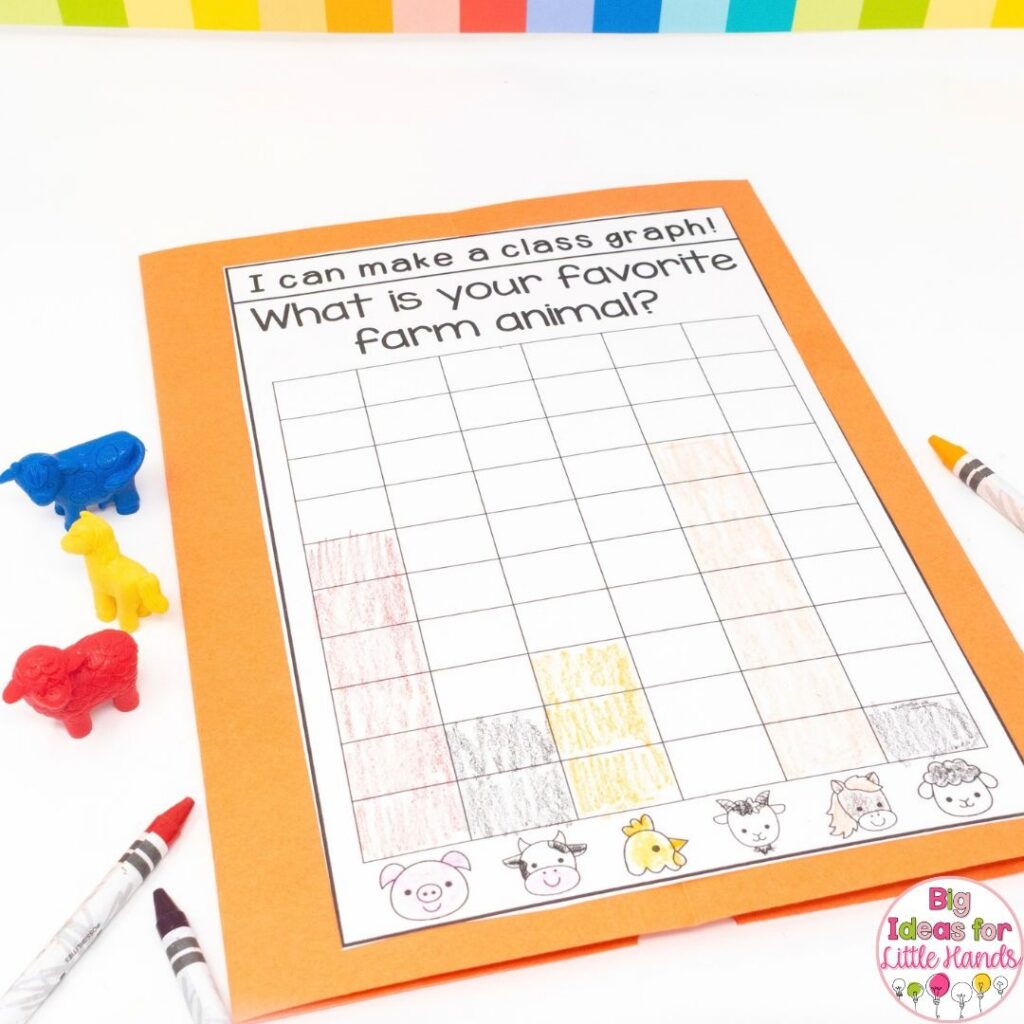
Then take some time to look at your data together. Talk about things such as. . .
- Which animal has the most votes?
- Which has the fewest?
- How many students chose cows?
- How many more students chose pigs than chickens?
This is such an easy way to sneak meaningful math conversations into your farm theme.
Once you’ve completed the class graph, students can transfer the information to the graphing page included in the Farm Animals Lap Book. They can complete their own graph and glue it onto the back of their folder.
Now they have a record of the class data that becomes part of their finished project!
5. Write About Your Favorite Farm Animal
Once your students have had a chance to learn about several different farm animals, give them an opportunity to choose a favorite and write about it!
Ask the kids to think back about the animal they chose as their favorite. Have students turn and talk to a partner about their choice. Ask them to explain why they picked that animal and share something they know about it.
You can make a quick class anchor chart with a few sentence starters to help them get their ideas flowing:
My favorite farm animal is a ____. It has ____. It can ____. I like it because ____.
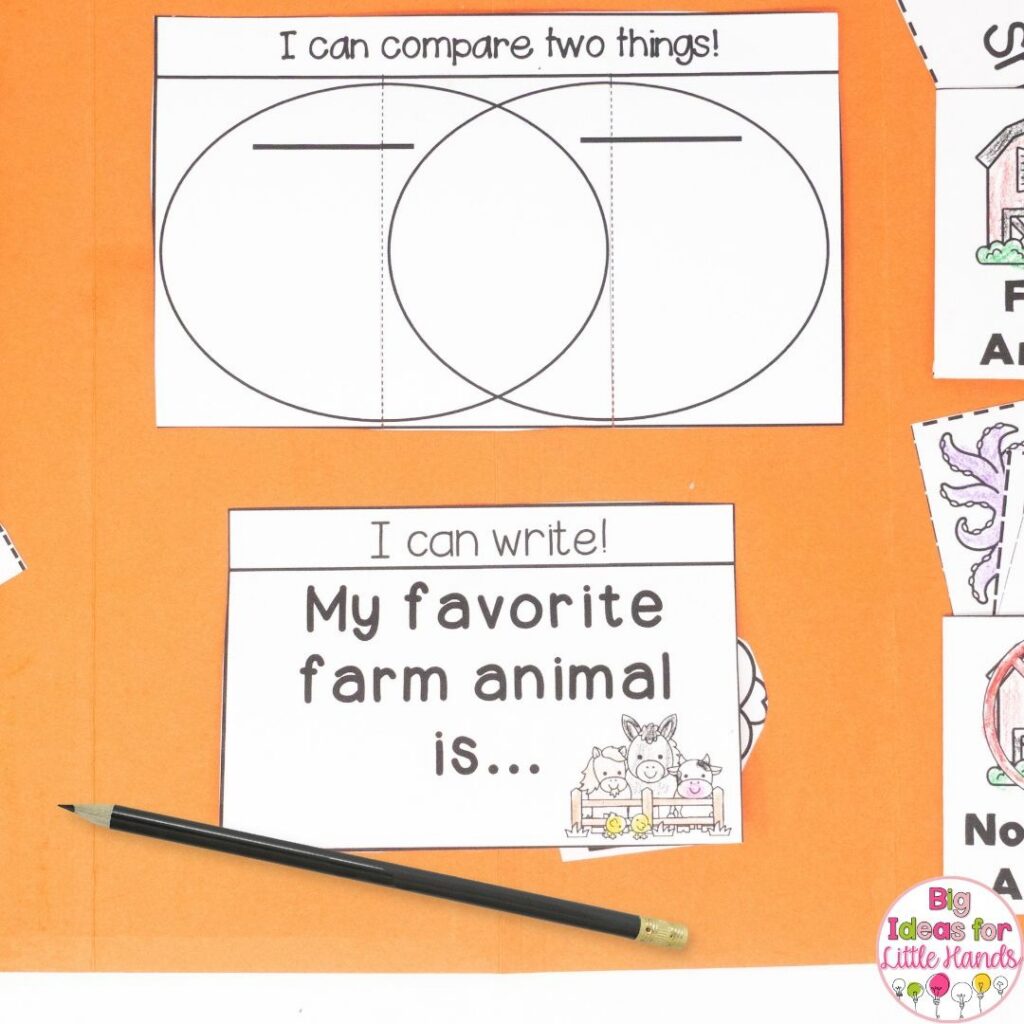
For students who are ready to write more independently, encourage them to add their own facts or details. You might ask, “What does your animal eat?” “Where does it live?” or “What does it give us?” to help them expand their writing.
This is also a great opportunity to remind students that their pictures can add details to their writing. After they finish their sentences, have them draw and color their favorite farm animal.
Once students have practiced their ideas together, they can complete the Favorite Farm Animal Writing Prompt Page included in the Farm Animals Lap Book.
I love using a familiar topic like farm animals for writing because students already have so much to say! Even beginning writers can draw a picture, label their animal, and write a sentence, while more advanced writers can add several facts and details. It’s a simple way to bring writing into your farm theme while giving students a chance to show what they’ve learned.
Keep Your Farm Learning Going With a Farm Activities Lapbook
If your students are enjoying your farm theme, keep the learning going with the Farm Animals Flippy Flap Lap Book. With 16 hands-on farm activities, you can combine science, vocabulary, sorting, comparing, writing, labeling, and fine motor practice in one project. Here are a few more of the activities included in the lapbook:
- Learn about different farm animals
- Match farm animal pictures and vocabulary
- Learn and use farm animal vocabulary
- Explore the life cycle of a chicken or cow
- Label parts of farm animals
- Describe individual farm animals
- Record facts about farm animals
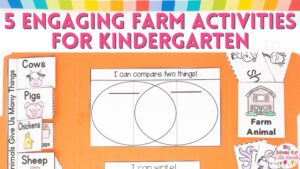
- Compare two farm animals with a Venn diagram
Don’t worry, you don’t have to complete it all at once. Choose the farm activities that fit your lessons and add to the lapbook throughout your unit. Students might sort farm animals one day, explore life cycles the next, then compare animals or write about their favorite farm animal later in the week.
Building Farm Activities Your Students Will Remember and Share
If you’re looking for fun farm activities that will engage your students and build strong skills, look no further! Piecing together meaningful activities can be difficult, so I’ve done the heavy lifting for you. Everything you need for a full farm animal unit is ready to go and easy to use!
You can also choose the format that works best for your classroom. Use the All About Farm Animals Flippy Flap for a full farm unit, as I’ve described here, or focus on one animal such as a cow, pig, chicken, sheep, or horse. The individual animal option works especially well for small groups, animal studies, or differentiated learning. They’ll also get plenty of practice coloring, cutting, gluing, sorting, and assembling as they learn.
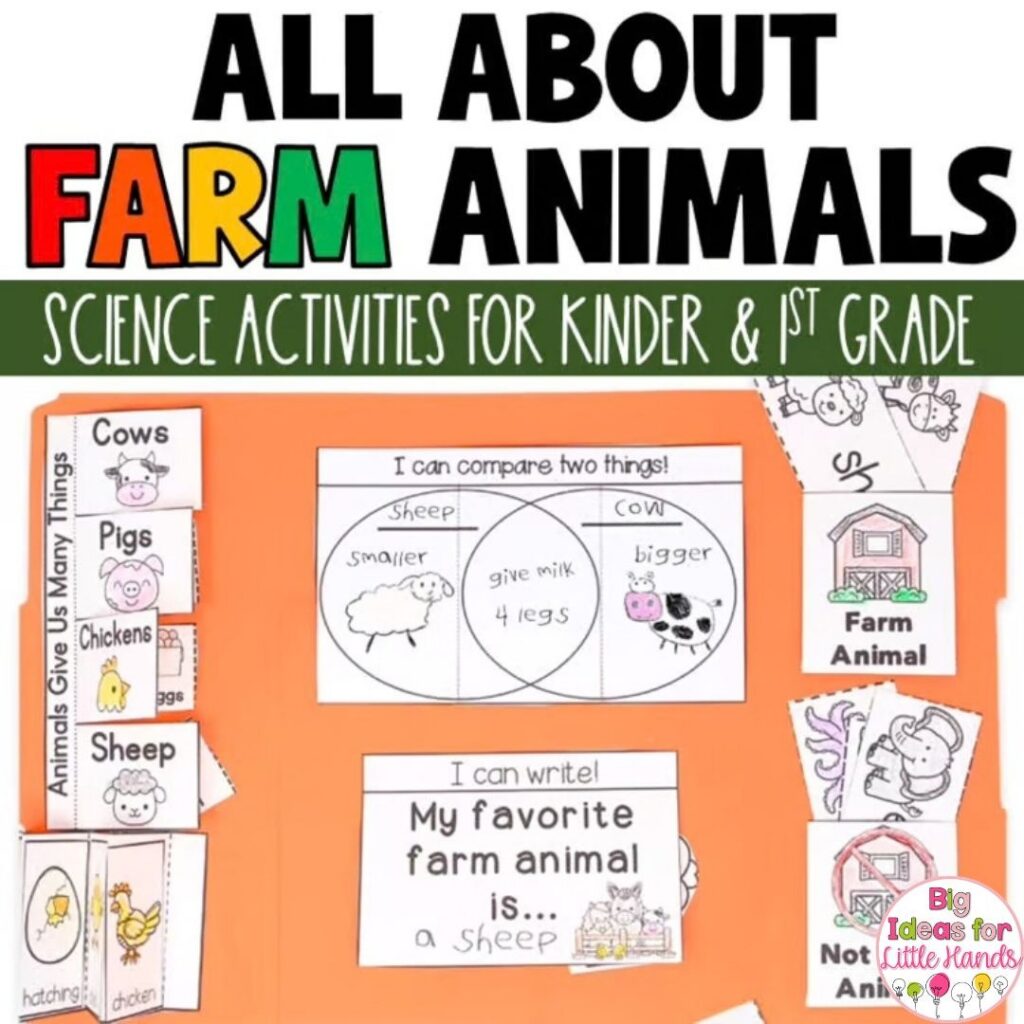
Use the farm activities for whole-group lessons, small groups, science centers, independent work, interactive notebooks, or an end-of-unit project. Choose the pieces that make sense for your students and your farm unit. Grab the Farm Animals Flippy Flap Lap Book and give your kindergarteners a fun, hands-on way to learn about farm animals while creating a project they’ll be excited to share and take home!
Looking for More Lapbook Fun?
Make sure to check out these posts next for more lapbook teaching ideas!
- Fun Dinosaur Lapbook Activities
- All About Me Lapbook Activities
- 3 Fun and Engaging Weather Lapbook Activities
Save These Farm Activities for Kindergarten
Planning a farm theme soon? Save this post so you have these 5 farm activities ready to come back to when you’re planning your unit!