If you’ve ever handed a kindergartner a worksheet only to find it half-finished, covered in random coloring, or completely abandoned, you know that independent work can be tricky! At this age, students are still learning how to follow directions, stay focused, and apply new skills without someone sitting beside them. They need plenty of hands-on learning opportunities, but they also need opportunities for independent practice. If you’re ready to find the middle ground, you’re in the right place!
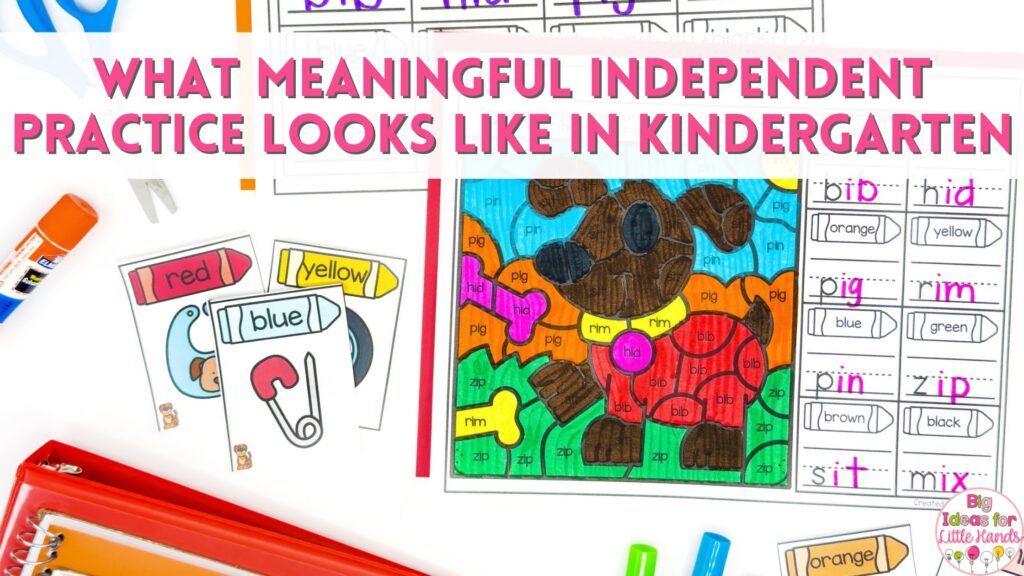
How to Make Independent Practice Work in Your Room
Independent practice in the primary classroom can be hard. Young students are still learning to work independently, so give them activities that are easy to understand, engaging, and appropriate for their skill level. The goal is to help students build confidence as they practice what they’ve already learned, without needing constant reminders or assistance.
Before we get started, here’s an important thing to note… Not all worksheets are busy work!
The goal isn’t to choose between hands-on activities and paper-and-pencil practice. It’s to give students opportunities to explore a new skill, practice it in different ways, and eventually show what they know independently.
A good independent activity doesn’t have to be complicated. Sometimes it’s as simple as giving students a set of manipulatives, a recording page, or a familiar activity they can complete on their own. What matters is that they’re actively using the skills you’ve been teaching.
Let’s look at four ways to make independent practice meaningful in your kindergarten classroom!
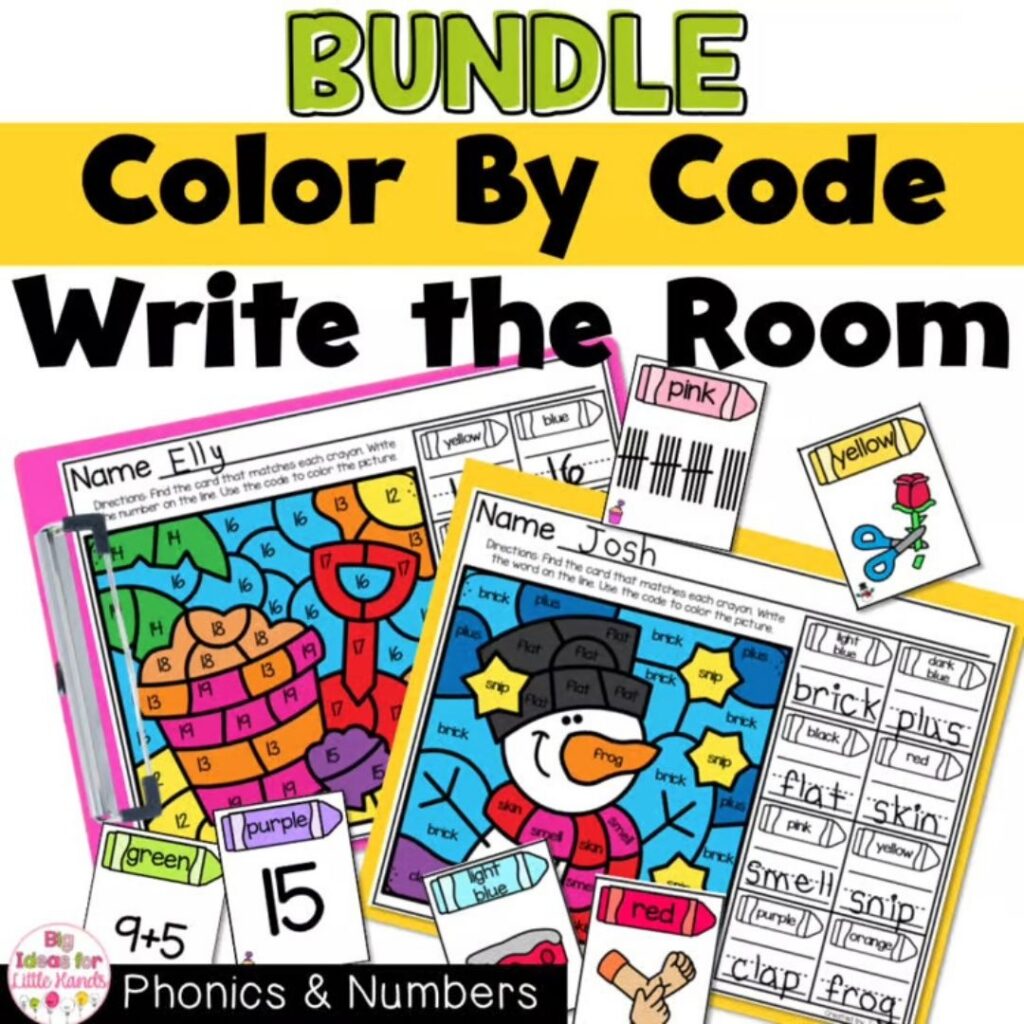
1. Get Students Moving with Color by Code Write the Room Activities
Kindergarteners aren’t meant to sit still for long periods. Sometimes, the best way to keep students engaged during independent practice is to get them up and moving! Write the Room activities are a great way to combine movement, problem-solving, and independent skill practice.
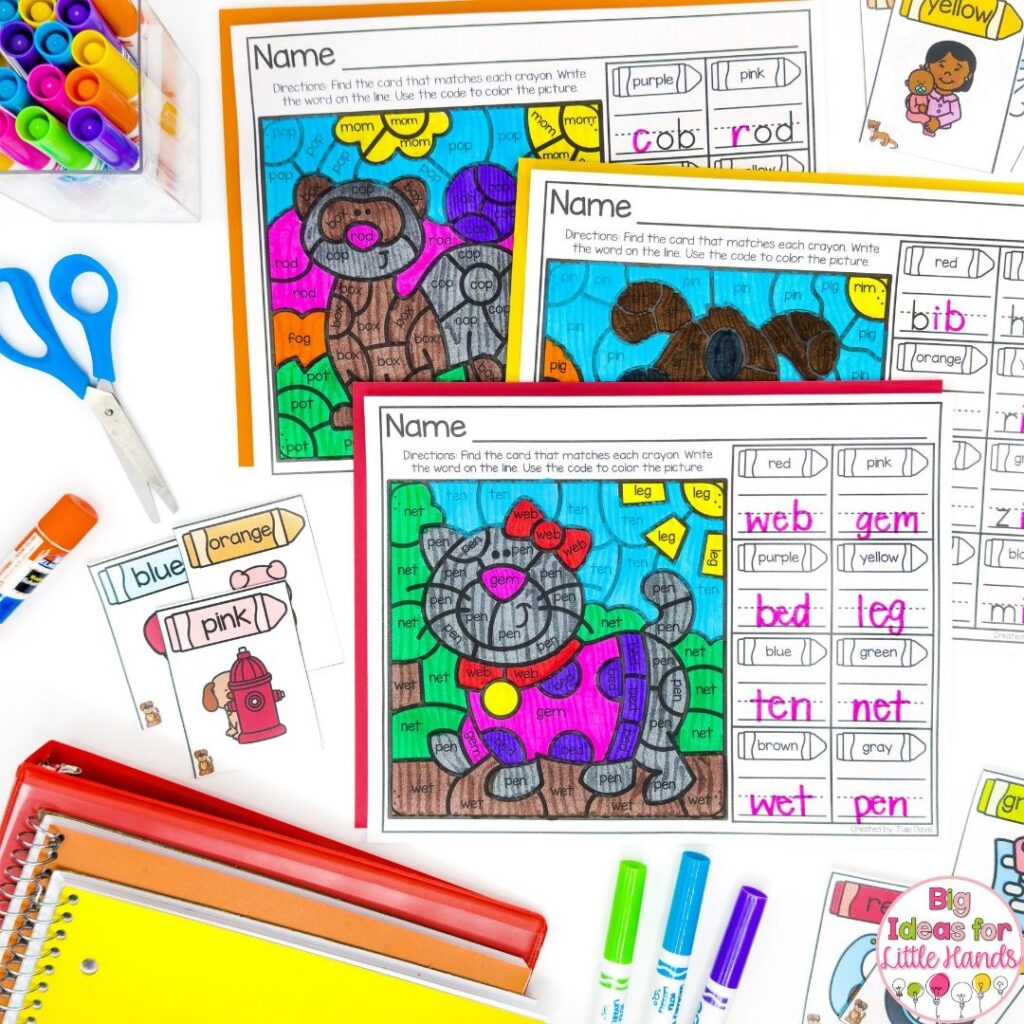
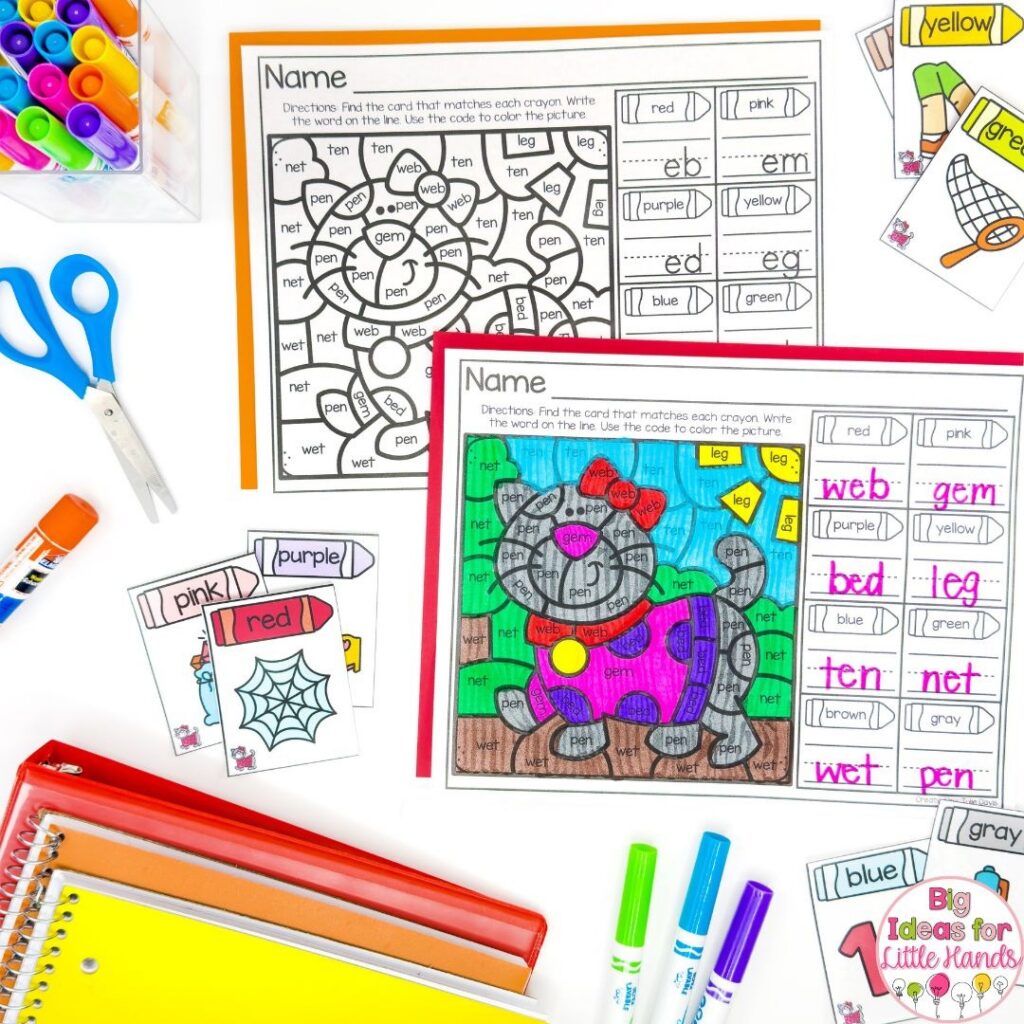
Start by placing picture or word cards around your classroom. Give each student a recording sheet and have them walk around the room to find the cards. As they find each one, they’ll solve a problem, identify a word, or practice a skill before recording their answer. The color-by-code page gives students an additional reason to stay focused and complete their work. I love this type of activity because students are practicing important skills without feeling like they’re simply completing another worksheet.
These color by code write the room activities cover a wide range of topics and units. For example, during a CVC phonics unit, students might find picture cards around the room, identify the beginning, middle, and ending sounds, and record the matching word. Once they’ve completed the activity, they use the color code to finish their page. You can use this same routine for beginning blends, digraphs, CVCe words, teen numbers, addition, and subtraction!
My Color by Code Write the Room MEGA Bundle includes both phonics and math activities, with monthly themes and evergreen resources you can use throughout the school year. It’s an easy way to keep literacy and math centers fresh while giving students a predictable routine they can eventually complete independently.
2. Build Number Sense with Snap Cube Centers
Before expecting students to work with numbers on paper, give them opportunities to see, touch, and build those numbers! Snap cubes are one of my favorite tools for kindergarten math because students can physically represent quantities, compare groups, and explore number relationships.
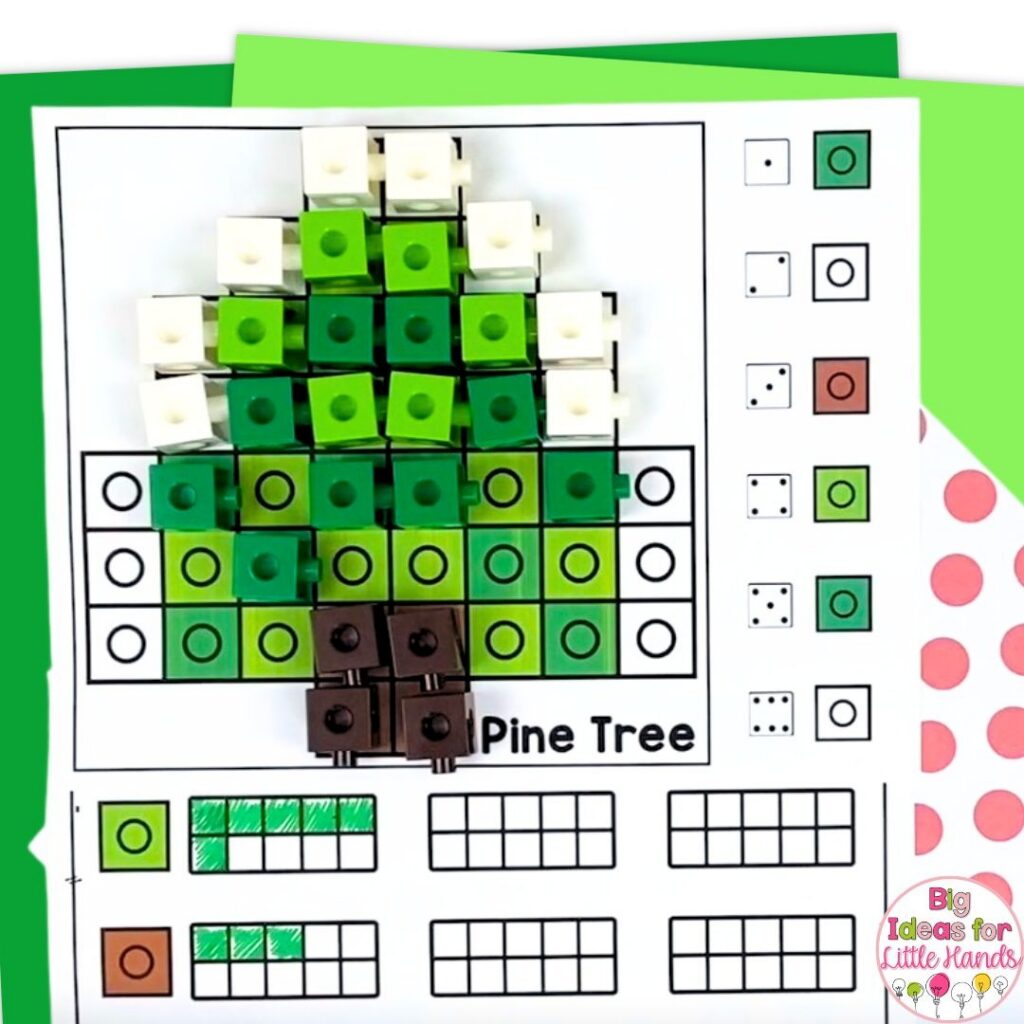
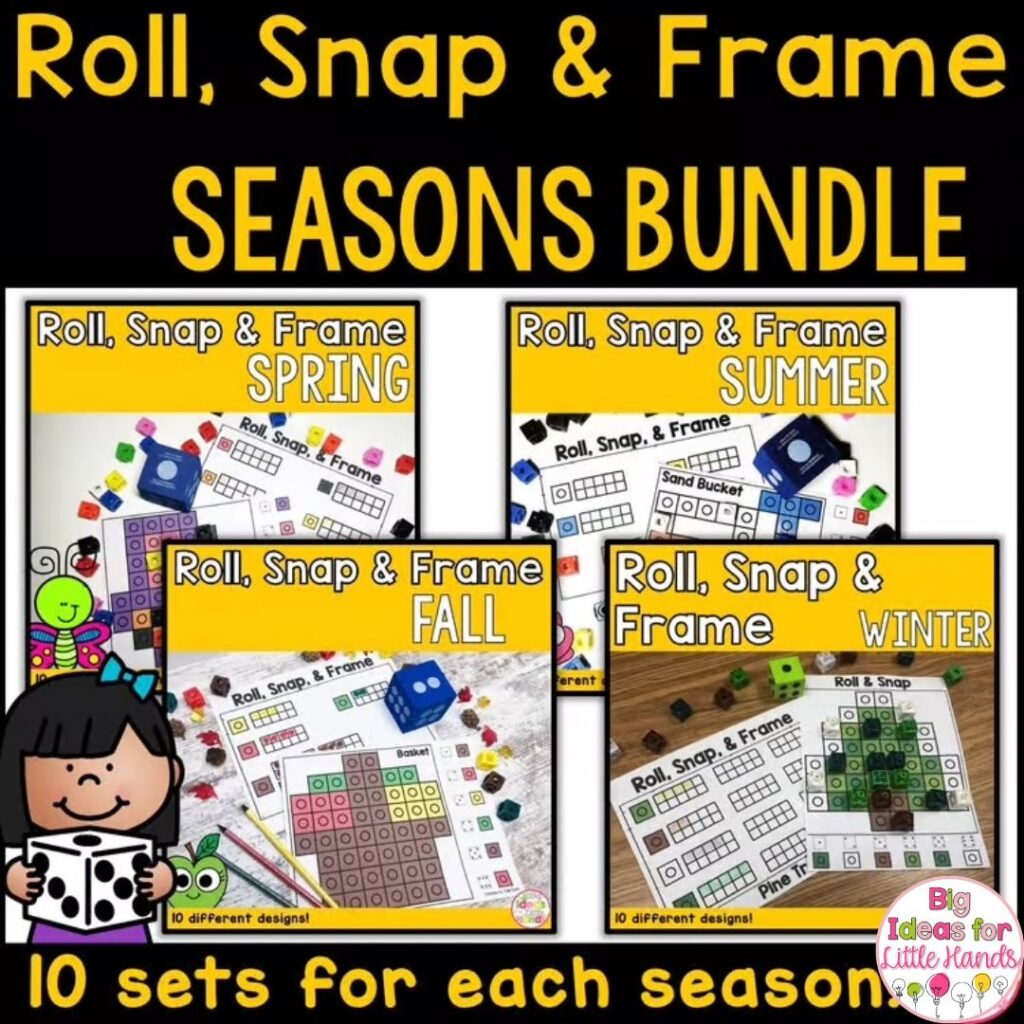
One simple activity is to give students a ten frame mat and a collection of colored snap cubes. Have them roll a die, find the matching colored cube, and place it on their mat. Then, they color one square on the matching ten-frame recording sheet.
Students continue rolling, matching, and coloring until their recording sheet is complete. This simple routine gives students practice with color recognition, one-to-one correspondence, counting, and representing quantities.
You can also encourage students to count their cubes as they go, compare which colors have the most or fewest, or talk about how many more cubes they need to fill their ten frame. The best part? Students are using manipulatives while also recording what they’re doing on paper.
My Seasonal Snap Cube Centers include spring, summer, fall, and winter themes, with 10 different mats in each pack. They’re great for small groups, math centers, morning work, or early finishers.
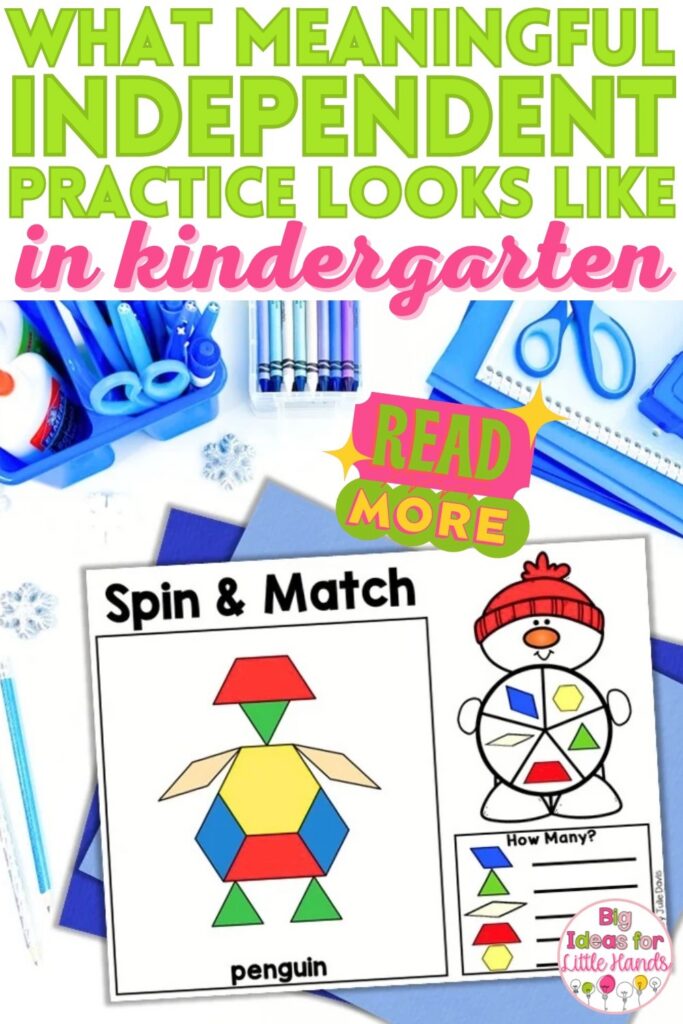
3. Practice Geometry with Pattern Block Mats
Math practice doesn’t always have to involve numbers! Kindergarten students also need plenty of opportunities to explore shapes, spatial awareness, and early geometry concepts. Pattern blocks are a wonderful way to do this because students can manipulate shapes, rotate pieces, and figure out how different shapes fit together.
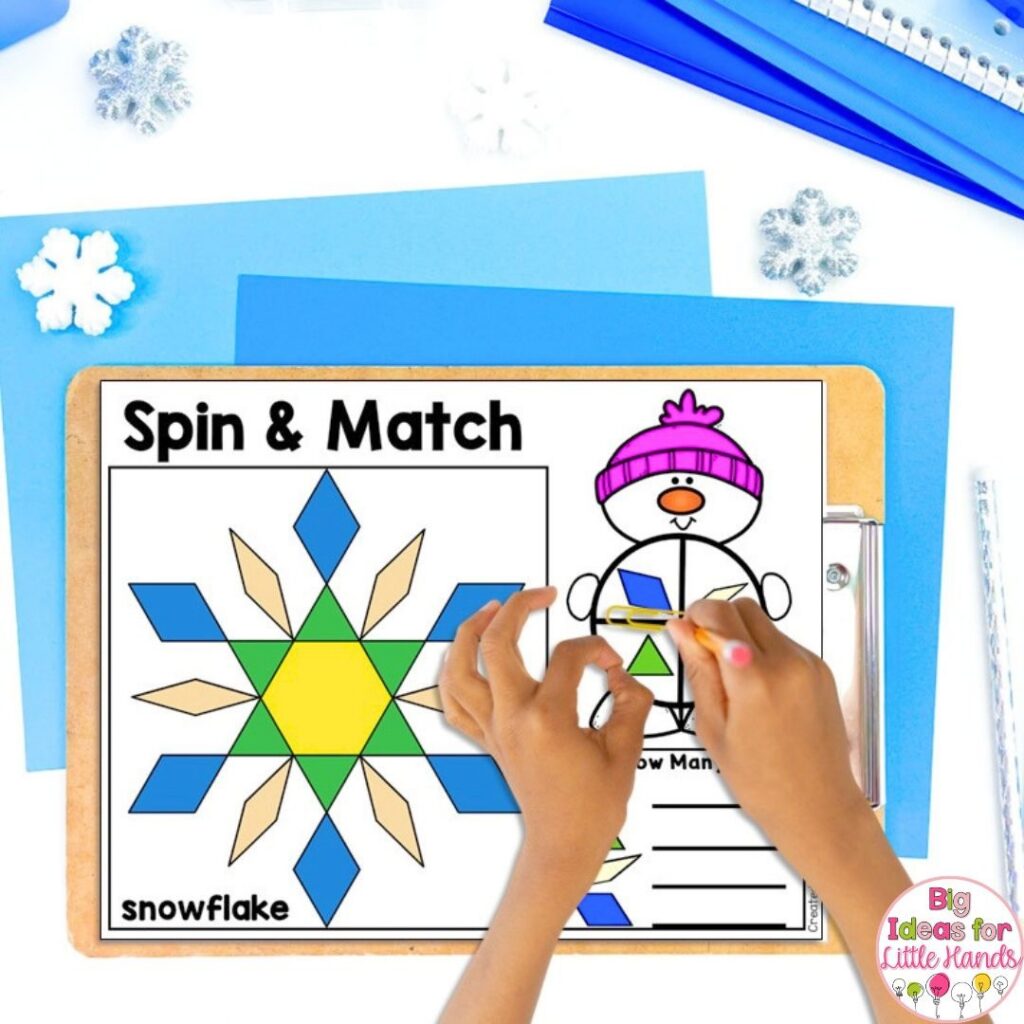
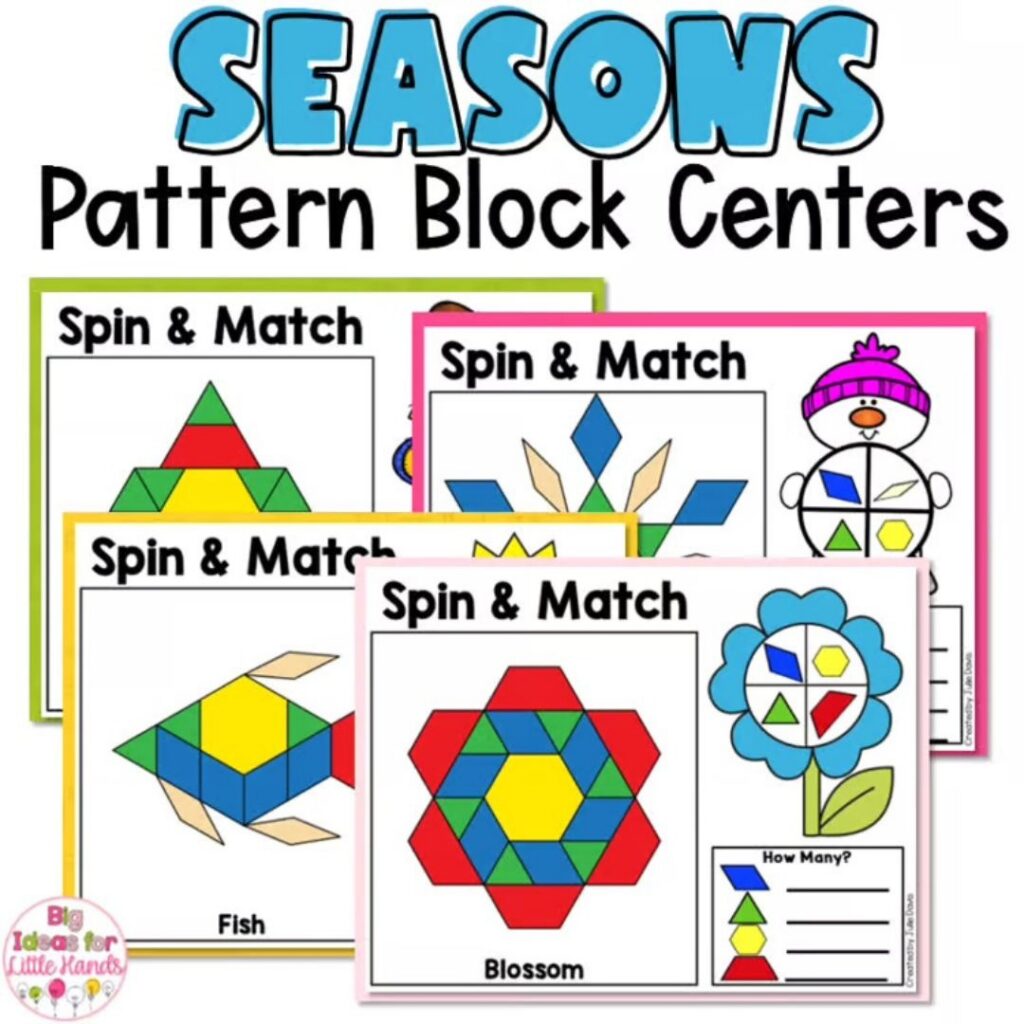
Set out a collection of pattern blocks along with a few picture mats. Students choose a design and use the blocks to recreate the picture. As they work, encourage them to think about which shapes they’re using and how they fit together. You might ask questions like:
- “Which shapes did you use to make the roof?”
- “Can you find two triangles that fit together to make a larger shape?”
- “How many hexagons can you find in your picture?”
You can also challenge students to build the same picture using fewer blocks or find another way to create a particular shape. This is a great example of meaningful independent practice because students are actively thinking, experimenting, and solving problems instead of simply filling in answers.
My Seasonal Pattern Block Mats include spring, summer, fall, and winter designs that are perfect to elevate your independent practice routine. Each pack includes 10 templates in two versions, so you can choose the level of support that works best for your students. They’re easy to add to math centers and give students a fun way to practice geometry throughout the year.
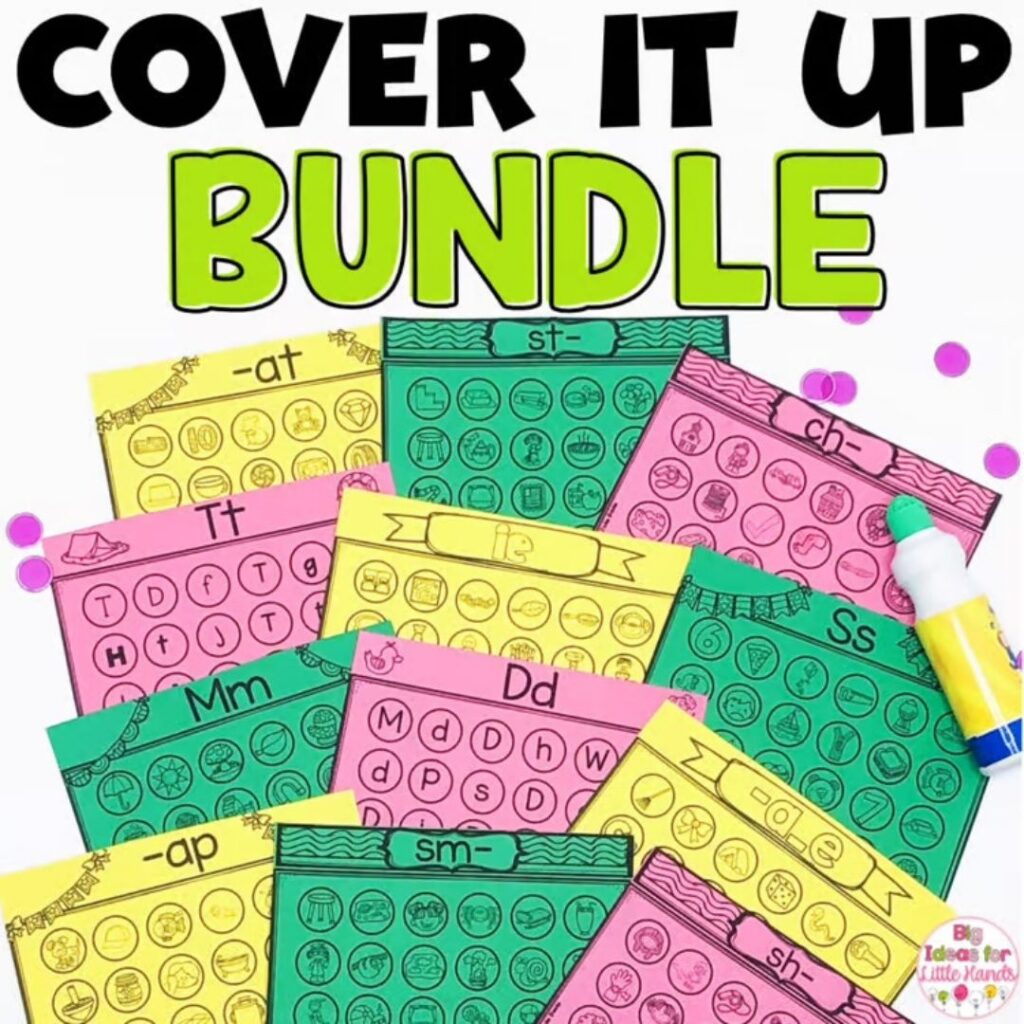
4. Reinforce Phonics Skills with Cover It Up Worksheets
Of course, there are times when students really do need to sit down and practice a skill on paper! Once you’ve introduced a phonics skill, modeled how to use it, and given students opportunities to practice together, a simple recording activity can help them show what they know independently. Cover It Up worksheets are a great option!
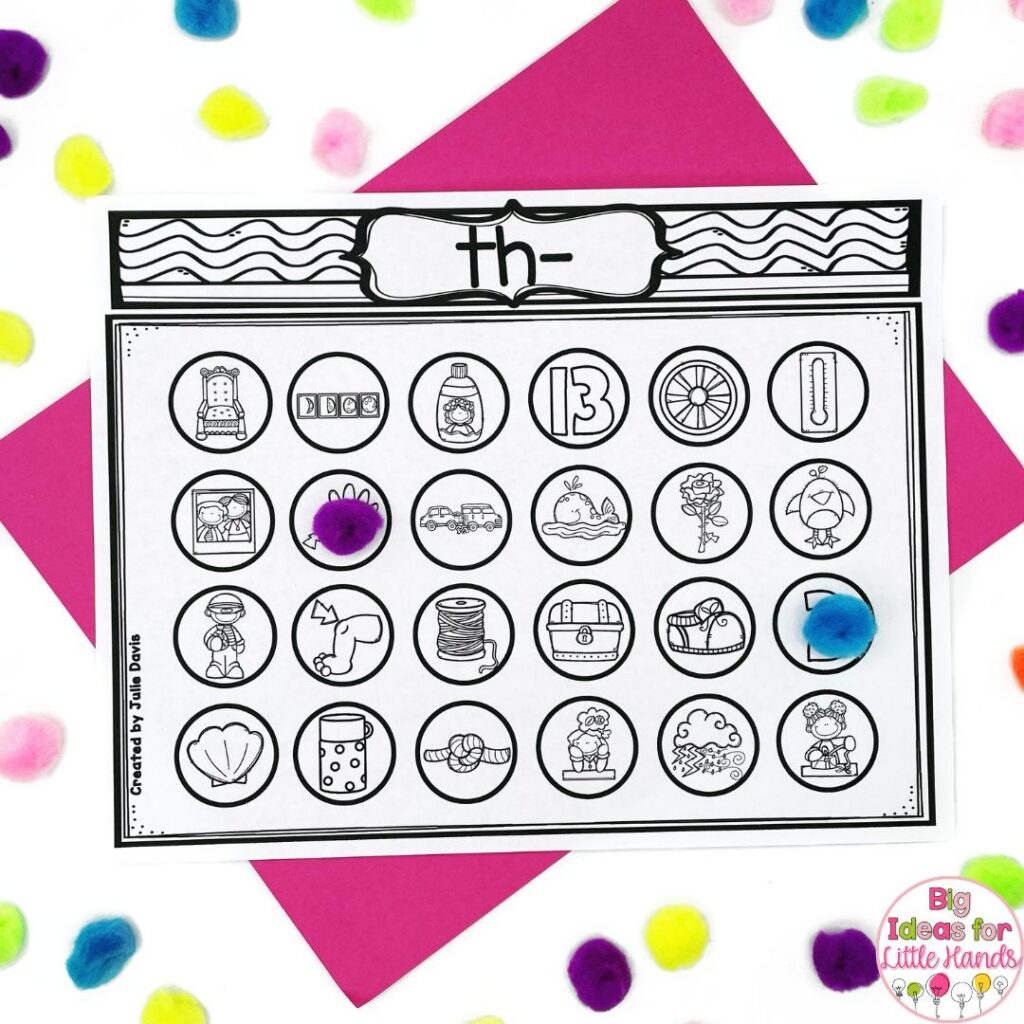
Give students a page that focuses on a specific skill, such as beginning sounds, short vowel word families, blends, or digraphs. You can make the activity reusable by using counters, or let students color the circles or use bingo daubers when you’re ready for a paper-based version.
For example, if you’re working on beginning sounds, students look at each picture and identify the letter that matches its initial sound. They place a counter over the correct answer and continue working through the page.
I especially like this activity for small group warm-ups. While you’re getting your group organized or helping another student, everyone has something meaningful to work on right away.
My Cover It Up Phonics Worksheets include a variety of early literacy skills, from letter recognition and beginning sounds to short vowels, blends, digraphs, and long vowel patterns. With multiple sheets for each skill, you can give students different pages while still practicing the same concept. They’re also handy for independent practice during literacy centers or for early finishers!
Remember: Not All Worksheets Are Busy Work
The biggest thing to remember is that independent practice should have a purpose. A worksheet isn’t automatically busy work, just like a hands-on activity isn’t automatically meaningful learning. What matters is whether students are using the skills you’ve taught them and having an opportunity to apply what they know.
When planning independent practice, I like to think about a few simple questions:
Have students had a chance to explore the skill first?
Give them opportunities to see the skill modeled, use manipulatives, participate in games, and practice with you before expecting them to work independently.
Can students understand what they’re supposed to do?
Keep directions simple and routines predictable. If students need you to explain every step, they may not be ready to complete the activity independently.
Are they practicing something they’ve actually learned?
Independent work should reinforce a skill, not introduce an entirely new concept without support. This will only lead to more confusion and questions, which is the opposite of what you want!
Does the activity keep students actively involved?
Look for opportunities to build, sort, match, move, solve, and create. Even a simple worksheet can become more engaging when students have a purpose for completing it.
And remember, independent practice doesn’t mean students have to work silently or without any help. Kindergarteners are still learning how to be independent! It’s perfectly okay to model an activity, practice the routine together, and provide reminders along the way.
A Little Bit of Both Makes a Big Difference!
You don’t have to choose between hands-on learning and worksheets in your kindergarten classroom. Both have a place!
Students need opportunities to explore concepts with real materials, move around the classroom, build their fine motor skills, and practice new concepts. They also need opportunities to apply those skills independently and build confidence in what they can do. The key is finding activities that support what you’re already teaching and give students a reason to stay engaged.
Whether you’re using snap cubes to build number sense, pattern blocks to explore geometry, Write the Room activities to practice phonics or math, or a simple Cover It Up page to reinforce beginning sounds, meaningful independent practice can take many different forms.
If you’re looking for easy-to-use activities to add to your literacy and math centers, explore these resources by clicking the images below!
These activities are designed to make it easier to give your students hands-on learning opportunities and meaningful practice without adding hours of prep to your day. Start by choosing one to add to your routine and build from there!
Your students get to keep learning, and you get a little more breathing room in your busy kindergarten classroom. That’s a win-win in my book!
Looking for More Support?
Read these posts next for more ways to plan your independent practice activities!
- Independent Work for Kindergarten: 3 Strategies for Success
- Math Centers in Kindergarten: Your Top 5 Questions Answered
- Making the Most of Small Group Time in the Primary Classroom
Save These Independent Practice Activities
Be sure to pin this post on Pinterest so that you can come back to these ideas and activities for independent practice when you’re planning!