You know that moment when one of your little learners confidently tells you that “cat” rhymes with “dog”? Yep, me too. . . Rhyming looks simple on the surface, but for young learners, it can be surprisingly tricky to hear and hold onto those ending sounds. The good news is that with the right kind of practice, it really does start to click. And even better, rhyming workbooks make that practice structured, consistent, and easy to fit into your already busy day.
Why Rhyming Feels Tricky
For many young learners, rhyming is confusing at first because they are still learning how to hear and isolate sounds in spoken words. Some students focus only on the beginning sound. Others connect words that “go together” in meaning instead of sound.
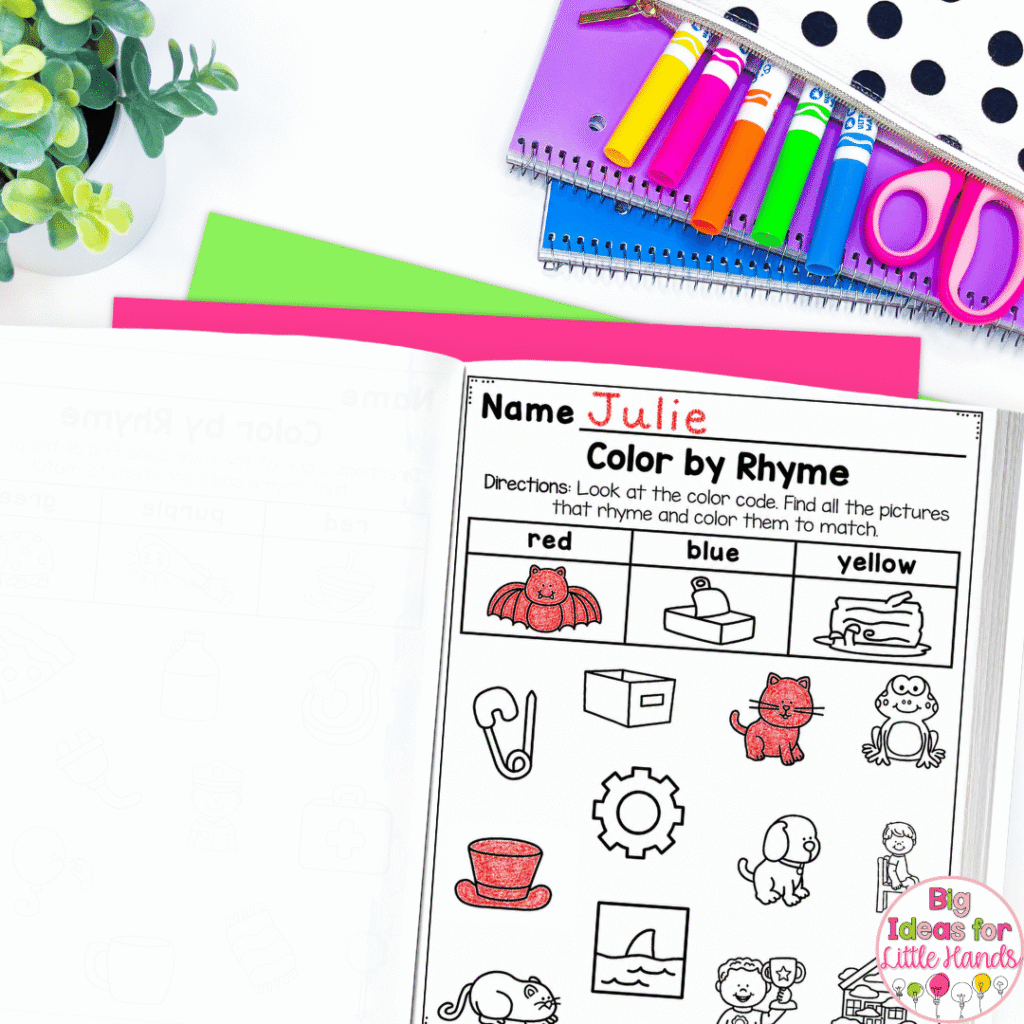
That is completely normal! But it is also why rhyming practice is so important.
When students learn to hear that “cat,” “bat,” and “hat” share the same ending sound, they are building phonological awareness, which is a key early literacy skill. This is what later supports blending sounds, decoding words, and reading more confidently.
Without strong phonological awareness, early reading can feel frustrating. With it, students are much more ready to take on new words and patterns.
That is why short, consistent rhyming practice really matters in preschool, kindergarten, and first grade!
How Rhyming Workbooks Help Students
The biggest shift I notice with students is this: they don’t need more explanation, they need more structured exposure. But, it also needs to be fun!
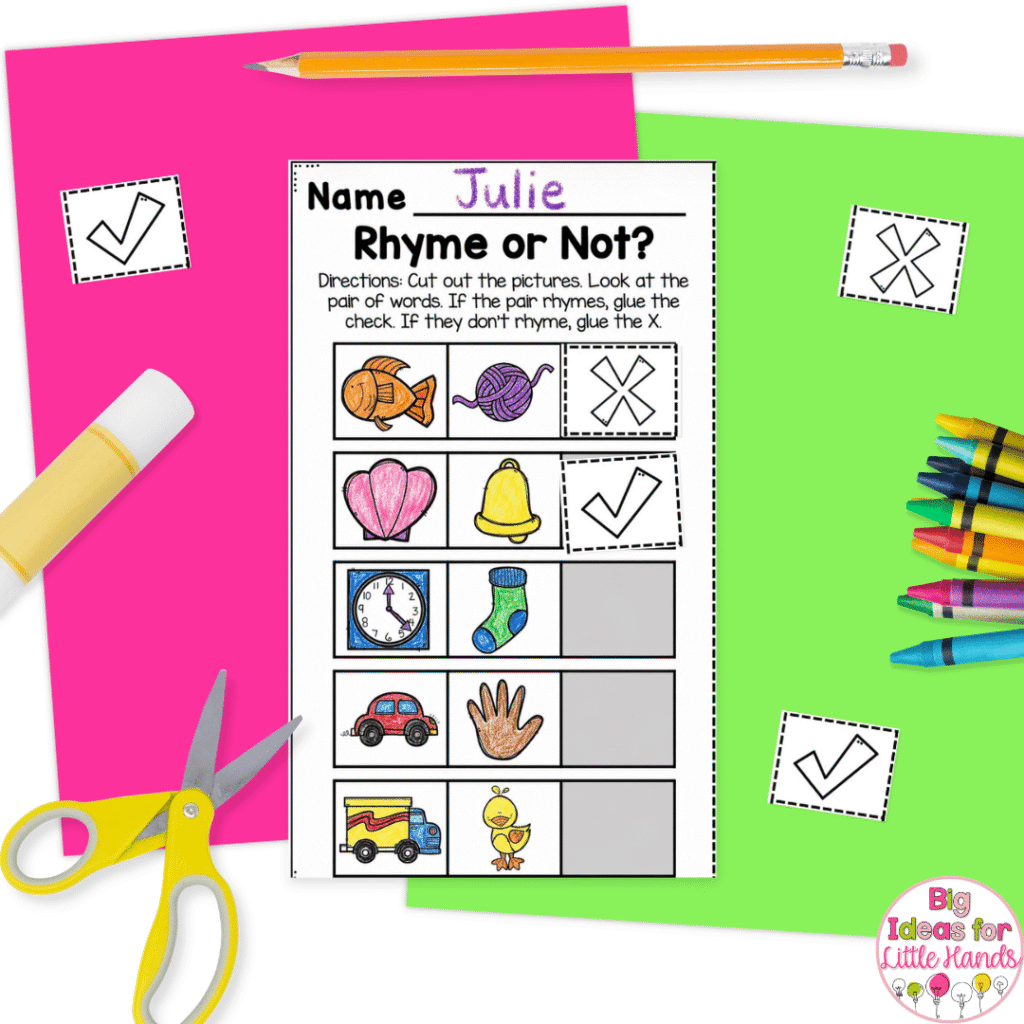
Rhyming workbooks accomplish both because they:
- Give repeated practice with the same skill in different formats
- Keep the focus on listening, not spelling or decoding
- Provide visual support so students are not guessing
- Build confidence through small, successful steps
- Provide 3 different fun ways to practice rhyming
Instead of reteaching rhyming over and over in isolation, you can build it into your literacy routine in a predictable way that students understand, and actually want to do! Even 10 minutes a day makes a difference when the practice is intentional.
Who These Rhyming Workbooks Are Perfect For
These workbooks are flexible, which makes them easy to use in traditional classrooms, as an extra practice tool, and even in homeschool settings. They work well for:
- Classroom literacy centers
- Morning work routines
- Small group intervention
- Homeschool lessons
- Homework or extra practice
Now let’s look at how each one solves a slightly different classroom need!
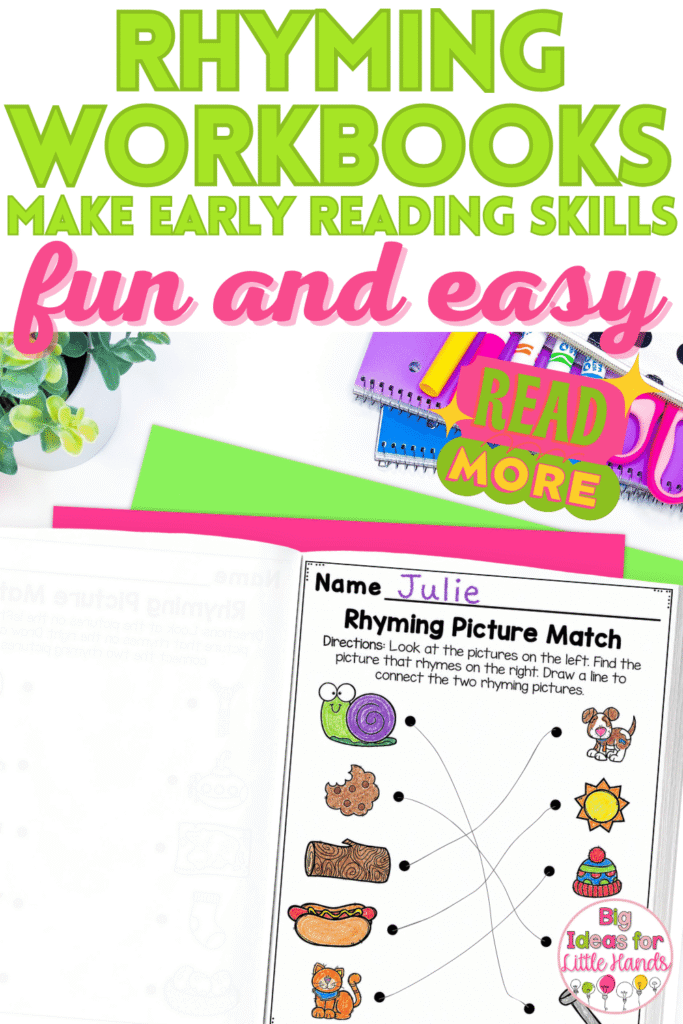
1. The Color & Match Rhyming Workbook
Some students struggle with rhyming because they are overwhelmed by too much language at once. They need something simple, visual, and predictable. That is exactly what the Color and Match Rhyming Workbook is designed for.
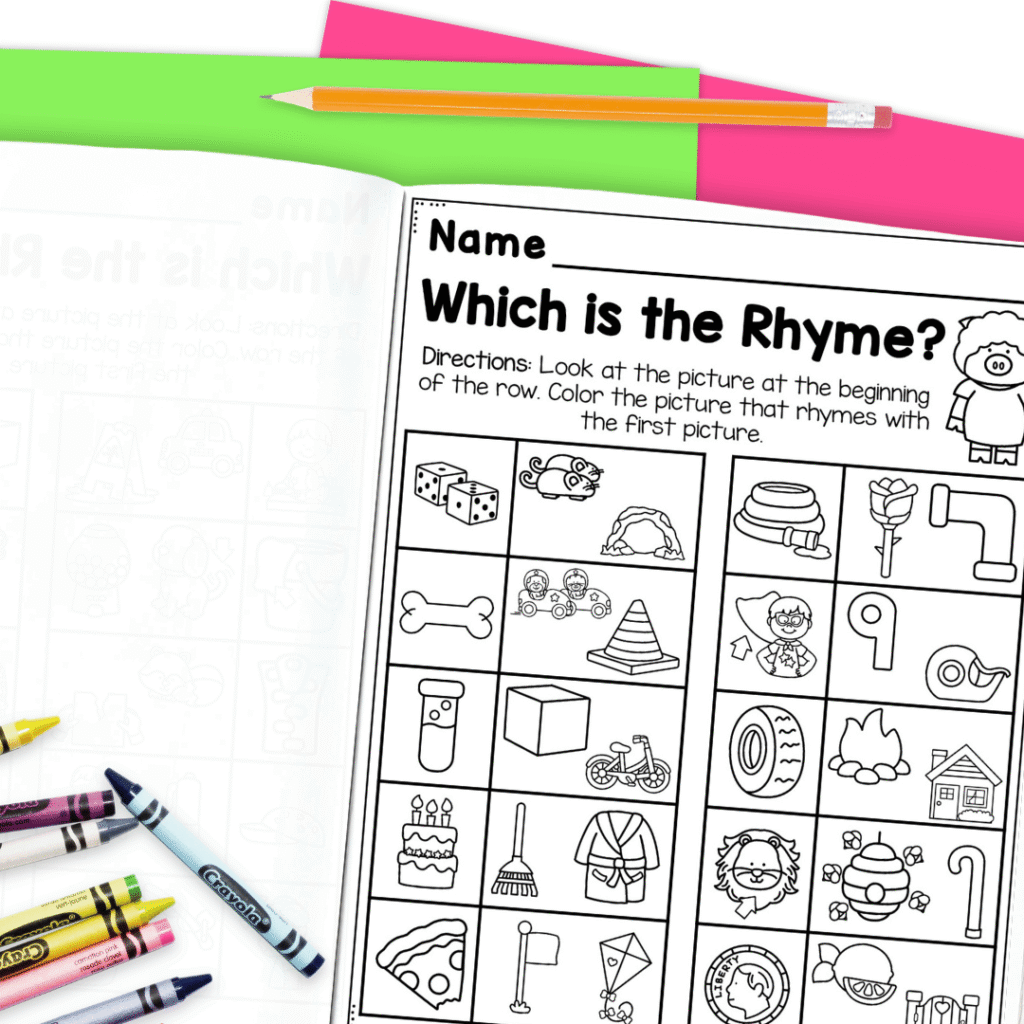
This rhyming workbook helps students focus only on hearing whether two words sound alike. No reading required. Just pictures, listening, and matching.
This is especially helpful if you notice students confusing beginning sounds with ending sounds, guessing instead of listening carefully, and/or needing repeated modeling before they can work independently.
You can support these types of learners as they use the book with prompting, such as, “Let’s say both words out loud. Do we hear the same ending sound? Let’s check together.” Then students complete similar problems on their own or with a partner.
This is a great fit for morning work or centers because it gives students structure without overwhelm!
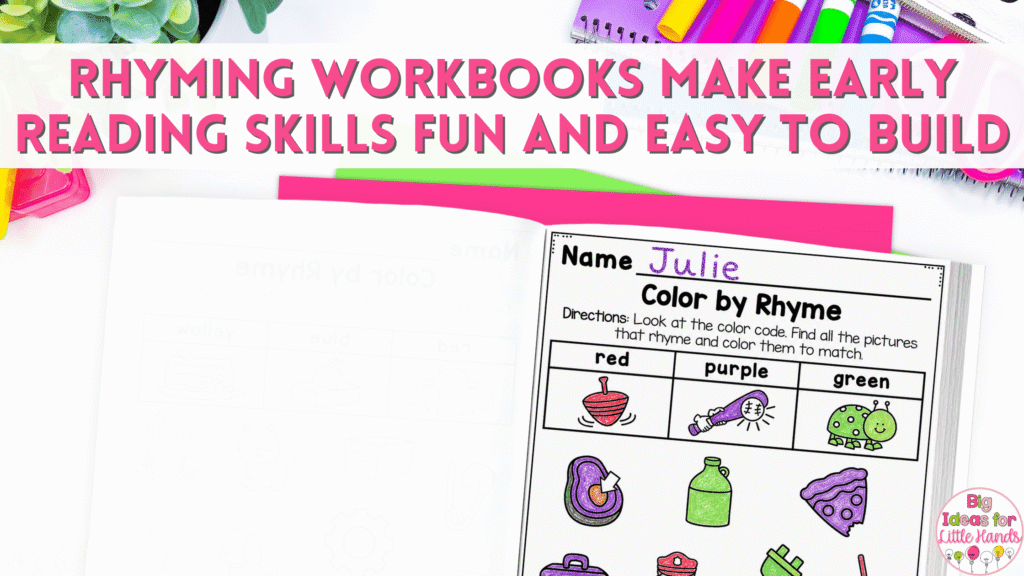
2. The Color & Draw Rhyming Workbook
Some students understand rhyming better when they can interact with it creatively. They need more than matching. They need something that keeps them thinking and engaged.
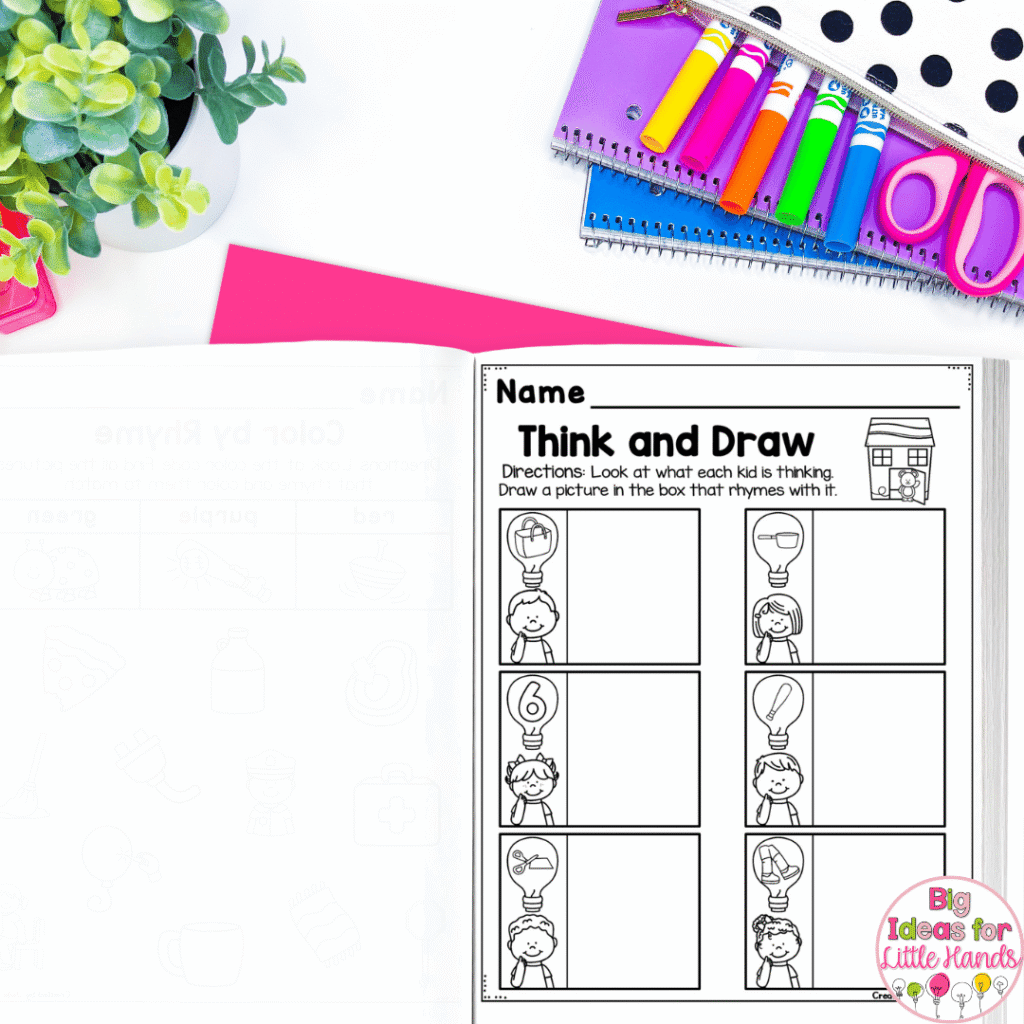
The Color and Draw Rhyming Workbook supports that by blending sound awareness with drawing and coloring tasks.
This workbook includes 7 unique activity types, including “think and draw,” “color by rhyme,” and “which doesn’t belong”. This is especially helpful for students who lose focus during traditional worksheets or need extra time processing spoken language. And we can’t forget those visual, creative learners, too! They will especially enjoy the drawing aspect of this workbook.
I love using these books for fast finishers, homework assignments, or centers. Students stay focused while slowing down to complete the tasks, and the drawing aspect of the activity makes it feel fun!
3. The Cut & Paste Rhyming Workbook
Some students need to move to learn. Sitting and circling answers is just not enough for them. That’s where the Cut & Paste Rhyming Workbook gives those learners a hands-on way to practice the same skill. It’s a bit more interactive, strengthens fine motor skills, and is a great way to switch things up!
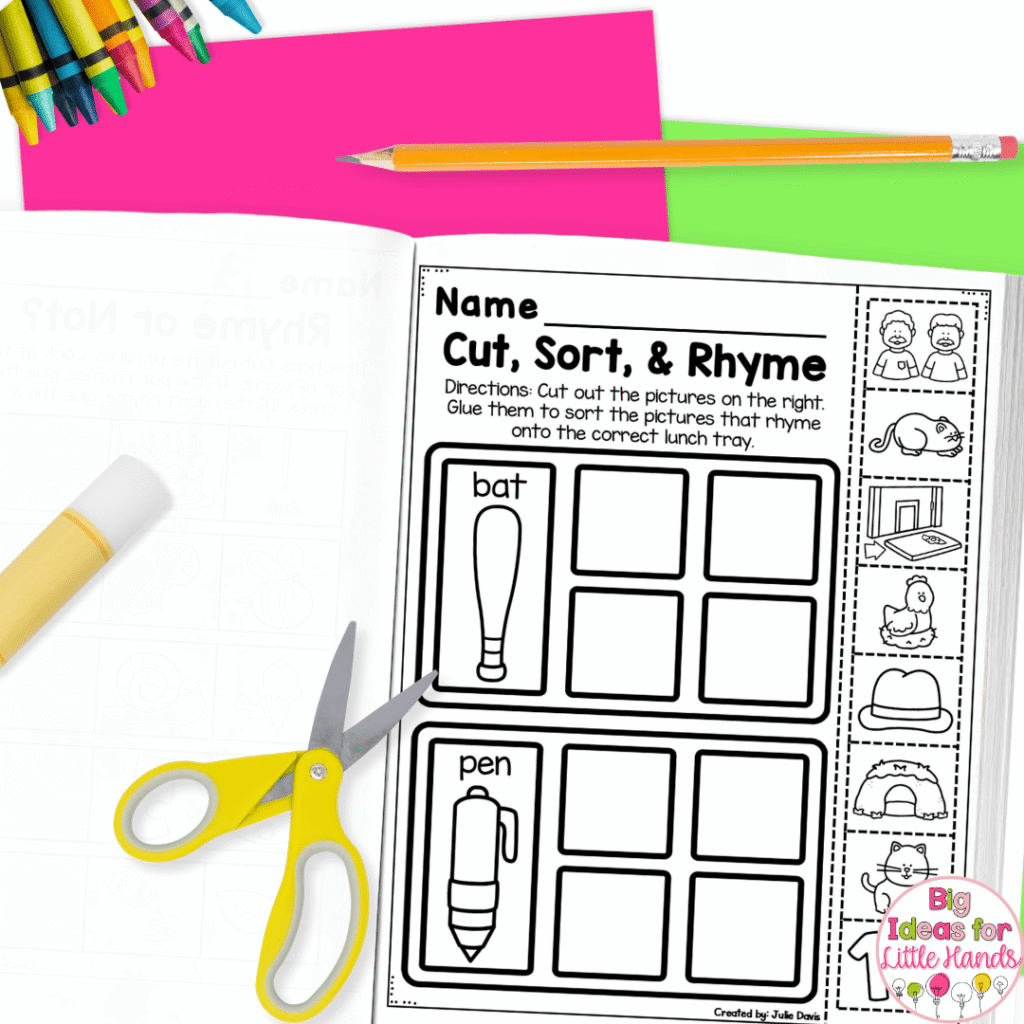
Students cut out pictures, sort rhyming and non-rhyming words, and glue matches together. The task keeps them engaged while still focusing on sound patterns.
This is great for your students who struggle to stay focused during worksheets! Plus, it will allow you to target fine motor skills during your normal literacy block, which is always a bit tricky to fit into the day, right?!
In a small group, you might model it like this: “Let’s say these two words. Do they rhyme? If yes, we’ll put them together.” Then, students continue independently with similar sets. This format is perfect for intervention groups, tutoring, homeschooling, or parent-led activities because it allows you to easily adjust how much support each student needs.
Bringing Rhyming Workbooks Into Your Daily Routine
Rhyming does not need to be a separate, complicated lesson. It works best when it shows up in small, consistent moments throughout your week.
That might look like:
- A quick rhyming workbook page during morning work
- A short, small group activity focused on one rhyming skill
- A center rotation that students can complete independently
The key is repetition, not intensity. When students see and hear rhyming patterns often, they start to recognize them naturally in books, songs, and conversations.
Ready to Make Rhyming Practice Easier?
If you are working on early literacy skills right now, here is the best next step: choose the workbook that matches your students’ biggest need and try it in your next literacy block.
Start simple. One page. One skill. One short moment of practice.
You can find all three rhyming workbooks in my Amazon shop. Each one is designed for a different learning style, so you can easily meet your students where they are without adding extra prep to your day.
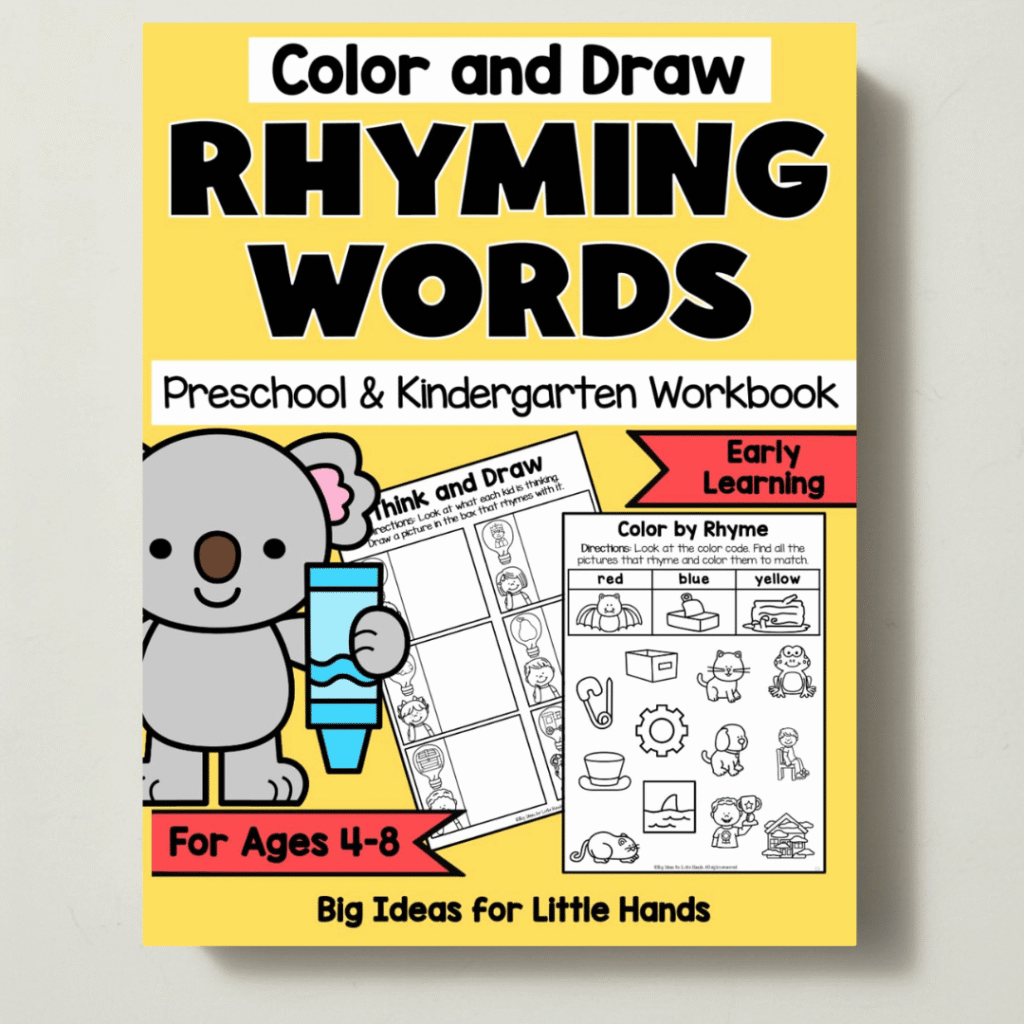
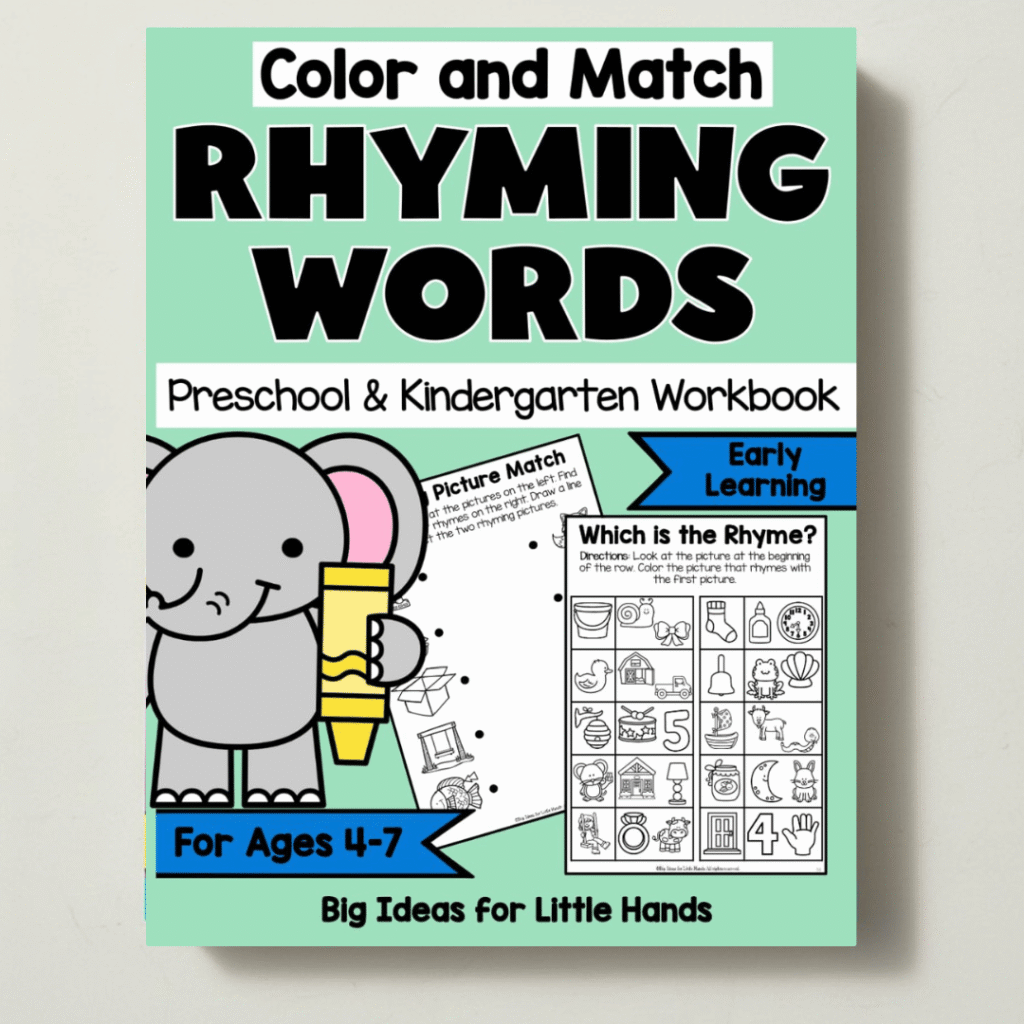
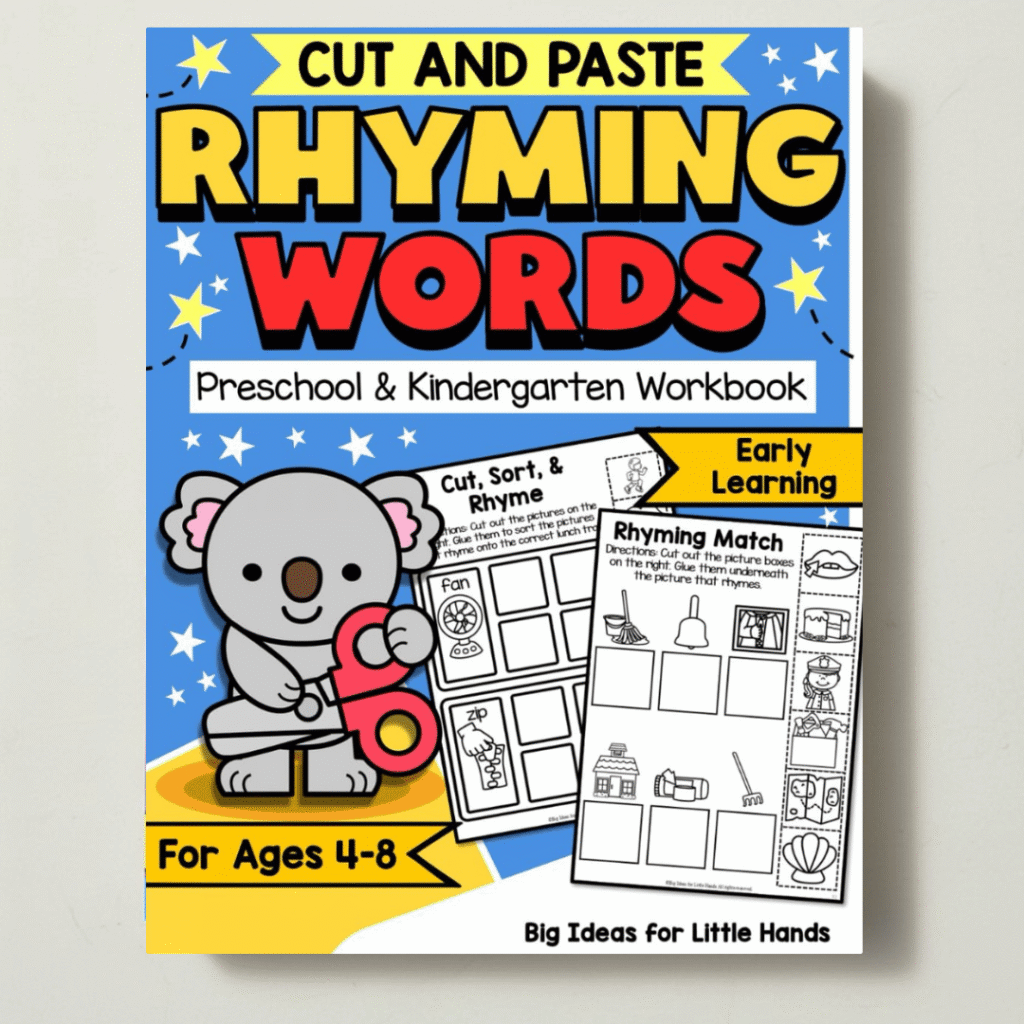
If your students need simplicity, start with Color & Match.
If they need creativity, go with Color & Draw.
If they need movement, try Cut & Paste.
Just pick one that fits your current group and start there. Even a small change in practice can make a big difference in how confidently students hear rhymes!
Looking for More Rhyming Activities?
Be sure to check out these posts next for more ideas!
- The Importance of Rhyming in Learning to Read
- At Home Phonemic Awareness Games
- 5 Fun Games to Teach Rhyming Words
Save This Post
Make sure to pin this post on Pinterest so that you can quickly and easily find these rhyming workbooks later!