“I don’t know what to write!” Getting young students excited about writing can sometimes feel harder than teaching the writing itself. One minute, they are full of stories to tell, and the next minute, they are staring at a blank page with no idea where to start. If you’re in this boat as a primary teacher, come along to learn how you can change everything with a few simple writing strategies and sentence writing workbooks!
Why Early Writing Feels Tricky
Many early writers need a little extra support turning their thoughts into actual sentences, especially while they are still learning letter sounds, spacing, handwriting, and spelling.
The good news is that writing practice does not have to be complicated or stressful. With simple routines, engaging prompts, and a little guidance, young learners can build confidence and become excited to share their ideas on paper.
Here are a few easy, flexible ways to support early writing skills at home, in tutoring sessions, or in the classroom, along with structured workbook options you can use when you need something ready to go. Try these approaches next time you’re teaching writing skills to see major progress!
Label and Write Sentences for Early Writers
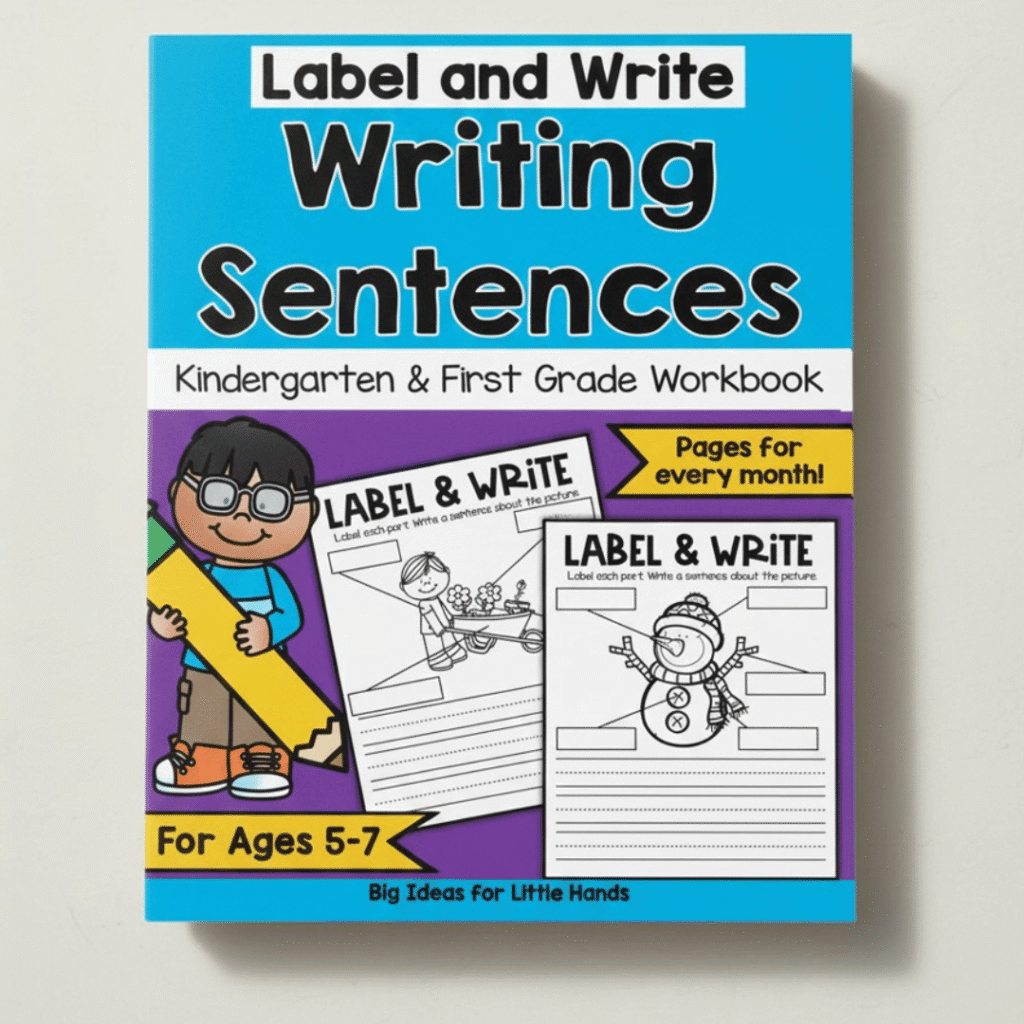
One of the easiest ways to support early writing is by helping students connect pictures to words first. In this type of activity, students begin by looking closely at a picture and labeling what they see. This might mean identifying simple objects like a dog, sun, or tree, and then writing the matching word next to it.
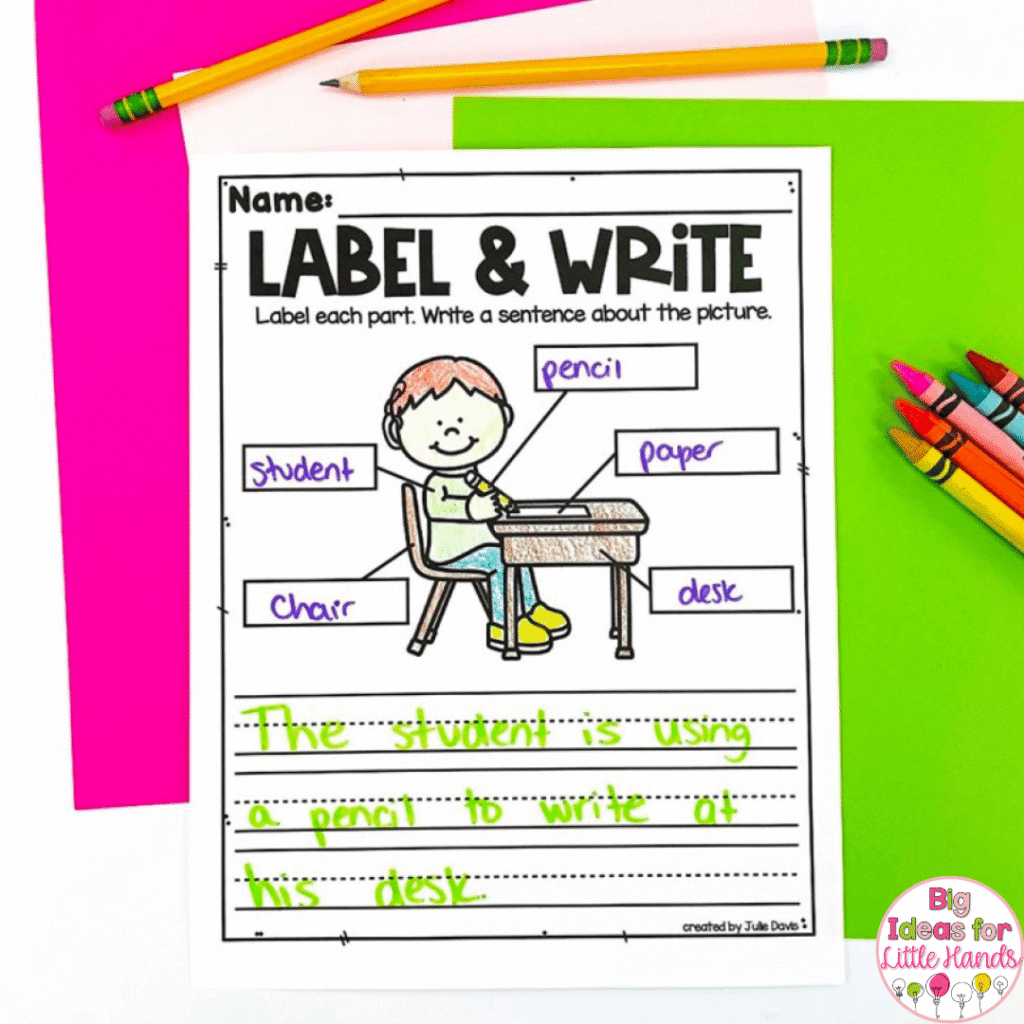
In action, this can look like you modeling a page first by saying, “I see a cat. Let’s stretch the sounds together: /c/ /a/ /t/.” Then you write the word slowly while students follow along. After that, students try the next object or word independently or with support.
Once labeling is complete, students move into writing a simple sentence about the picture. I usually model the first sentence together as a whole group before releasing students independently. Once you’ve modeled, you might prompt them with, “What is happening in this picture?” or “Can you tell me something about it in a full sentence?” This gives them a clear starting point instead of a blank page. I love this strategy because it’s flexible enough to be used with varied skill levels, which is a big help in the primary classroom!
Label and Write Sentence Workbook
This Label and Write Sentence Workbook is a great structured option for this skill because it provides picture prompts, labeling support, and sentence lines all in one place. It works well for independent practice, tutoring, or small group writing time.
This sentence writing workbook includes seasonal pictures for each month of the year, so you’ll be able to use it all year long without feeling like you’re repeating the same lesson. You can use the workbook as is, or remove the pages one month at a time to create a smaller, more focused writing journal. This makes it a great asset for classrooms, homeschooling, and even tutoring sessions!
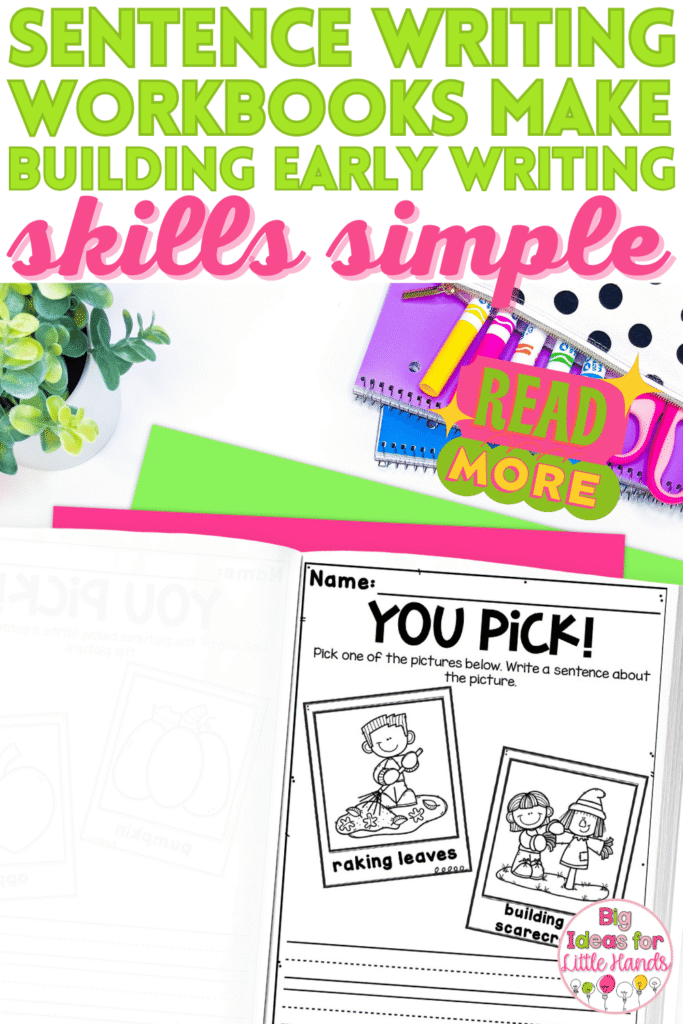
You Pick and Write for Student Choice
Choice is powerful for young writers. When students feel like they get to decide what they are writing about, they are often more willing to take risks and share ideas.
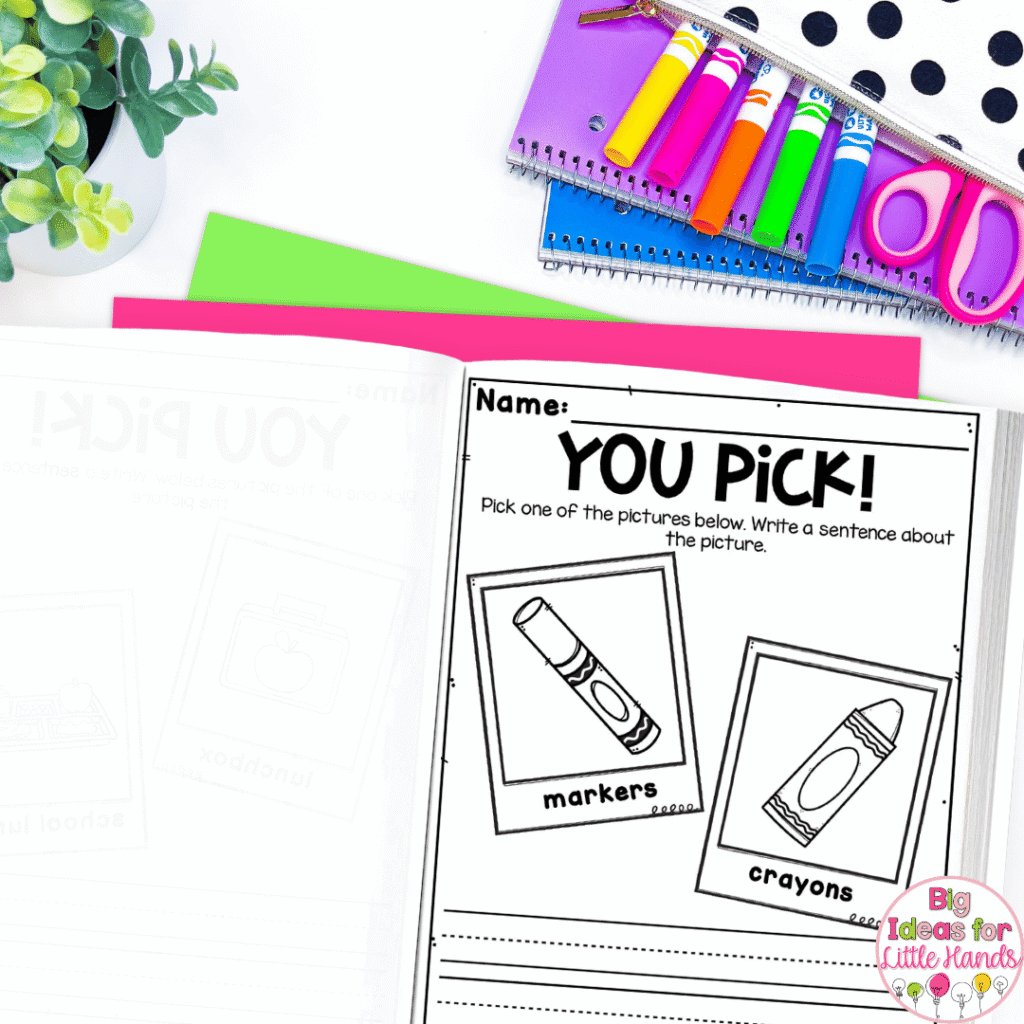
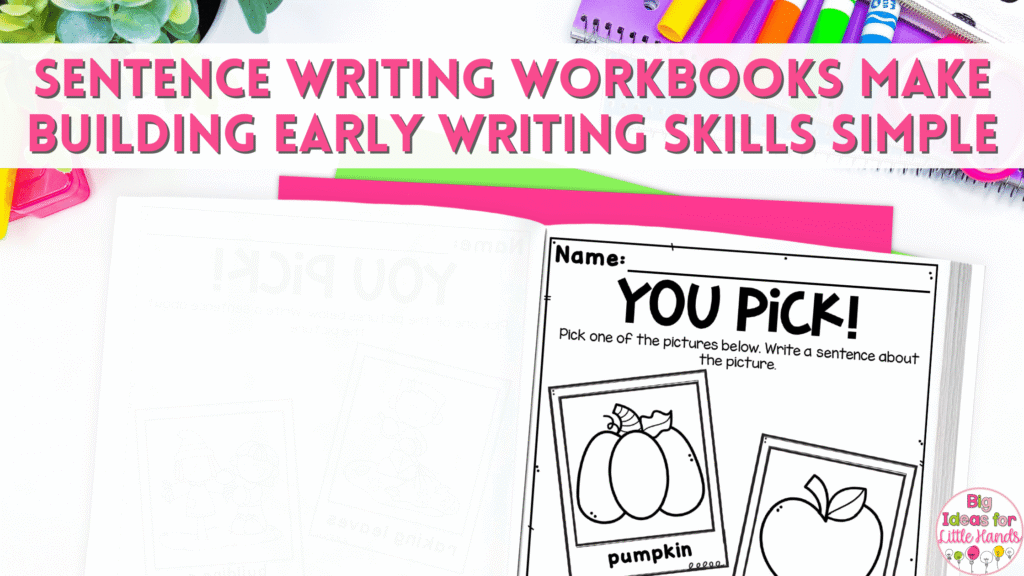
In this activity style, students look at two picture options and choose the one they want to write about. First, they color their choice. Then, they talk it out with a partner or teacher. I like to partner stronger speakers with hesitant writers for extra support. This oral storytelling step is important because it helps students organize their thoughts before writing.
I like to model picking my item or topic, then writing one or two sentences. I might say, “I like to use markers more than crayons, so I am going to write about coloring with markers.” Once students have chosen their topic, you might prompt them by saying, “Tell me your story first,” and then help them narrow it down to one or two simple sentences they can write on their page.
You Pick Sentence Writing Workbook
This is where a structured resource like a You Pick and Write Sentence Workbook is helpful. It gives students guided choices while still allowing creativity. It’s especially great for reluctant writers who need a little extra motivation to get started.
Plus, I’ve made it easier than ever to use this writing strategy, as the pages and pictures are ready to go! Just choose an option and get started with engaging picture prompts to inspire writing. This sentence writing workbook also comes with seasonal options so you can change your writing lessons to align with the themes and activities you’re working on.
Draw and Write for Creative Thinking
Some of the strongest early writing comes from drawing first. When students add details to a picture, they naturally begin building ideas for their writing.
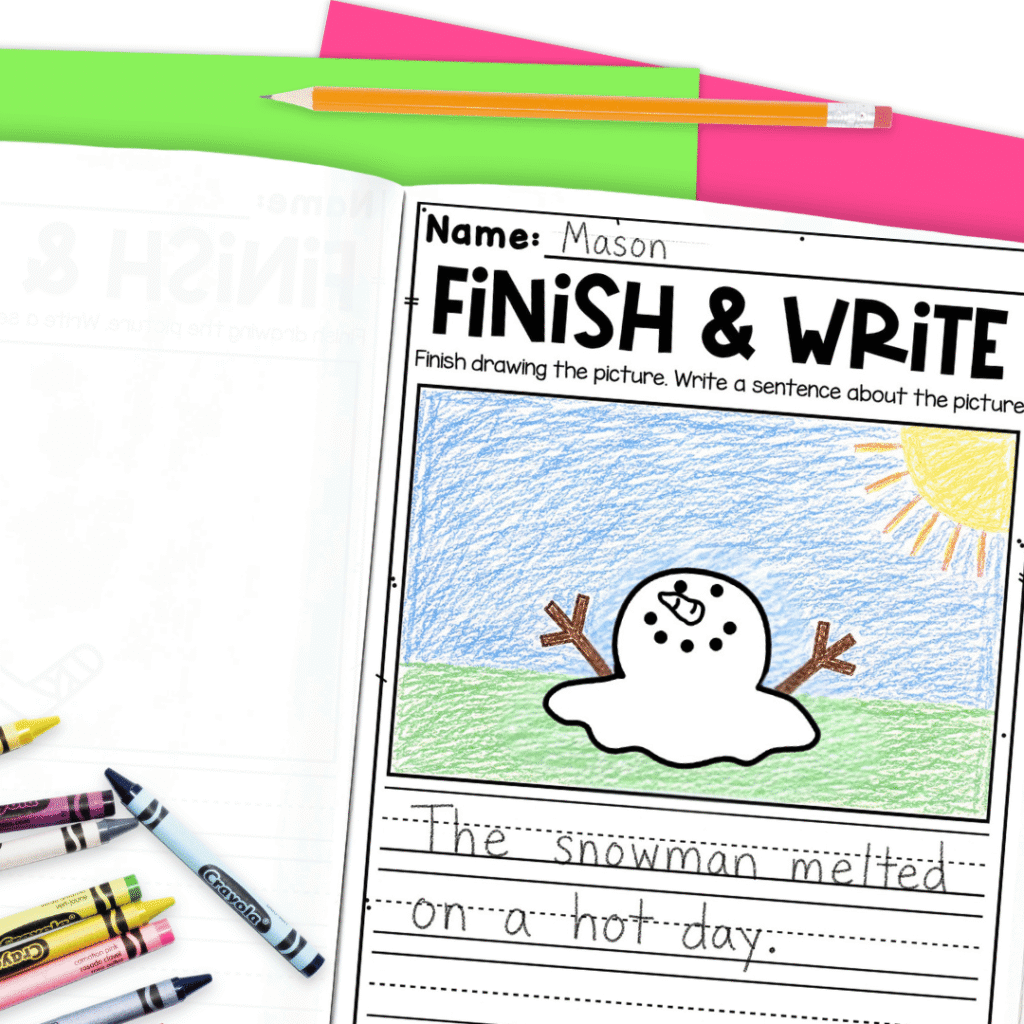
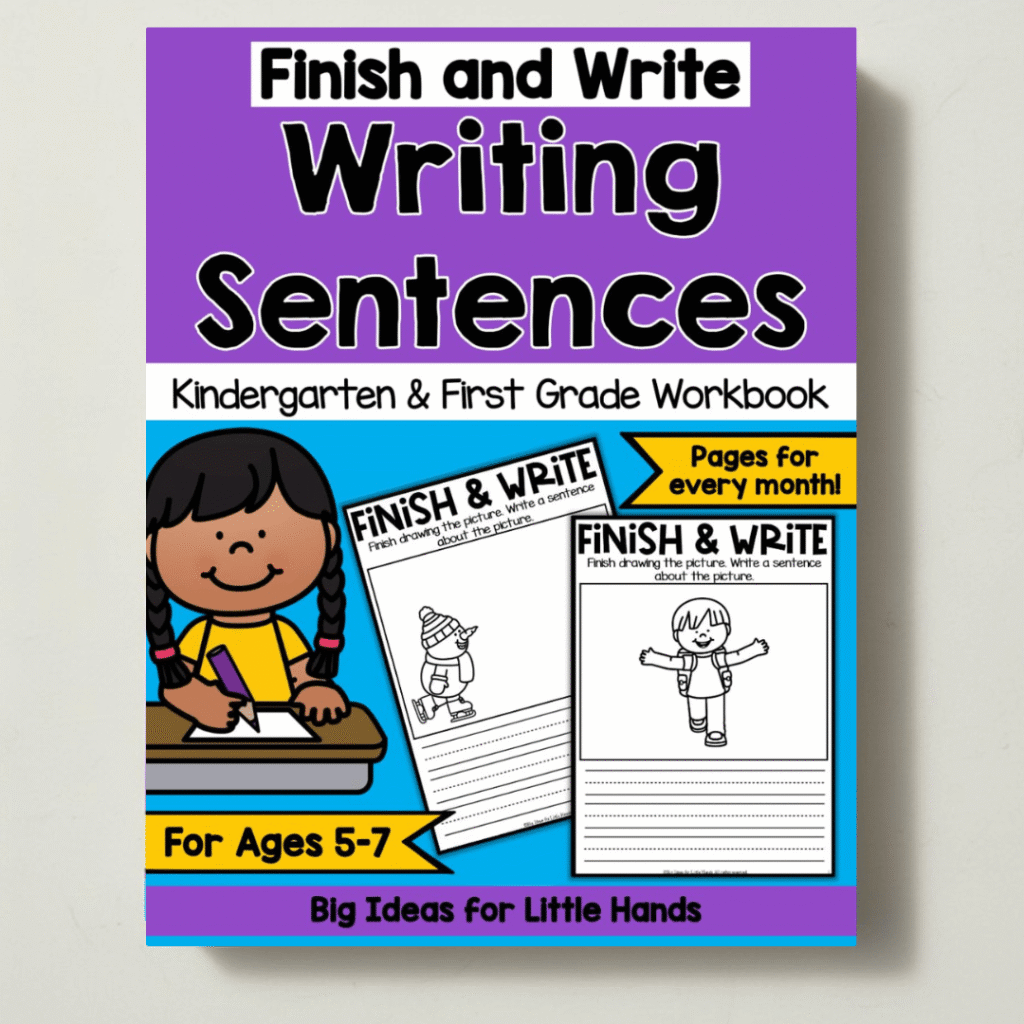
To use this strategy, start by giving students a simple image. Ask them to add details like background, characters, or objects. You might say, “What else could be in this picture?” or “What would make this scene more interesting?”
After drawing, students explain their picture out loud. This is where storytelling happens. I recommend modeling this process with your own drawing first to help them understand what they need to do. Once they’ve shared their ideas, they choose one or two sentences to write about what they created.
Draw and Write Workbooks
I have a sentence writing workbook for this skill, too! This ready-to-go resource makes this process easy to implement because it already includes simple prompts that guide students from illustration to writing. It’s a great fit for independent work or writing centers.
Each page features fun pictures for students to add simple details to. Then, they will draw a setting and maybe a few more characters. After they finish drawing, I suggest allowing the child to tell you a story about their picture. They will pick one or two sentences from their story to write on the lines.
This sentence writing workbook makes it easy and fun to continue leveling up as writing skills improve!
Flexible Sentence Writing Activities Make Building Skills Fun
Early writers need structure, but they also need space to think. When we combine visual support, oral language, and simple sentence frames, students are much more successful. Instead of feeling stuck, they feel supported.
These types of activities work well in classrooms, homeschool settings, and tutoring sessions because they are flexible. You can model them as a whole group, use them in centers, or send them home for extra practice.
The goal is not perfect sentences. The goal is confident writers who are willing to try!
Ready to Make Writing Time Easier?
If writing feels like a struggle right now, don’t overthink it. I’ve created these sentence writing workbooks to make your writing practice easier and more fun! Pick one workbook and use just one page in your next writing block or center time. That small step is often what helps students finally “get going” with their ideas.
When students have a clear starting point, they spend less time staring at the page and more time actually writing. That’s where the confidence starts to build.
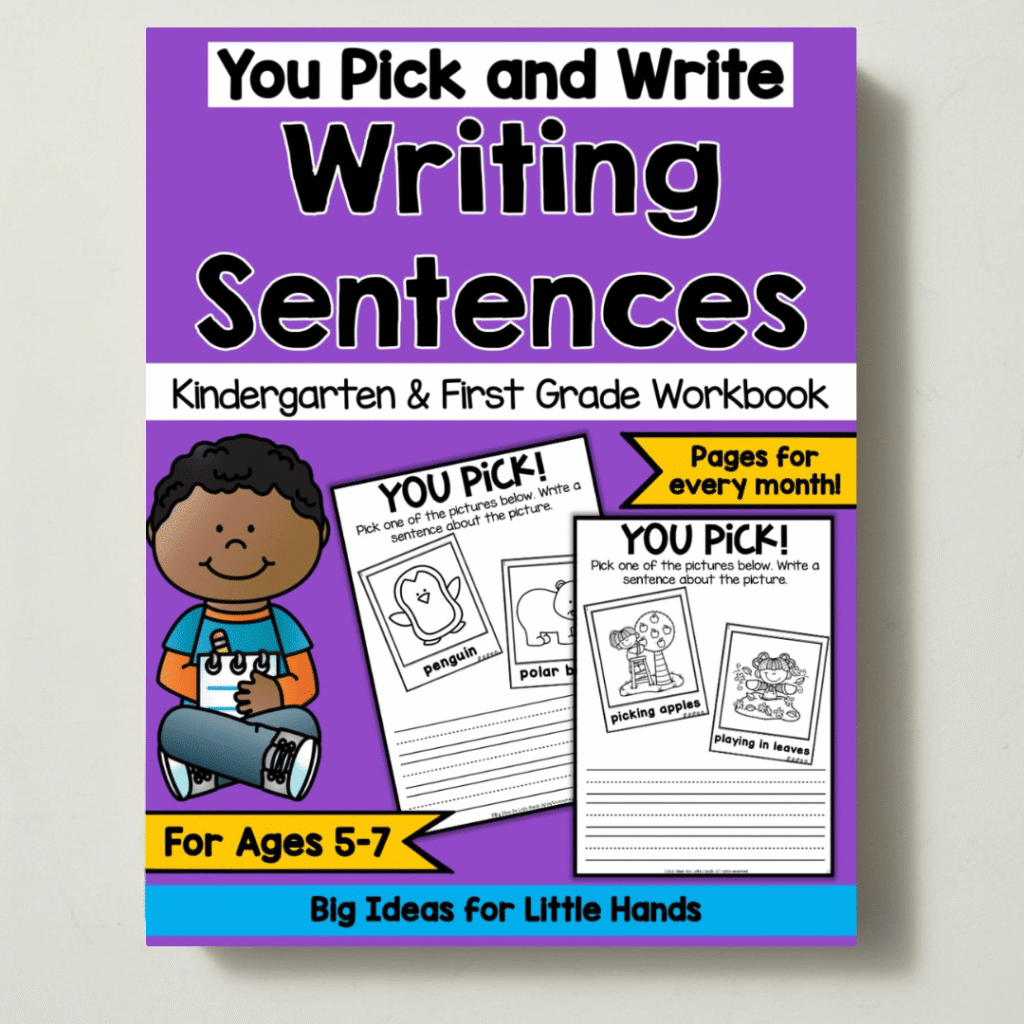
You can find all three sentence writing workbooks in my Amazon shop and choose the one that best fits your students right now.
Looking for More?
Check out these blog posts next for more tips on making writing fun and manageable in the primary classroom!
- 15 Kindergarten Writing Activities for Exploring Colors
- 5 Benefits of Having a Classroom Writing Center
- Setting Up a Back to School Writing Center
Come To These Sentence Writing Workbooks Later
Make sure to pin this post on Pinterest so that you can find it quickly and easily later!