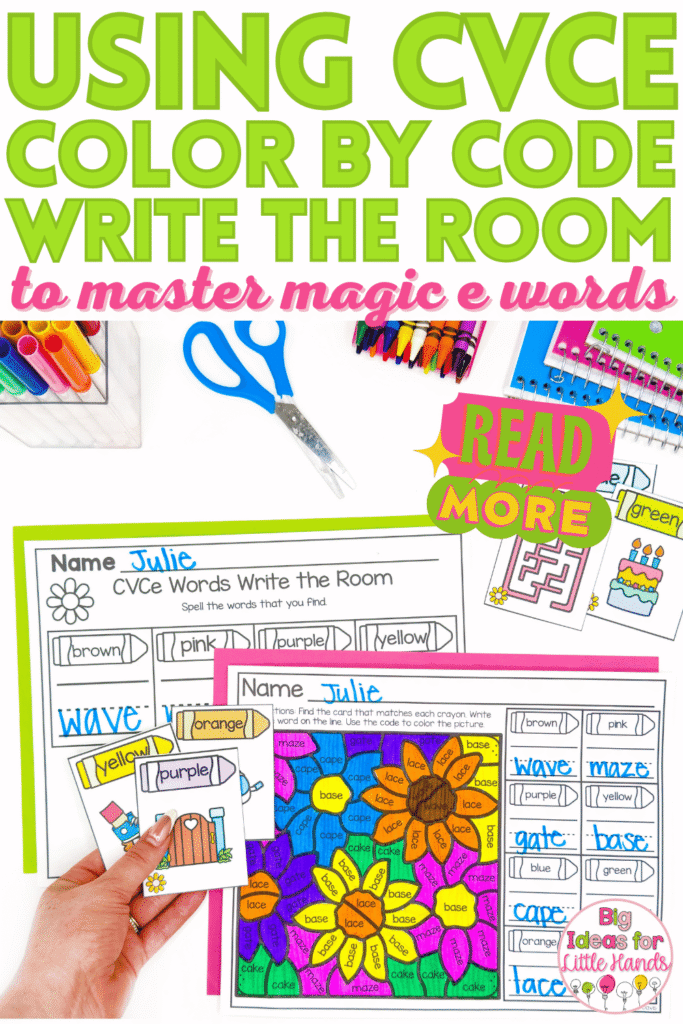
If you’ve ever taught CVCe words, you know the moment. Students can read cake and bike in isolation, but when it’s time to apply that silent “e” rule in real reading and spelling, things start to fall apart a bit. They kind of know it, but it doesn’t always stick. That gap is exactly where students need more than practice on paper. They need repetition that feels active, structured, and engaging enough to keep them thinking the whole time. That’s where CVCe Color by Code Write the Room really earns its place in your literacy block. Let’s break down why this routine works so well and how it helps students finally lock in those long vowel patterns.
Why CVCe Practice Needs More Than Worksheets
CVCe words ask a lot of early readers. Students have to notice the vowel, remember the silent “e,” and then adjust the sound they’re hearing in the middle of the word. That’s a lot happening at once.
On a worksheet, many students fall into guessing or rushing. They might complete the page, but they aren’t always processing the pattern deeply enough for it to transfer into reading and spelling later.
What changes everything is when practice becomes:
- Movement based
- Repetitive in a meaningful way
- Multi-step so students have to slow down and think
That’s exactly why combining Write the Room with color-by-code is so effective for CVCe review.
Why This Routine Works Better Than Traditional Practice
This resource is built around a simple but powerful sequence that keeps students engaged from start to finish. Here’s how it works. . .
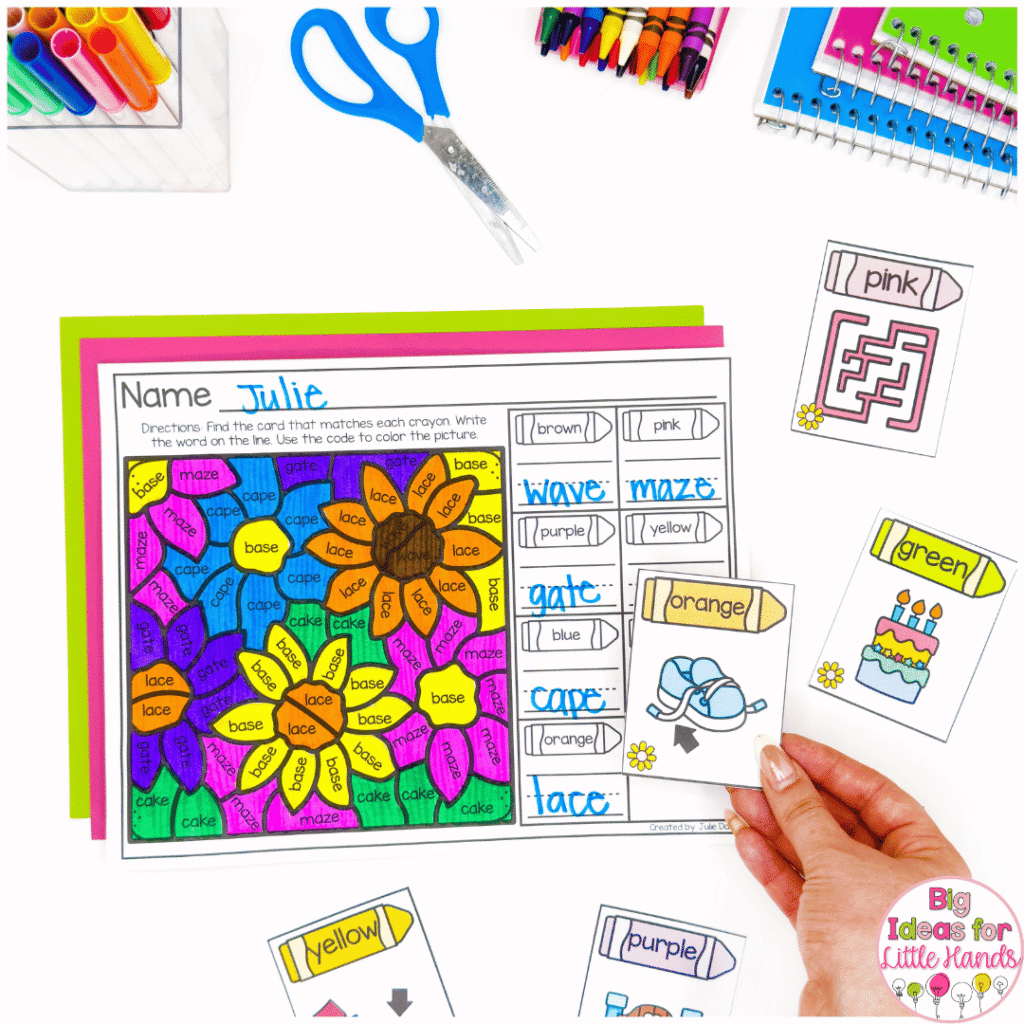
First, students move around the room to find CVCe word cards. That movement alone increases attention and gives them a clear purpose: they’re “on the hunt” for words.
As they work, they slow down and record each word. This is where the learning really happens. Students are not just reading, they are making decisions about vowel patterns and spelling as they write.
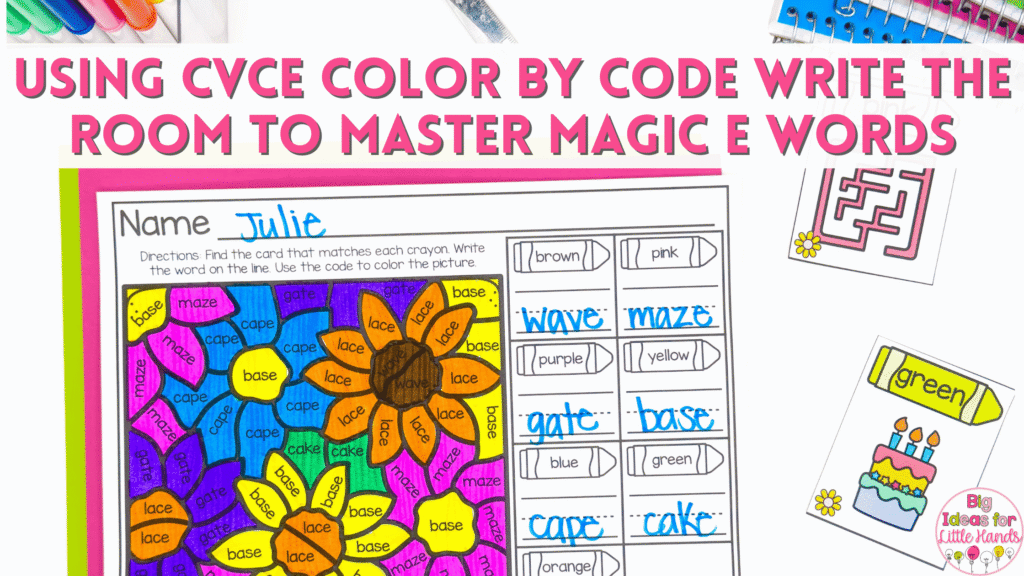
Finally, they shift into a new task to wrap up. They will color a mystery picture based on their answers. This step is more than just fun. It acts as a built-in self-check. If something doesn’t match, students naturally go back and rethink their work.
That cycle of movement, thinking, writing, and checking is what helps the CVCe pattern actually stick. Plus, it keeps attention spans WAY better than any worksheet ever could!
What’s Included in the CVCe Color by Code Write the Room Resource
This resource is designed to make differentiation easy while keeping your routine consistent all year long.
Inside, you’ll find 9 Color by Code Write the Room sets, including:
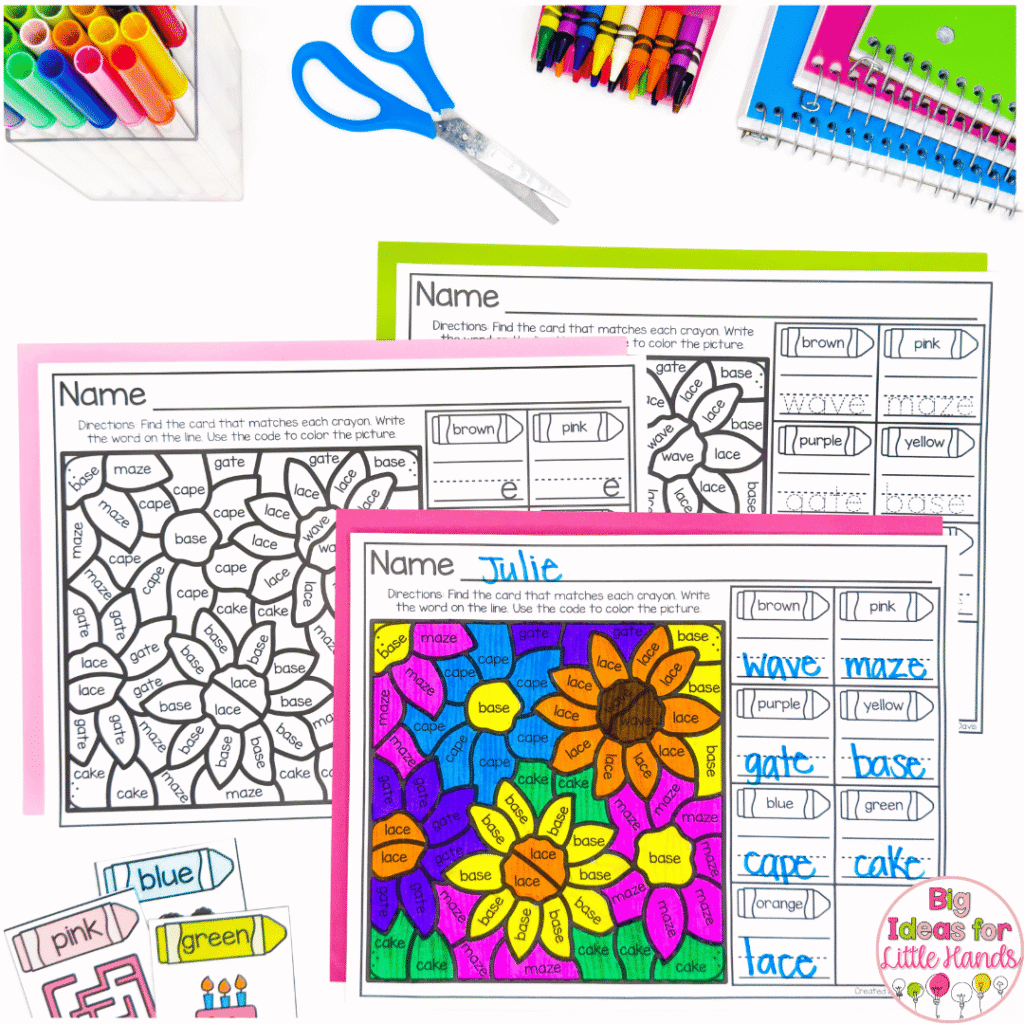
- 2 Long A sets
- 2 Long I sets
- 1 Long O set
- 1 Long U set
- 3 Mixed CVCe sets (all vowels combined for review)
Each set also includes 3 built-in support levels, so you can meet your students right where they are! Students can write the full word independently, use the silent “e” as a scaffold and complete the beginning of the word, or trace the full word for extra support. Simply choose the option that works best for your kids.
The different sets and variety of recording sheets mean you can keep the same activity structure while still supporting emerging readers and extending confident ones without extra planning.
Skills Students Practice Without Even Realizing It
Another great benefit to this resource is that students practice many different skills at the same time.
Students get repeated, meaningful practice with CVCe patterns in a way that feels engaging instead of monotonous. Students are reading and spelling CVCe words, recognizing long vowel patterns, blending and segmenting sounds, matching sounds to spelling patterns, and building fluency with magic e words.
Whether they’re working with long A words like cake, long I words like bike, or mixed review sets, students are getting repeated exposure to the same phonics concept in multiple contexts. That repetition, paired with movement and coloring, is what helps the learning finally stick!
How to Use It in Your Classroom
Ready to see how this works in a real classroom? Luckily, this routine is simple to introduce and even easier to reuse once students know it!
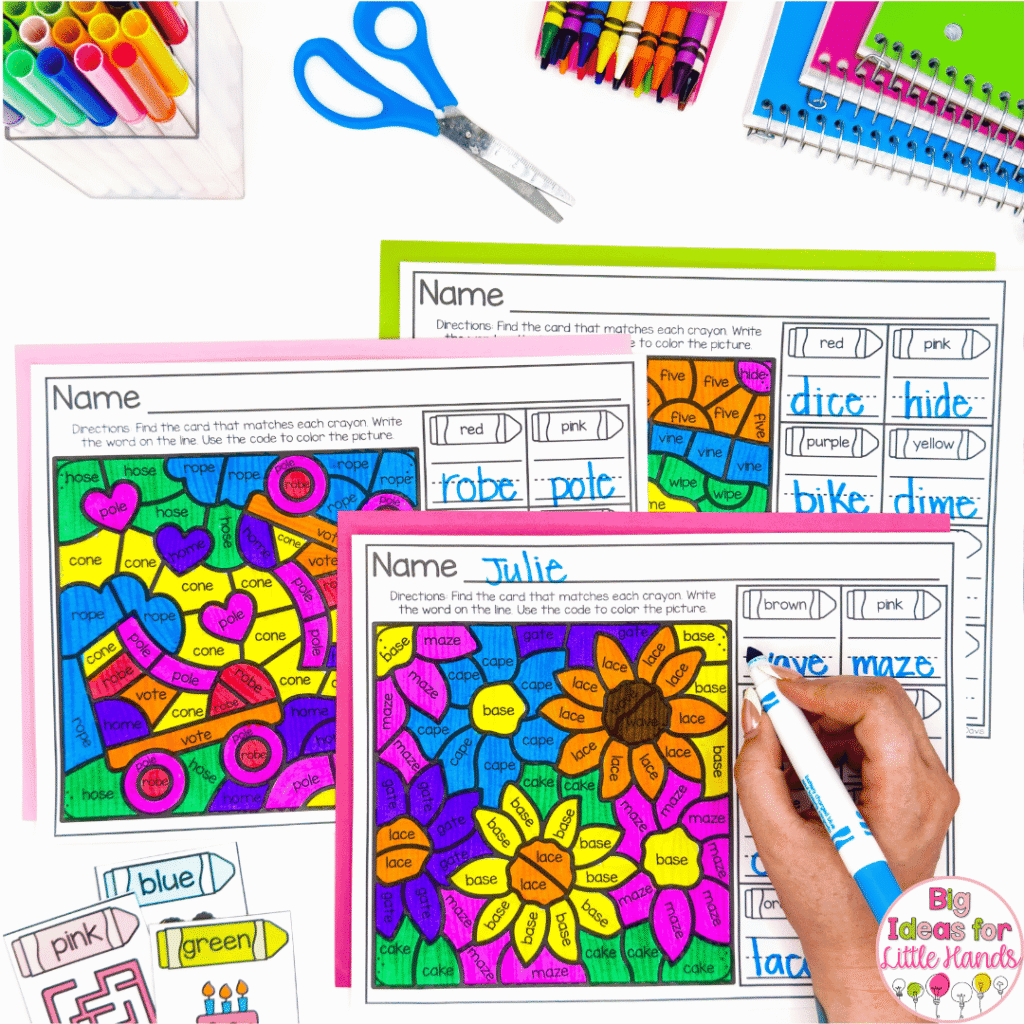
Start by hanging the CVCe word cards around the room. Give students a recording sheet and a clipboard, then model the full process.
To get started, students find a card, read the word carefully, write it on the sheet, and move on to the next one. Once all words are recorded, students use their answers to complete the color-by-code mystery picture.
Most students complete the activity in about 10 to 20 minutes, which makes it an easy fit for literacy centers, small groups, or even review days when you want something structured but engaging.
Tips to Make This Write the Room Run Smoothly
- A strong model makes all the difference here. Take time to explicitly show students each step, especially how to slow down and actually read the word before writing it. It also helps to model what it looks like when someone rushes or skips steps, so expectations are crystal clear.
- Spreading cards out across the room helps avoid crowding and keeps students focused on the task instead of the traffic flow. Clipboards also make a big difference in independence and reduce off-task wandering.
- Finally, set a clear “what do I do when I finish?” routine ahead of time so early finishers stay productive, and the rest of your group can stay on track.
Ready to Make CVCe Practice Stick?
If your students are stuck in that “I kind of get it” stage with CVCe words, this routine can really shift things. The combination of movement, repeated exposure, and built-in accountability helps them internalize the pattern instead of just practicing it once and moving on.
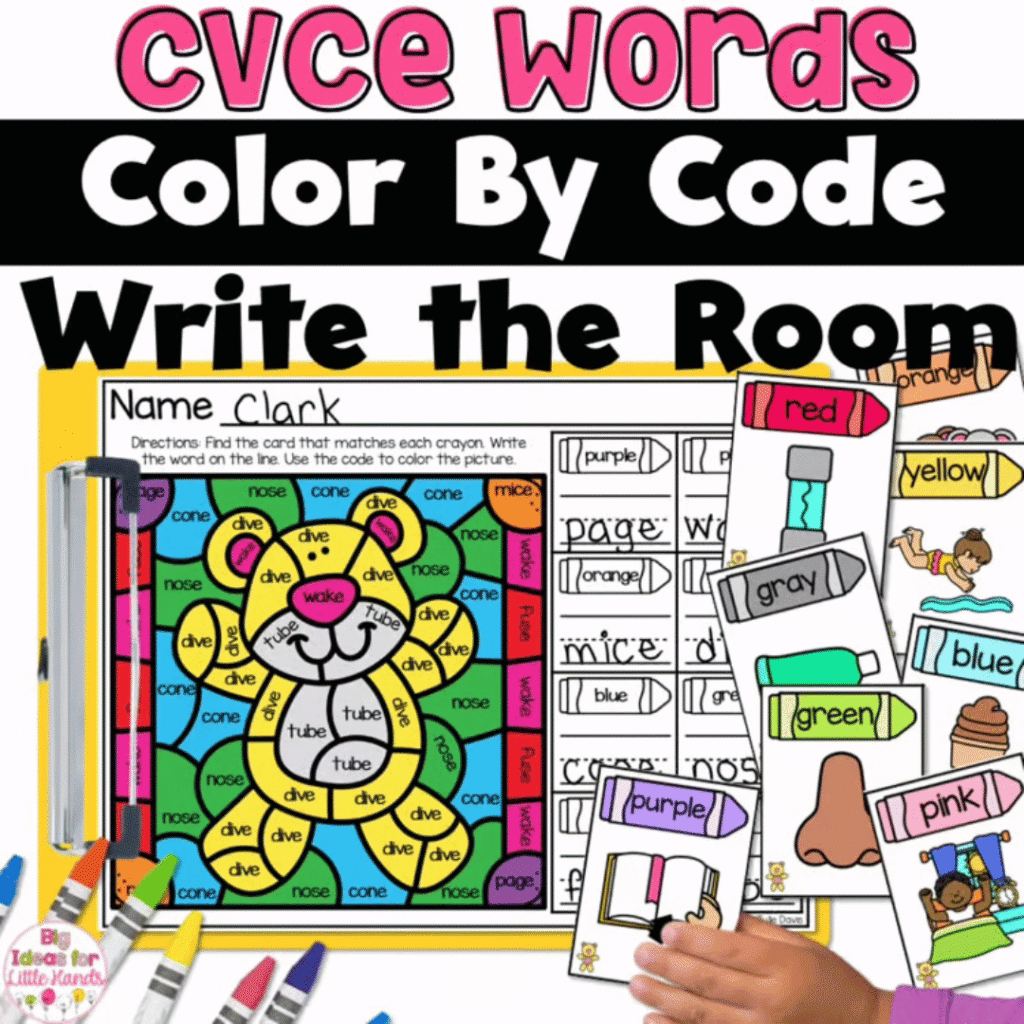
The CVCe Color by Code Write the Room resource gives you a ready-to-use structure that keeps students engaged while giving them the repetition they need to master long vowel spelling patterns. Grab it here and set it up in minutes!
Looking for More Phonics Ideas?
If you’re building out your phonics block, you’ll love having more hands-on routines that keep students moving while still reinforcing core skills in a meaningful way. Check out these posts next!
- Phonics Games to Practice Blending Sounds
- Using Phonics Games to Teach Middle Sounds
- 3 Simple Steps for Phonics Progression Beyond CVC Words
Save This Post for Later
Pin this post so you can come back to this CVCe Write the Room idea anytime you need a high-engagement way to help students master magic e words without the worksheet struggle.