The first month of kindergarten can feel overwhelming. Between teaching classroom routines, helping students adjust to school, and building relationships, it can be difficult to decide which academic skills deserve the most attention. The truth is, you don’t have to teach everything at once.
When you focus on the foundational skills that students will build on all year long, everything else becomes easier. A strong start during those first 30 days helps students gain confidence while creating the building blocks they’ll need for reading, writing, and math success.
If you’re wondering where to begin, these five foundational skills deserve a place at the top of your list.
1. Start with Routines and Expectations During the First Month of Kindergarten
First things first! Before diving into academics, remember that your most important job during those first few weeks is teaching routines, procedures, and classroom expectations. Students can’t fully engage in learning if they don’t yet know how your classroom works.
Spend time modeling everything, from how to line up and transition between activities to how to use classroom supplies, participate during lessons, and work independently at centers. Don’t be afraid to practice the same routine several times in one day. Young learners thrive on consistency, and every minute you invest in teaching expectations now will save you countless interruptions later in the year.
Once your students understand the daily routines and feel safe and confident in your classroom, introducing foundational academic skills becomes much smoother for everyone.

Some of the most important routines to teach during those first 30 days include:
- How to enter the classroom
- Where to put materials
- How to line up and walk safely in the hallway
- How to transition between activities
- How to ask for help
- How to use classroom supplies
- How to share materials and take turns
- What to do when they finish an activity early
- Bathroom, handwashing, snack, and lunch routines
- Using kind words, listening, and showing respect
A helpful rule of thumb is to never assume students already know how to do something. Model each routine, practice it together, provide positive feedback, and revisit it often. The more time you spend building these habits now, the more independent your students will become throughout the rest of the school year!
2. Build Strong Alphabet Knowledge
Before students can become successful readers and writers, they need a strong understanding of the alphabet. That means much more than singing the ABC song!
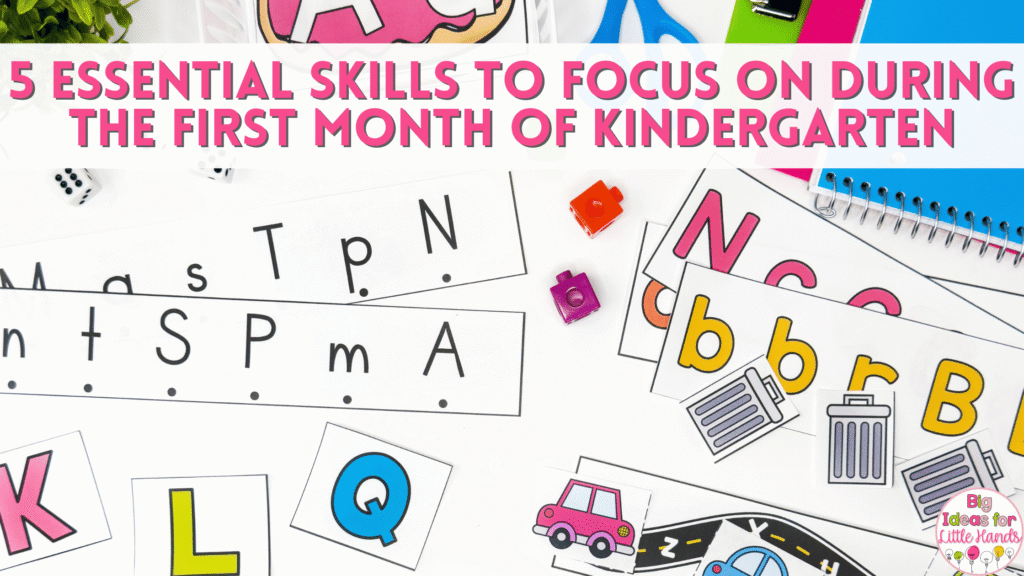
During the first month of kindergarten, students should begin learning to identify uppercase and lowercase letters, match uppercase to lowercase, and build automatic letter recognition. The more fluent students become with letter identification, the more mental energy they can devote to phonics, decoding, and reading later in the year.
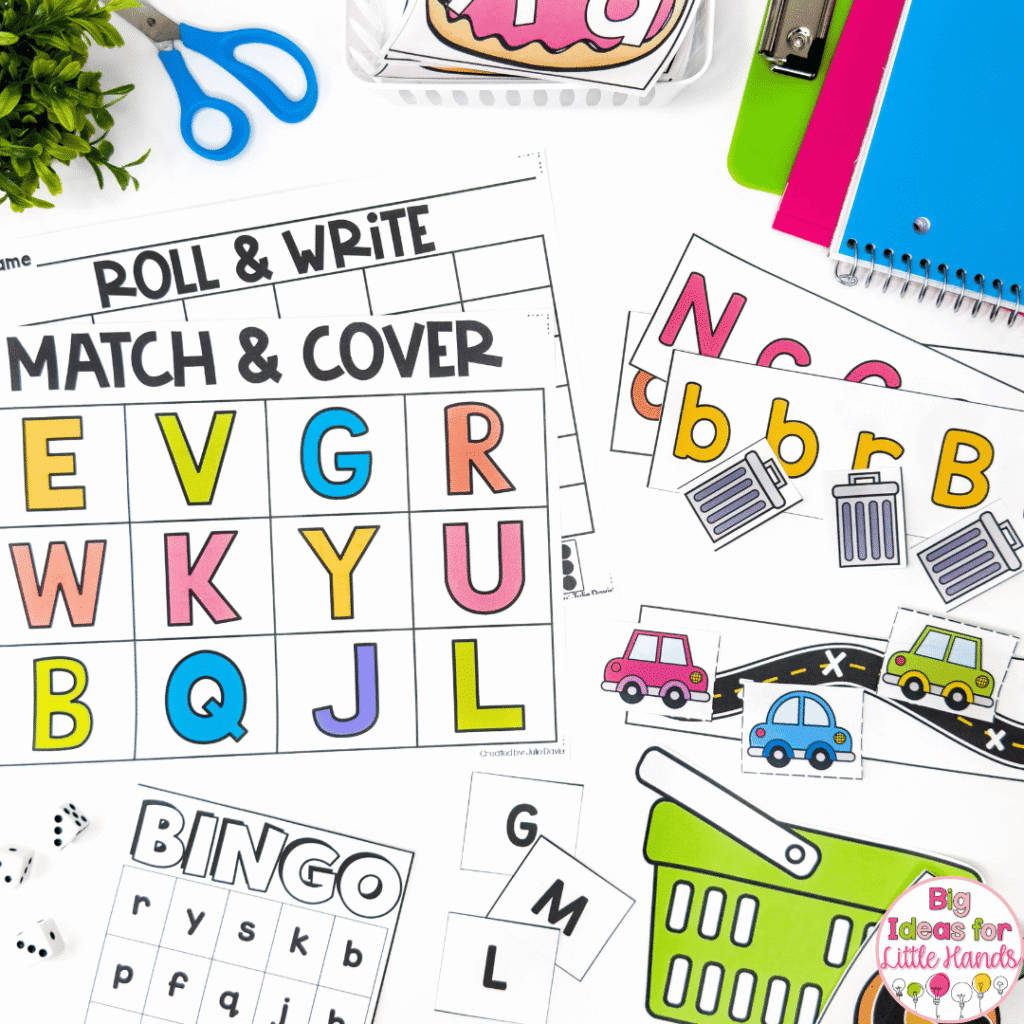
Since every student enters kindergarten with different levels of alphabet knowledge, plan for short opportunities to practice every single day. Rather than introducing dozens of letters at once, spend a few minutes reviewing previously taught letters through games, movement, and hands-on activities. Seeing the same letters in a variety of ways helps students build confidence and long-term retention.
One simple literacy rotation might include a teacher-led alphabet lesson, an independent fine motor activity, and a quick letter review center. This keeps students engaged while giving you opportunities to differentiate for students who need extra support or an additional challenge.
My Favorite Ready-to-Use Alphabet Resources
My Alphabet Knowledge Games include 16 different small group games that make letter recognition fun while aligning with Heggerty Phonics, phonemic awareness, and Science of Reading practices. They’re perfect as literacy warm-ups, small group lessons, center activities, or whole group review.
For hands-on learners, my Alphabet Playdough Mats allow students to build each uppercase and lowercase letter with dough before tracing, writing, and identifying the letter independently. They’re wonderful for morning tubs, literacy centers, early finisher bins, or even independent practice after your mini lesson.
Need a quick activity while you’re gathering your small group? My Alphabet Cover Up Games are one of my favorite grab-and-go options. Students use bingo chips, counters, dot markers, or crayons to practice identifying uppercase and lowercase letters independently, making every minute of your literacy block count.
3. Develop Beginning Sound Awareness
Once students start to recognize letters, it’s time to help them connect those letters to the sounds they represent. Beginning sounds are one of the first phonemic awareness skills that prepare students for reading. When children can hear the first sound in a word and connect it to the correct letter, they’re beginning to understand how spoken words connect to print.
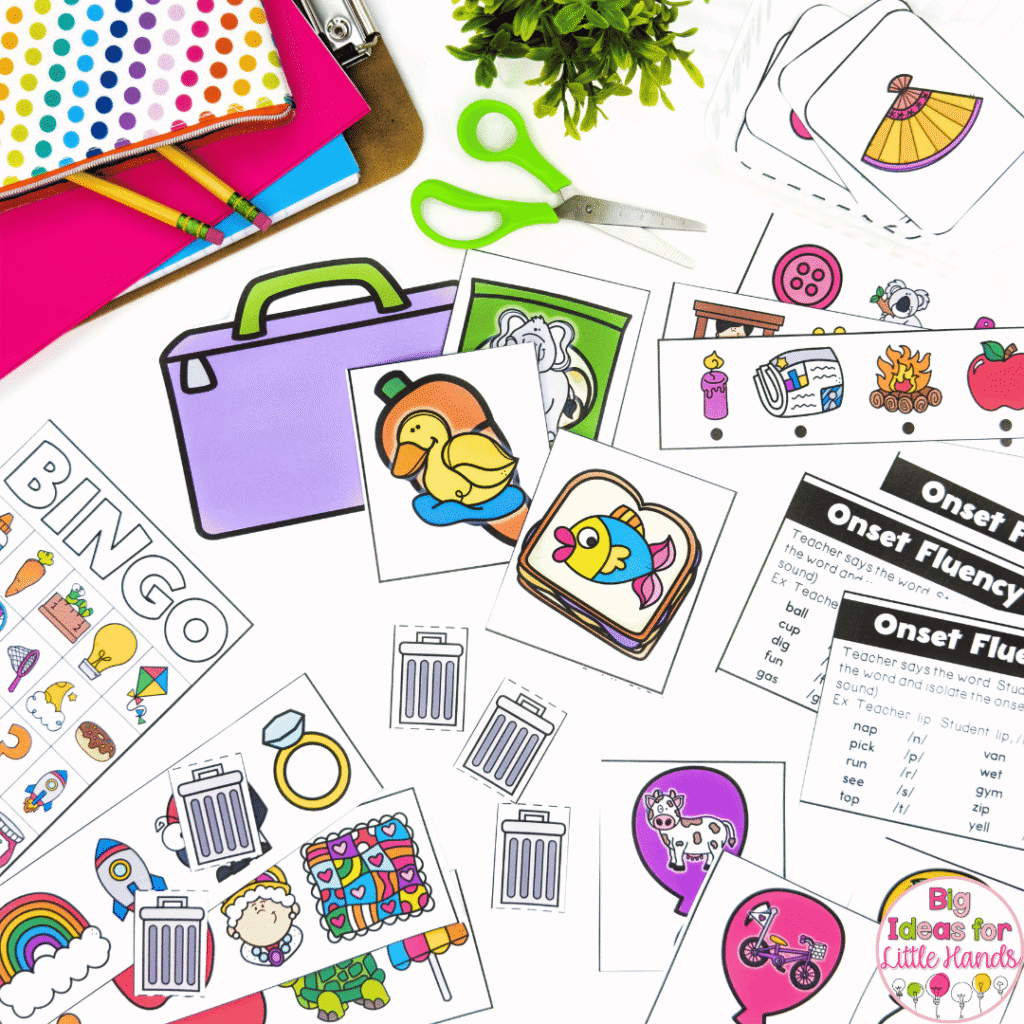
Throughout the first month of kindergarten, provide lots of opportunities for students to:
- Listen for beginning sounds.
- Match pictures to beginning sounds.
- Sort pictures by beginning letter.
- Practice orally identifying initial sounds.
These skills don’t require long lessons. In fact, five to ten minutes of intentional practice each day can have a huge impact. Before asking students to complete independent work, let them hear, say, and practice beginning sounds together through songs, picture cards, movement activities, and oral games. The more students hear the sounds, the easier it becomes to connect them with letters.
Beginning Sound Activities That are Easy to Use
My Beginning Sounds Games include 16 interactive games that make phonemic awareness practice fun while fitting perfectly into small groups, literacy centers, or whole group lessons. The variety keeps students engaged while giving them repeated practice with the same important skill.
If you’re looking for an easy technology option, the Beginning Sounds Boom Cards give students instant feedback while practicing beginning sound identification independently. They’re self-checking, engaging, and perfect for tablets, computers, or interactive whiteboards during literacy centers.
4. Help Students See Themselves as Writers
Many kindergarten teachers worry that students aren’t ready to write yet. The truth is, writing begins long before students are expected to write complete sentences. During those first few weeks, students are learning to hold a pencil, form letters, label pictures, build vocabulary, and understand that their ideas can be communicated through both pictures and words.
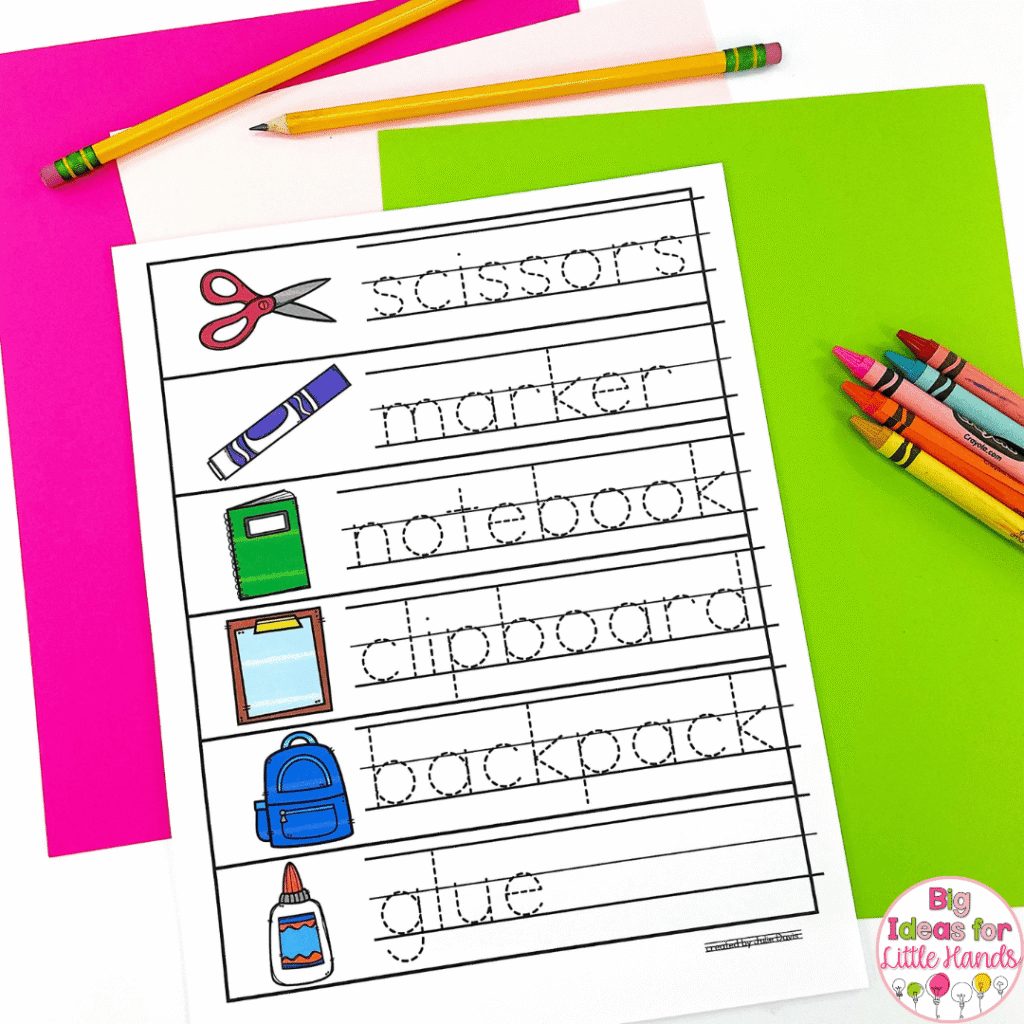
Remember that every student’s writing journey will look different. Some children may only draw pictures at first, while others may already be writing simple words. Celebrate every attempt. As students become more comfortable with classroom routines, you can gradually encourage them to label their pictures, stretch out simple words, and write short sentences with your support.
One of my favorite ways to build writing confidence during the first month of kindergarten is by offering students choices. When they can choose a picture to write about or create their own story, they’re much more excited to put pencil to paper.
Writing Activities That Students Will Love
My Back to School Writing Centers make this process simple by providing an entire month of developmentally appropriate writing activities. With over 100 pages of centers, students can practice tracing, labeling, vocabulary, fine motor skills, handwriting, opinion writing, storytelling, sight words, and more.
Many activities include differentiated versions with and without sentence starters, along with both clip art and real photographs, making it easy to meet students exactly where they are.
5. Lay the Foundation for Number Sense
While math will grow much more complex throughout the year, the first month should focus on helping students build confidence with numbers 0 through 10.
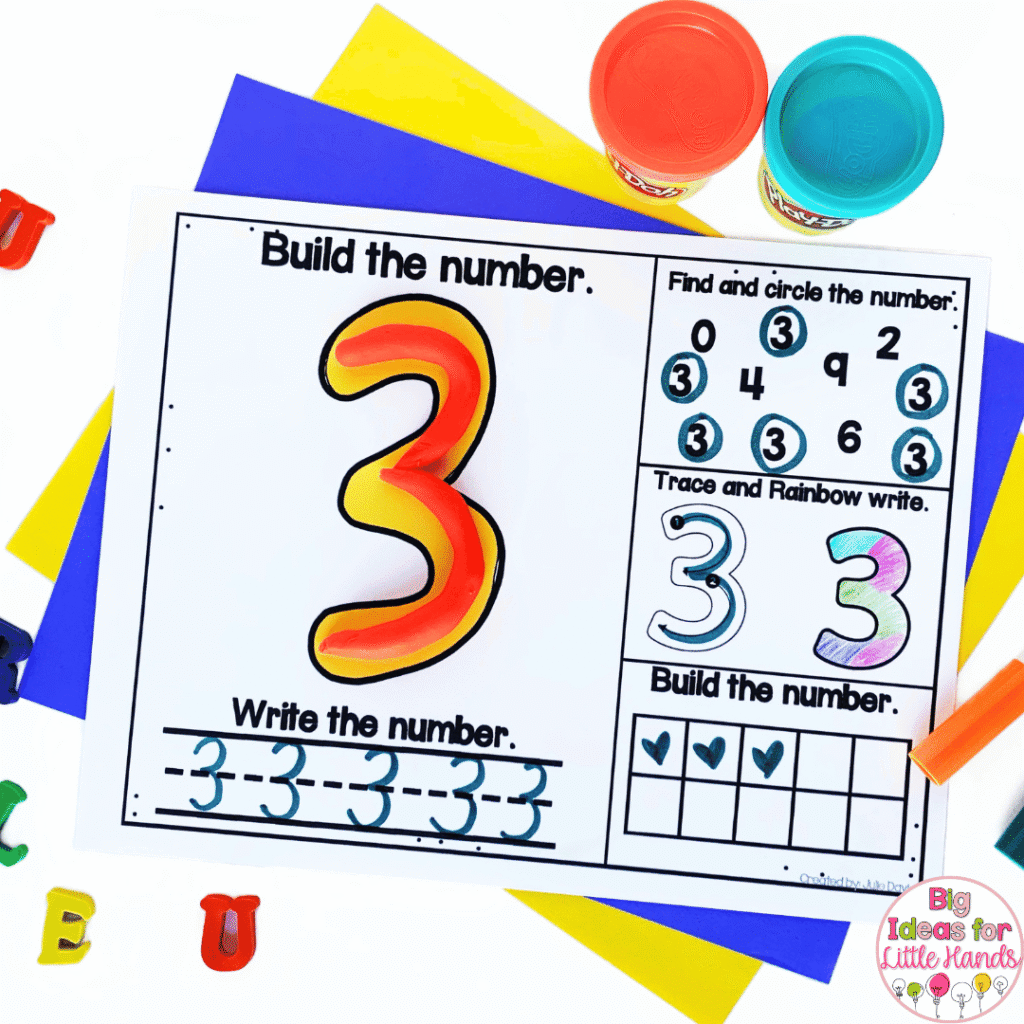
Students should have multiple opportunities to identify numbers 0-10, build numbers, trace and write numbers, count objects, connect numbers to quantities, and represent numbers on ten frames. Young learners understand math best when they can see, touch, build, and manipulate the numbers. Instead of relying only on worksheets, provide opportunities for students to use playdough, counters, cubes, ten frames, and other hands-on materials every day.
A simple math routine might include a quick whole group number warm-up followed by a hands-on center where students practice building, tracing, counting, and representing the same number in multiple ways. This repetition helps students build true number sense instead of simply memorizing number names.
Resources that Make Number Sense Fun and Engaging
My Numbers 0-10 Playdough Mats give students multiple ways to practice each number by building it with dough, tracing it, writing it, identifying it, and representing it on a ten frame. They’re perfect for math centers, morning tubs, independent practice, or early finisher activities.
For additional review, the Numbers 0-10 Cover Up Games provide a quick, low-prep activity that works wonderfully during guided math groups, centers, or independent practice. Simply add counters, bingo chips, dot markers, or crayons, and students are ready to learn.
Focus on Progress, Not Perfection During the First Month of Kindergarten
It’s easy to feel pressure to teach everything right away, but kindergarten is all about building a strong foundation.
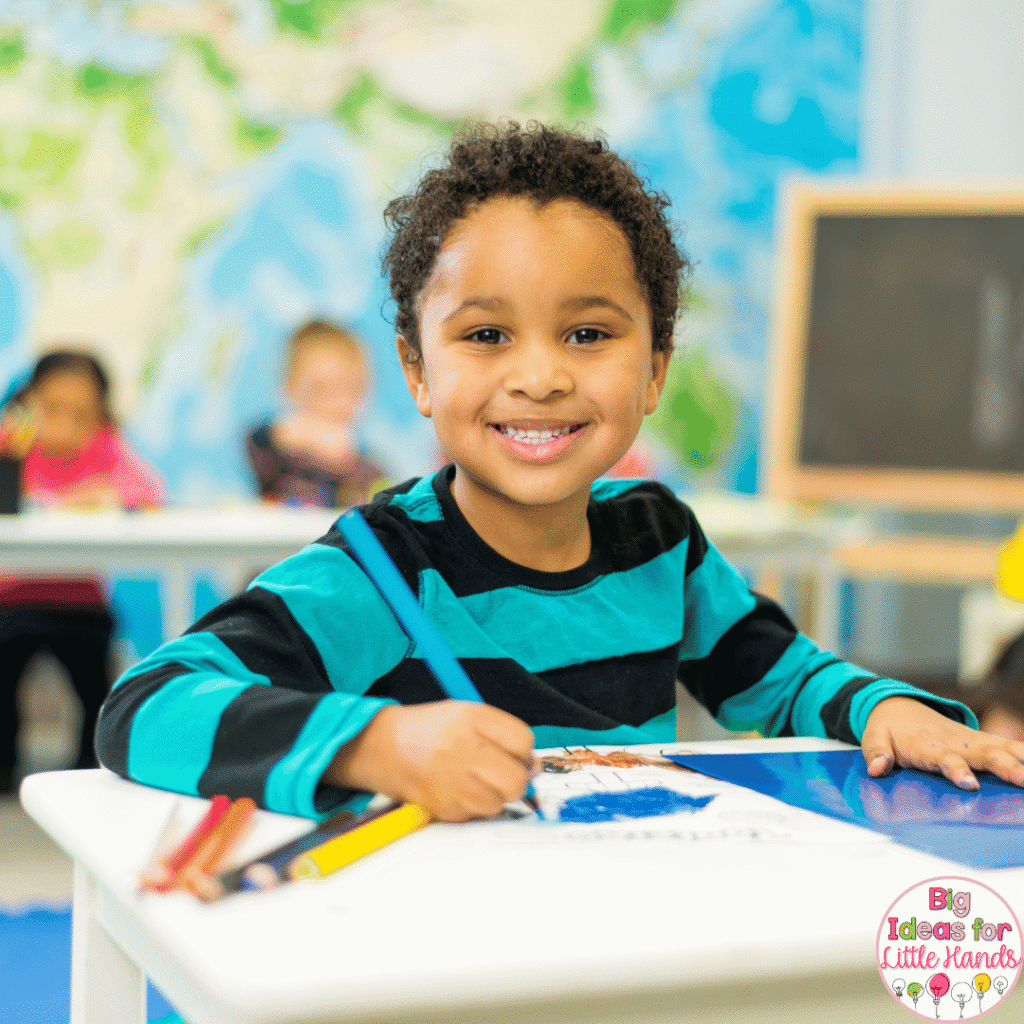
When students spend the first month of kindergarten confidently learning routines, recognizing letters, hearing beginning sounds, exploring writing, and identifying numbers 0 through 10, you’ve given them the skills they’ll continue building on for the rest of the school year.
Remember, mastery doesn’t happen in a week. Small, consistent learning opportunities each day are far more effective than trying to cover too many skills too quickly. By keeping your instruction focused and giving students plenty of hands-on practice, you’ll help them develop confidence along with the academic skills they need to succeed.
If you’re planning your first month of kindergarten, start by gathering activities that support these five essential skills. Having engaging, ready-to-use resources allows you to spend less time prepping and more time working alongside your students.
Are You Ready for the First Month of Kindergarten?
You’ll find all of the alphabet activities, beginning sounds resources, writing centers, number recognition activities, and many more Back to School favorites in my Teachers Pay Teachers store.
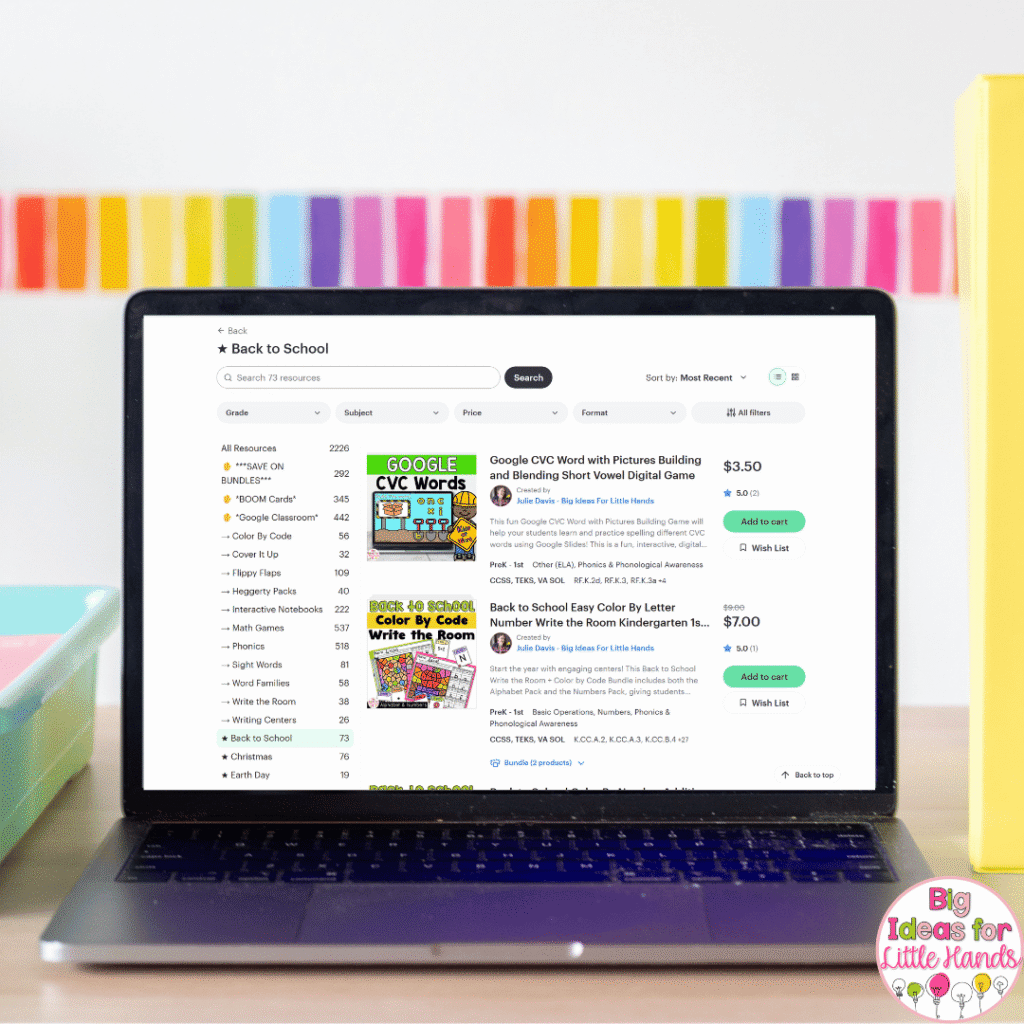
Whether you’re planning morning tubs, literacy centers, small groups, or math stations, these low-prep resources are designed to help your students build confidence and feel successful during the first month of kindergarten and beyond!
Looking for More Activities for the First Month of Kindergarten?
Be sure to read these posts next for more ideas and lessons for the first month of kindergarten!
- Back to School Counting Games for Kindergarten
- 6 Fun Back to School Activities for Kindergarten
- 13 Back to School Shape Activities for Kindergarten
Save This Post
Make sure to pin this post on Pinterest so that you can come back to it when you’re ready to plan your first month of kindergarten lessons!