If you’ve ever taught digraphs, you’ve probably seen this happen. One day, your students confidently tell you that sh says /sh/ or ch says /ch/. But the very next day, they’re reading ship as “sip” or forgetting that two letters can work together to make one sound. The truth is, learning digraphs isn’t just about memorizing letter combinations. Students need to see those spelling patterns over and over in real words before they become automatic. Today, I’m sharing the secret tool that is helping my students interact with the same spelling pattern several different ways, helping those phonics skills finally stick in a fun way!
Why Digraphs Need Meaningful Repetition
Beginning and ending digraphs can be tricky because students are learning that two letters work together to make one sound. Even after a whole-group lesson, many students still need lots of opportunities to recognize those patterns while reading and spelling words independently.
Unfortunately, one worksheet usually isn’t enough. Students may finish the page, but they often haven’t had enough exposure for the skill to become automatic.
What really builds confidence is repeated practice that asks students to think about the same spelling pattern in different ways. Every time students locate a new word, read it, record it, and use it again while coloring, they’re strengthening the connection between the letters they see and the sound they hear. That kind of meaningful repetition is what turns “I remember learning this” into “I know this.”
Why This Multi-Step Routine Helps Digraphs Stick
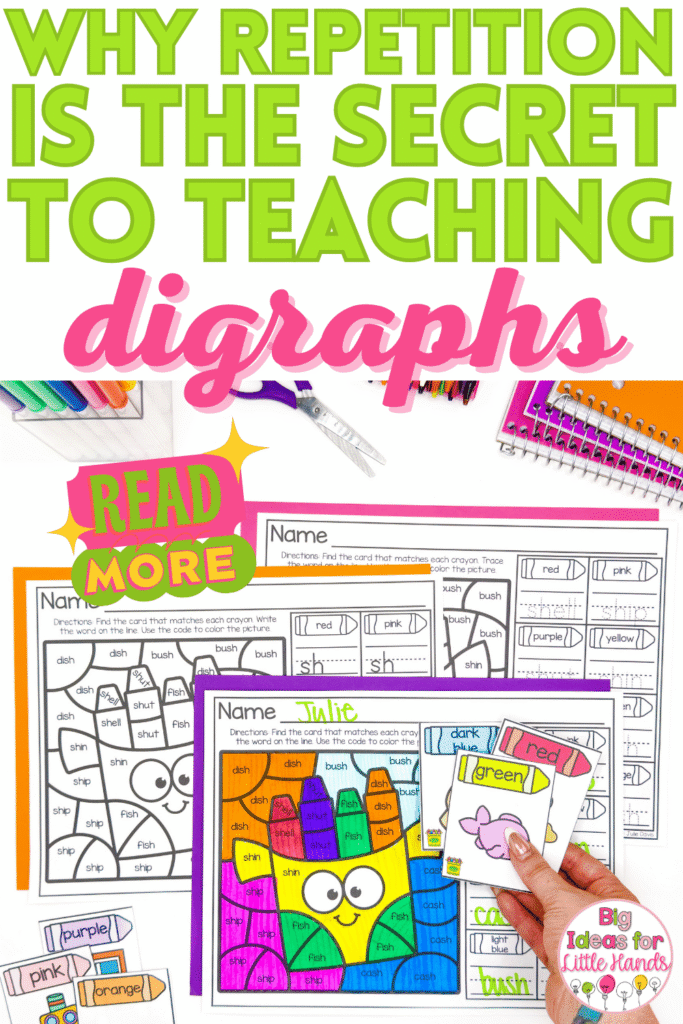
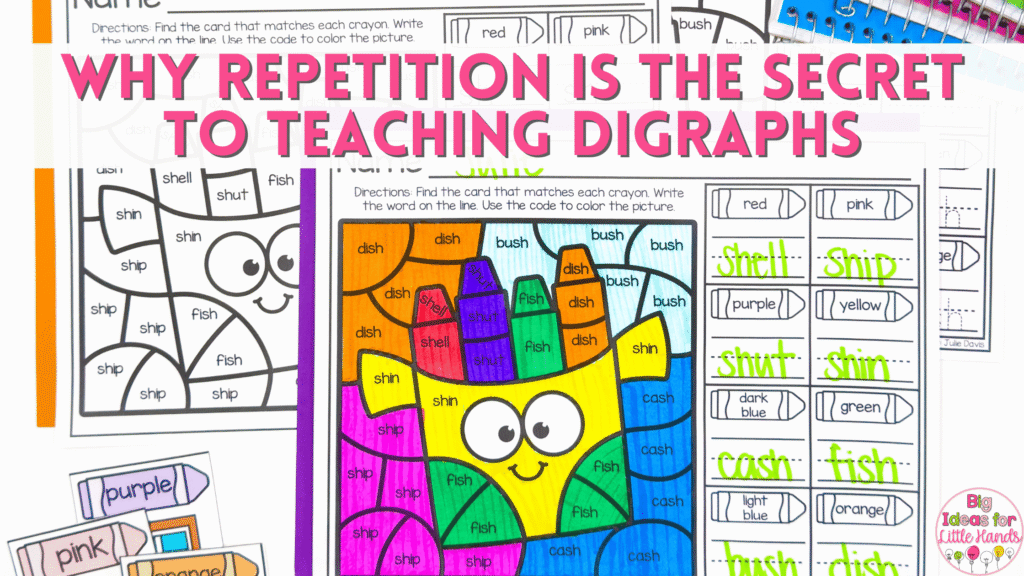
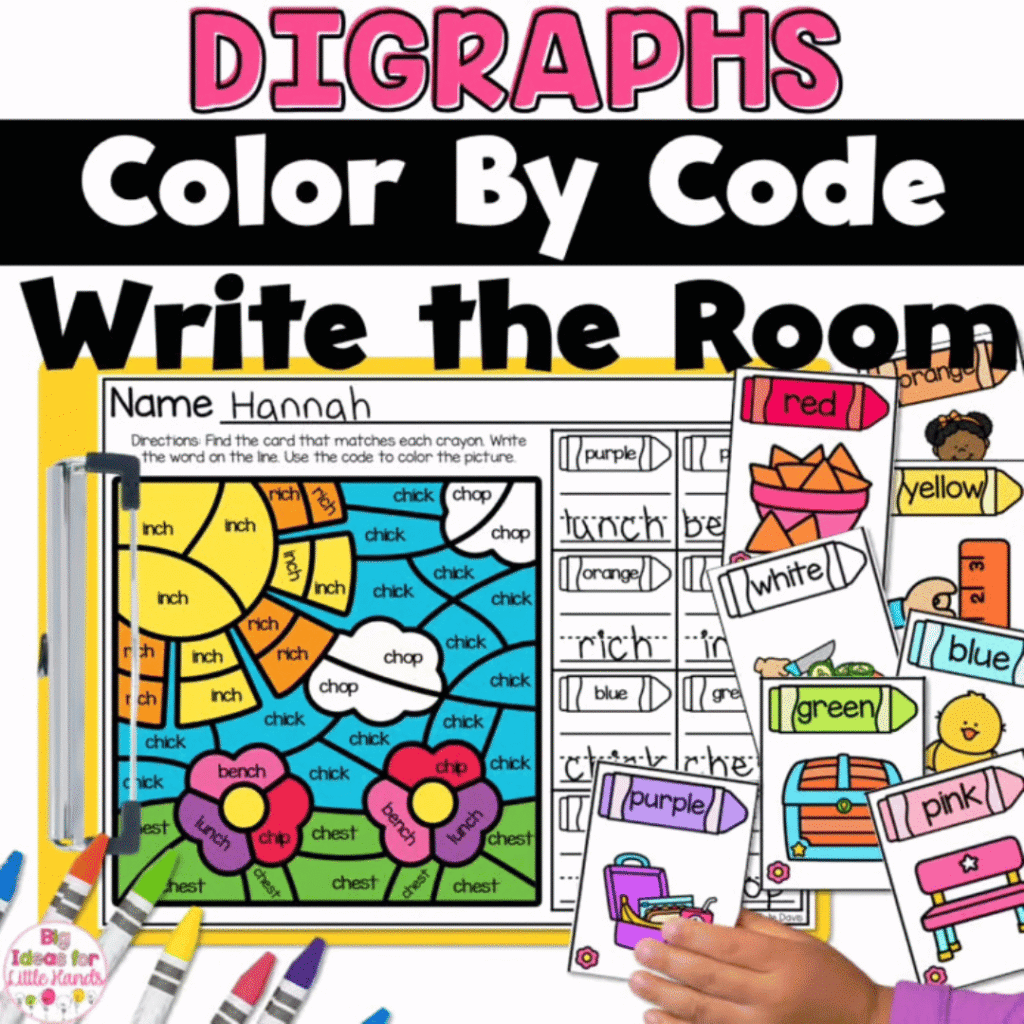
In my room, I’ve uncovered a secret formula that makes this repetition easy, fun, and engaging for everyone. Digraphs Color by Code Write the Room has become my new go-to for this skill. One of my favorite things about this activity is that students don’t just practice each word once. They interact with it multiple times from beginning to end.
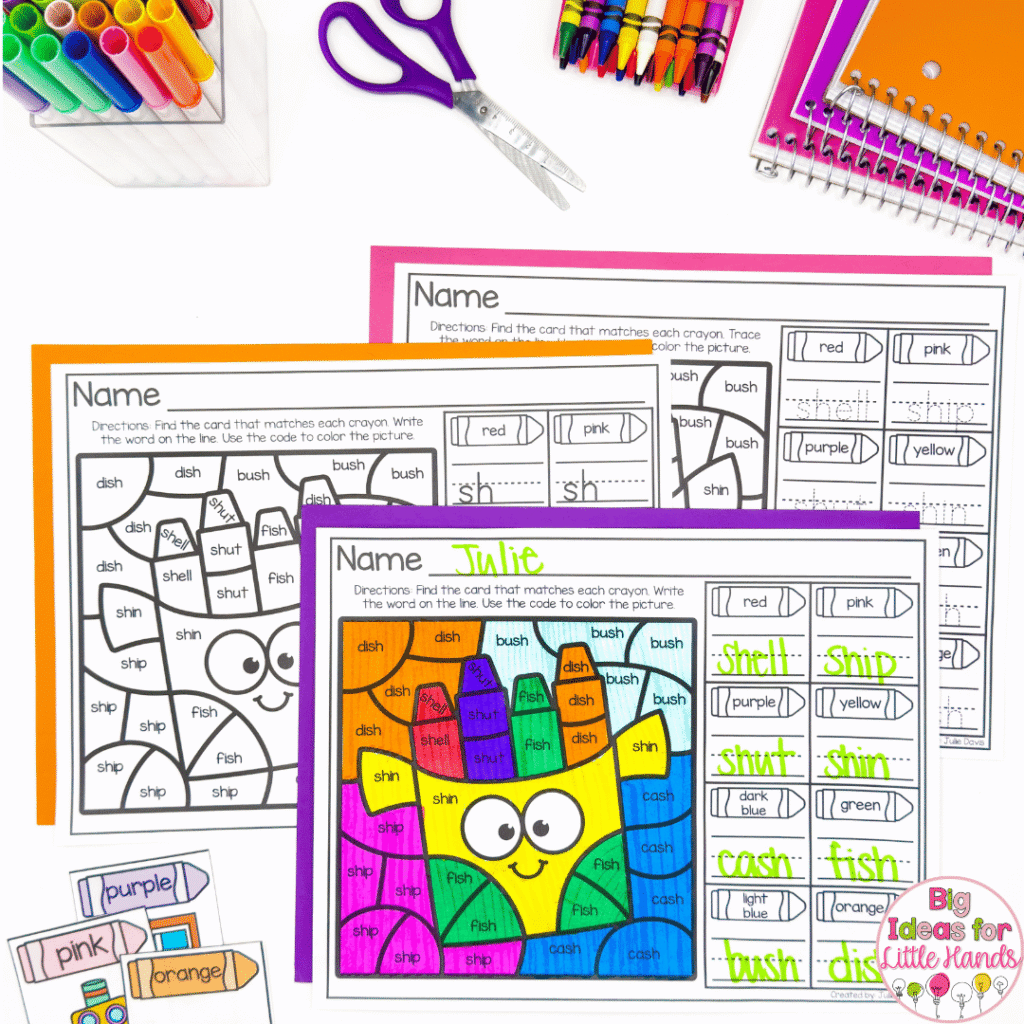
First, students search the room for a digraph word card. As they find each card, they read the word carefully and identify the digraph. Next, they write the word on their recording sheet, giving them another opportunity to notice the spelling pattern. Finally, they use their completed work to color a mystery picture, which encourages them to double-check their answers along the way.
By the time students finish the activity, they’ve found, read, written, and reviewed every word. That’s multiple meaningful exposures to the same phonics pattern, all wrapped inside one engaging activity.
Even better, students stay focused because every step has a purpose. Instead of feeling like they’re completing “just another worksheet,” they’re working toward revealing a mystery picture while building stronger phonics skills.
What’s Included in the Digraph Color by Code Write the Room Resource
One thing teachers love about this resource is how easy it is to target exactly the digraphs your students are working on while keeping the same familiar routine.
Inside you’ll find 12 Color by Code Write the Room sets, including:
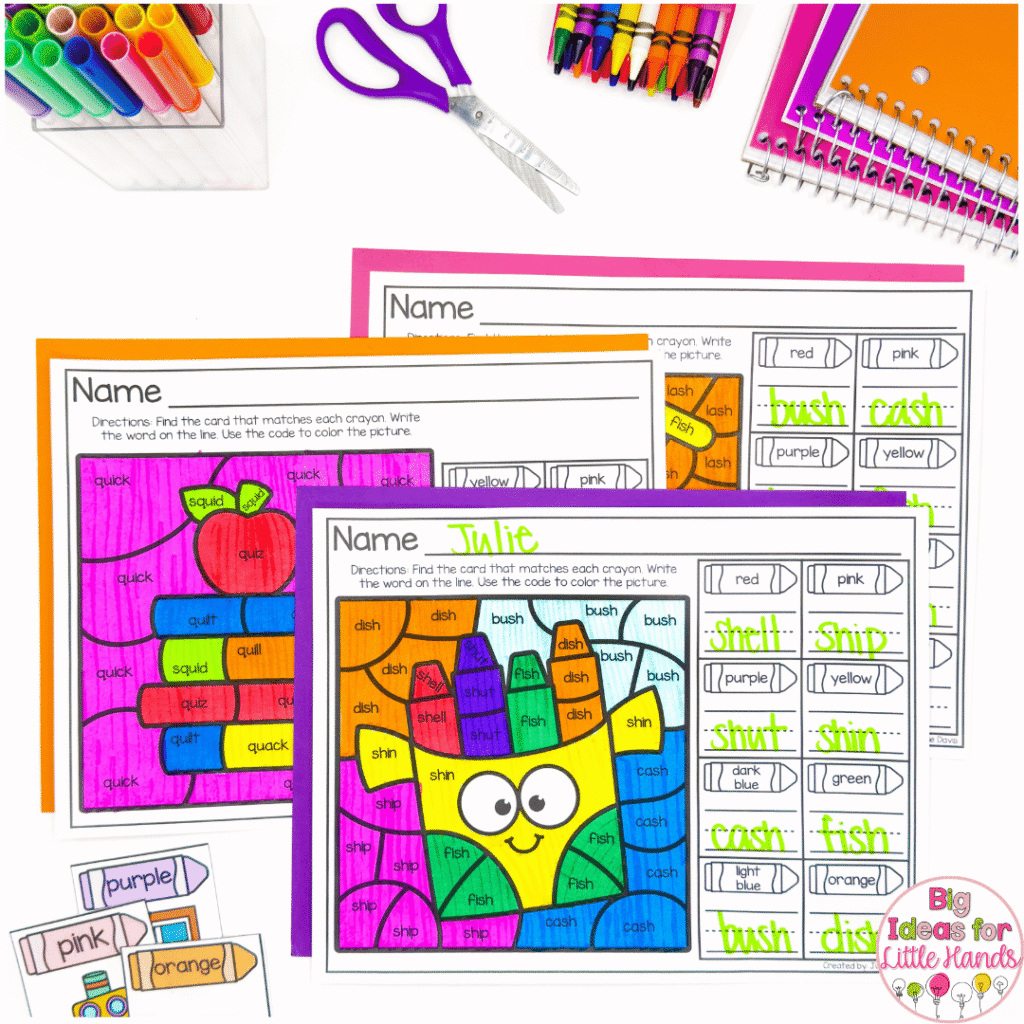
- Beginning SH
- Ending SH
- Mixed SH
- Beginning CH
- Ending CH
- Mixed CH
- Ending TH
- Mixed TH
- Beginning QU
- Ending CK
- Beginning WH/WR
- Ending NG
Every recording sheet also includes three built-in differentiation levels. Students can write the entire word independently, complete the word with the digraph already provided, or trace the entire word for extra support. This makes it easy to use the same activity with a wide range of learners while giving everyone the level of support they need.
Whether you’re introducing a new digraph, reviewing one you’ve already taught, or mixing several patterns together, this resource gives you plenty of flexibility without creating extra prep work.
Every Step Builds Another Phonics Skill
Aside from the repeated exposure to the digraph patterns in each step, your kids will also be working on so much more along the way! As students move through the activity, they’re strengthening several foundational phonics skills at the same time. They practice reading and spelling digraph words, blending and segmenting phonemes, and matching sounds to spelling patterns.
Because every word is encountered multiple times throughout the activity, students naturally build confidence and fluency with beginning and ending digraphs. The repetition doesn’t feel repetitive because each step has a different purpose, helping students stay engaged while reinforcing the same important phonics concepts.
How to Use It in Your Classroom
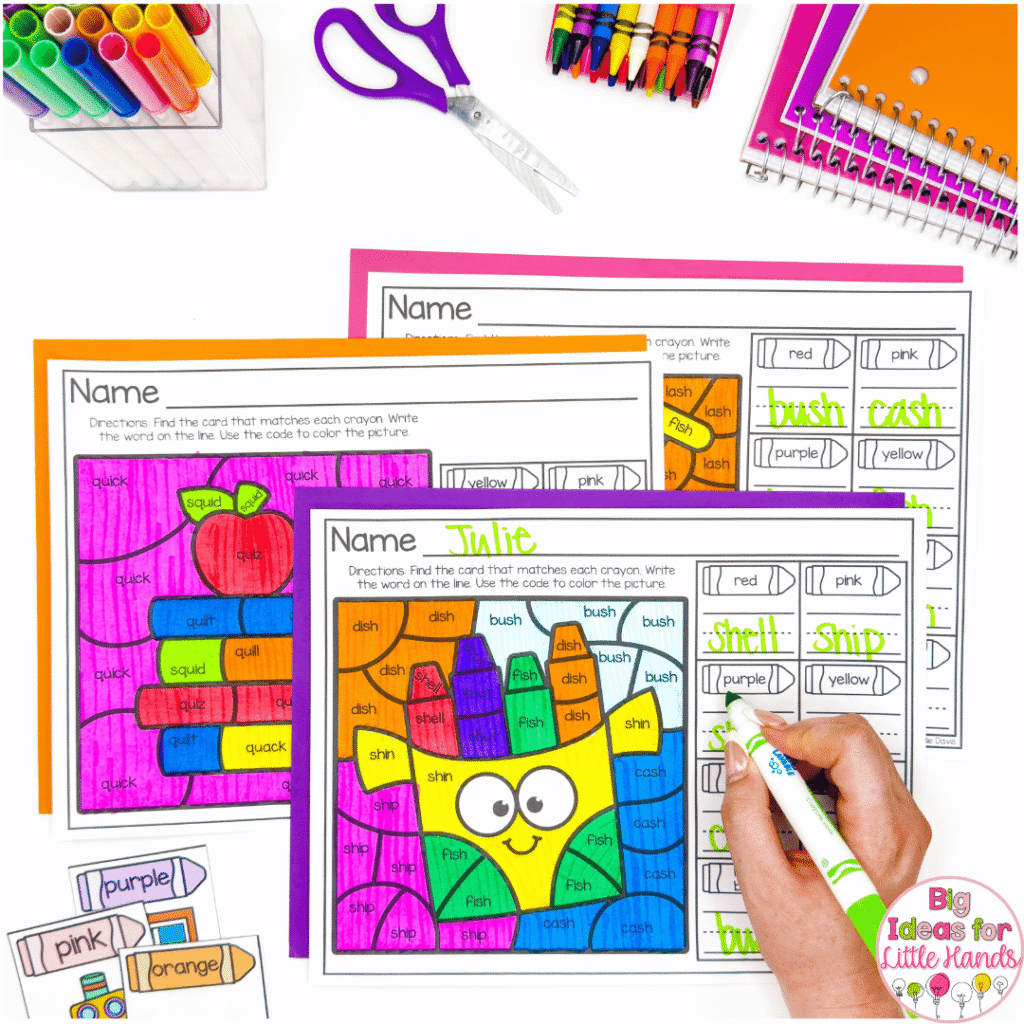
This activity is easy to introduce and quickly becomes one of those centers that students can complete independently.
Simply hang the digraph word cards around your classroom and give each student a recording sheet and a clipboard. After modeling the routine, students move around the room searching for the cards, reading each word, and writing it on their recording sheet. Once they’ve found every word, they use the color code to reveal a mystery picture.
Most students can complete the activity in about 10 to 20 minutes, making it a great choice for literacy centers, small groups, independent practice, or even partner work.
Tips to Make This Write the Room Run Smoothly
I am all about making things as easy as possible in the classroom. If you’ve never tried an activity quite like this before, here are some of my best tried and true tips!
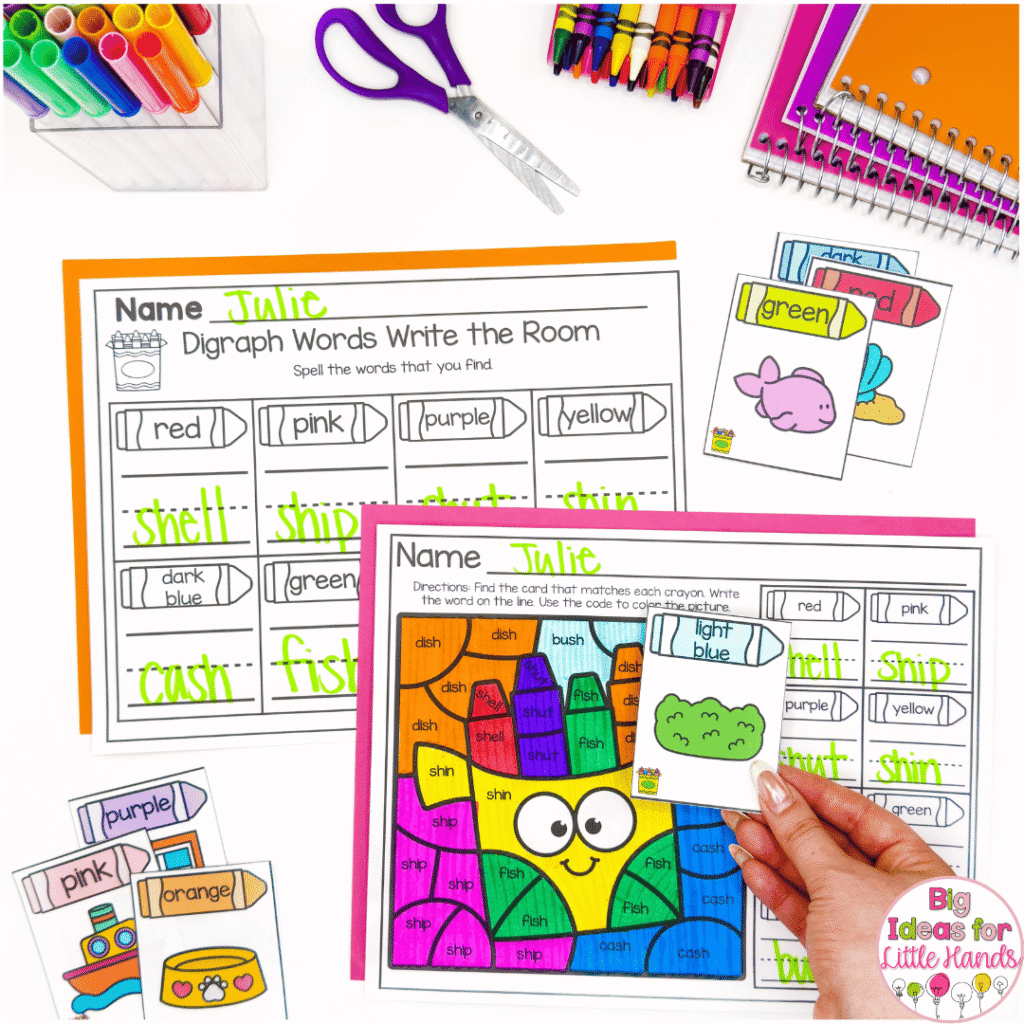
Before students begin, model the entire routine from start to finish. This is a must! Show them how to carefully read each word before writing it down, and don’t be afraid to model a few common mistakes too. Demonstrating what rushing looks like often helps students understand your expectations much more clearly.
You’ll also want to spread the word cards around the room to avoid crowding and give students enough space to move comfortably. Providing clipboards makes writing much easier and helps students stay focused as they travel from card to card.
Finally, have a plan for early finishers. When students know exactly what to do after completing the mystery picture, your center time runs much more smoothly.
Ready to Give Students the Repetition They Need?
Mastering digraphs takes more than one lesson. Students need opportunities to see, read, write, and apply these spelling patterns over and over before they become automatic.
That’s exactly what Digraph Color by Code Write the Room was designed to do! With built-in differentiation, engaging mystery pictures, and a simple routine you’ll use again and again, it’s an easy way to make phonics practice both meaningful and fun.
Grab the resource today, print it, and you’ll have a ready-to-use literacy center that helps students build confidence with beginning and ending digraphs one word at a time.
Looking for More Phonics Ideas?
If you’re building out your phonics block, here are a few more ideas to help students strengthen their decoding skills through hands-on learning:
- Phonics Games to Practice Blending Sounds
- Using Phonics Games to Teach Middle Sounds
- Using CVCe Color by Code Write the Room to Master Magic E Words
Save This Post for Later
Pin this post so you’ll have an easy, engaging digraphs center idea ready whenever your students need extra practice with beginning and ending digraphs.