You’ve taught the letter. You’ve sung the song. You’ve practiced the sounds. But when it’s time for your students to write, their pencils are being gripped for dear life, their hands are tired, and the frustration starts to sneak in. In kindergarten, this is so common! So what’s the missing piece? You need intentional fine motor practice that helps students build their hand muscles and feel empowered, not frustrated, during writing practice. And the easiest way to build these skills is by combining fine motor activities with something you’re already teaching, like the alphabet!

Why Fine Motor Practice Matters in Kindergarten
Kindergarten students are still growing and developing the hand and wrist strength needed for cutting, writing, coloring, and even holding manipulatives correctly. When those muscles aren’t strong enough, everything feels harder. Fine motor skills are the foundation for so many daily classroom tasks. When students build hand strength and control, they improve:
- Reaching, grasping, and manipulating objects
- Hand-eye coordination
- Handwriting and drawing skills
- Independence and confidence
- Overall body awareness
When we practice these skills daily in small, meaningful ways, we prevent bigger frustrations later. That’s why fine motor activities matter so much!
But. . . before you start to sweat about finding all new fine motor resources, take a deep breath. You don’t need separate “fine motor time” added to your busy day. Here are 12 of my favorite fine motor alphabet activities you can easily add to your instruction that won’t take away from what you are already teaching!
1. Fine Motor Playdough Activities
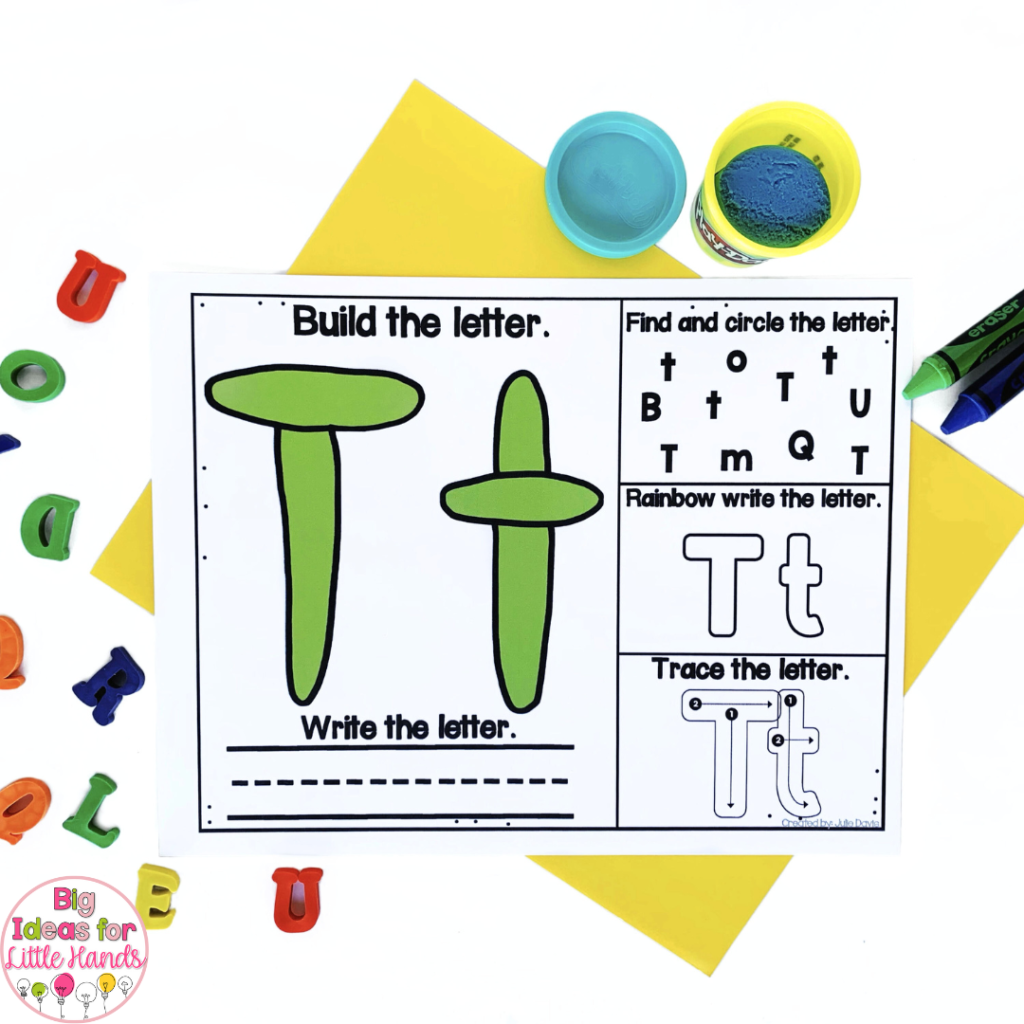
Playdough is a great tactile tool for students to use to strengthen the muscles in their hands. And. . . what kid doesn’t love to play with playdough?!
Using these alphabet playdough mats, students will roll and shape the dough to form and name a letter. We use these mats in my room all the time, as they are highly effective in helping students master new letters while targeting their fine motor skills.
Using these toward the afternoon, when everyone is a bit tired, restless, and in need of a brain break, is a great way to add some “fun time” to the end of your day.
2. Stickers
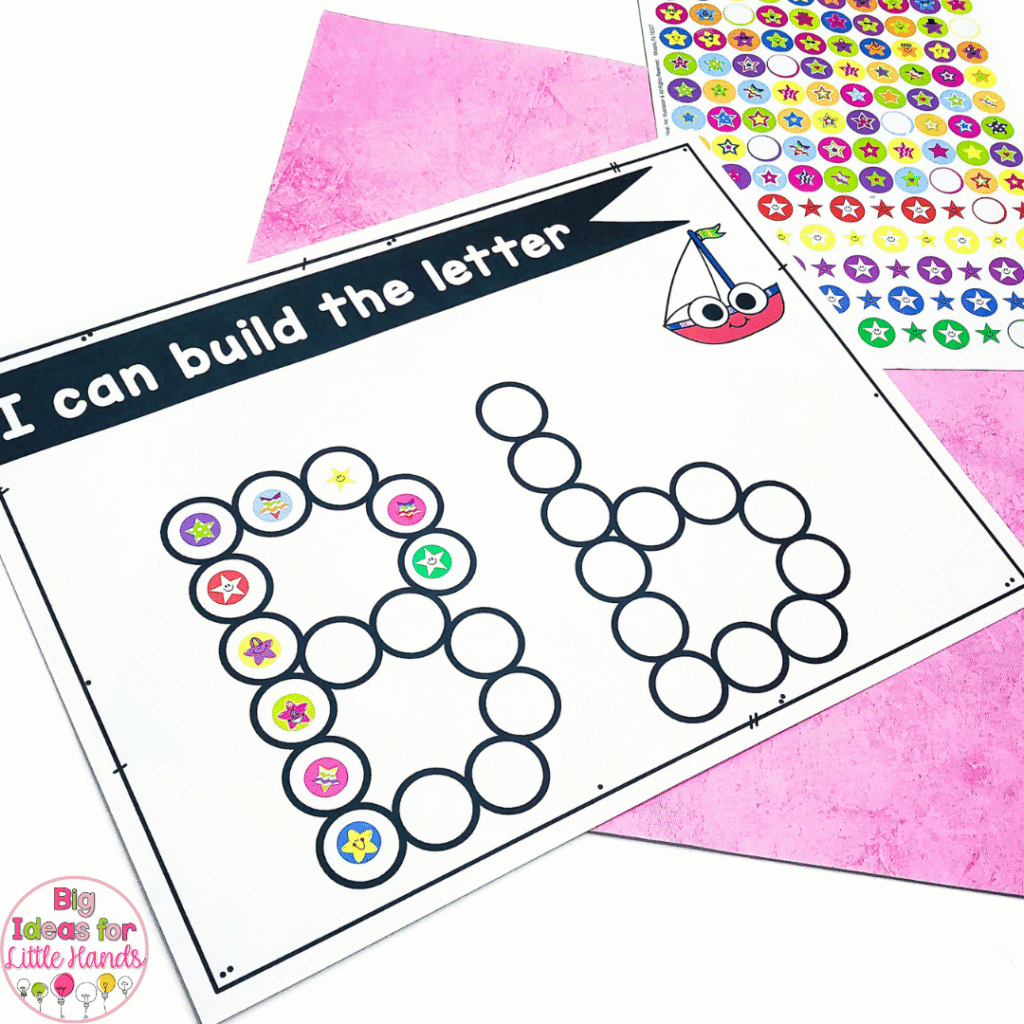
If your kids are anything like mine, then they are obsessed with stickers. I can put out some sticker sheets, and they are gone that same day!
Having kids peel the stickers off the sheets and match them carefully on a line or inside a circle is great for fine motor skills and hand-eye coordination. And beyond that, this activity provides a great way to practice letter identification and beginning sounds, too.
Pass out these alphabet building mats with a sheet of stickers, and let them get to work! This is a great low prep activity to add to your center rotation or morning work since students can easily complete it independently.
3. Building Bricks
One of the best ways to get your students excited to learn is to break out manipulatives that seem more like toys than learning tools. Case in point, building bricks for the win! My kids always race to get to the building center first! They love creating all sorts of things, so why not incorporate some letter practice, too?
With a small bucket of building bricks, students will look at the letter on the mat and recreate it with blocks. Then there is a place for them to practice finding and writing the letter on the mat. These are perfect for any time you need students to be engaged and independent.
4. Tearing Paper
Need something quick and easy? Paper tearing will be your hero! This is great for their finger grip and muscle strength. And the best part is, it doesn’t have to be perfect!
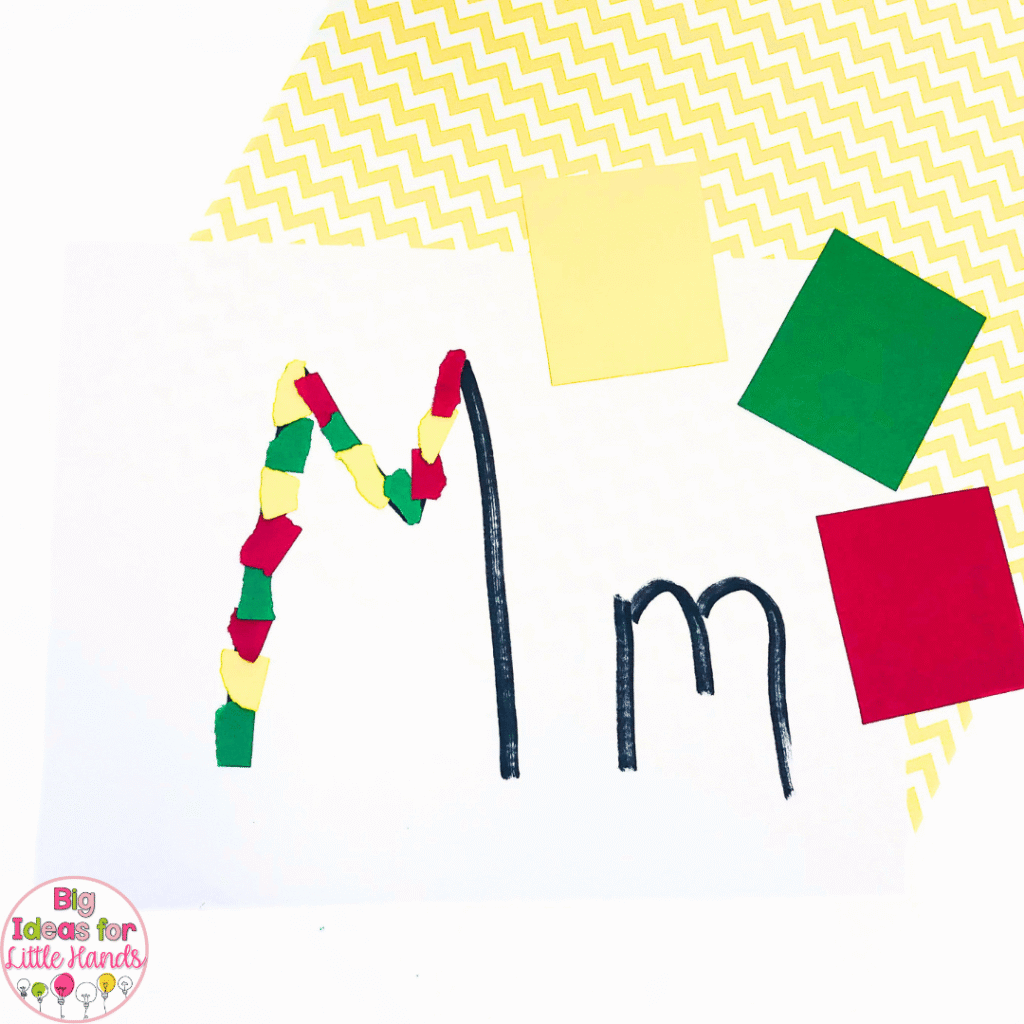
I let my kids choose from a stack of construction paper squares, then have them tear pieces to glue on the lines of large letters. I usually give them both an upper- and lowercase letter to work on, but there are so many other skills you can target here, too, like names, numbers, and even sight words!
To make it more practical, the pieces they tear should be about the size of their fingertip. This helps avoid making super tiny pieces that are hard to work with, or giant ones that take up too much space. While this can be easily done with a glue stick, adding a glue bottle will make it a bigger hand muscle workout. Students can work on gently squeezing the glue bottle to make a small dot.
5. Snap Cubes
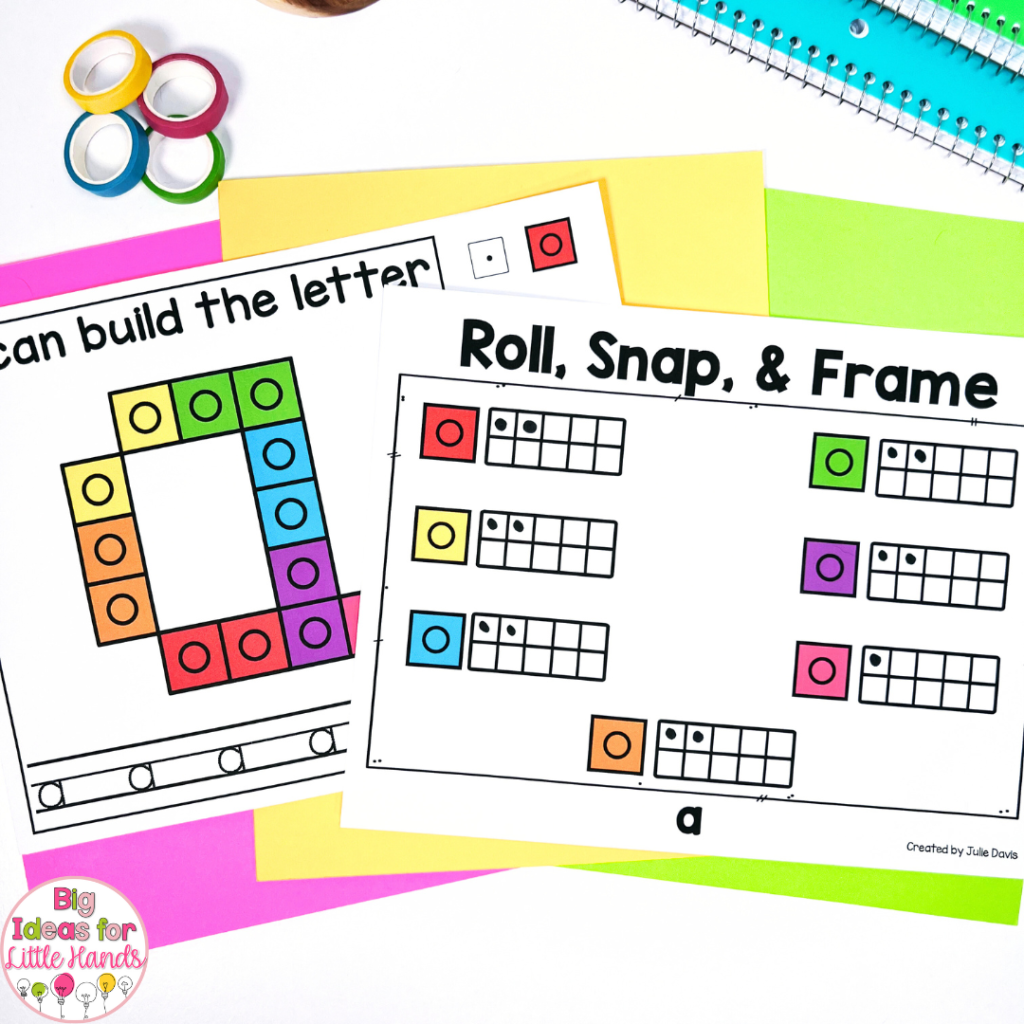
Around here, we’re big fans of snap cubes! Putting the snap cubes together and separating them is a great way to build strength in students’ hands. I sometimes need to practice this skill too because they can be tough to take apart! If you know, you know!
These alphabet mats combine fine motor skills, letter construction, color recognition, and one-to-one correspondence! Students will roll the dice to see which color cube they should use next as they piece together the letter shown. I love using this activity at the beginning of the year as we’re just getting started learning our letters.
6. Salt or Sand Tray

This fine motor activity is always a favorite with my kids! Something about the feel of the sand running through your fingers fascinates the kids. It’s a texture that many of them have not had the opportunity to explore. Not to mention, it’s also really calming!
To set up this activity, I lay a thin layer of salt or sand on the bottom of a tray with a stack of alphabet cards next to it. The kids will draw a card, say the name of the letter, then trace it with their finger. This low-prep center activity is always a favorite!
7. Scissor Skills
At the beginning of the year, many of the kids in my classroom have never used scissors before. While it can feel a little “dangerous” at first, this is still an incredibly important skill to learn. I like to use small, plastic scissors that are “kid-safe” to get things started.
To connect this fine motor skill to the alphabet, print out bubble letters in a large size. Have students practice cutting around the outside edge of the letter, being careful to cut along the black line. While this in itself is great practice, you can easily connect this activity with the paper-tearing or sticker ideas above by letting students decorate their letter after they have cut it out!
8. Pattern Blocks
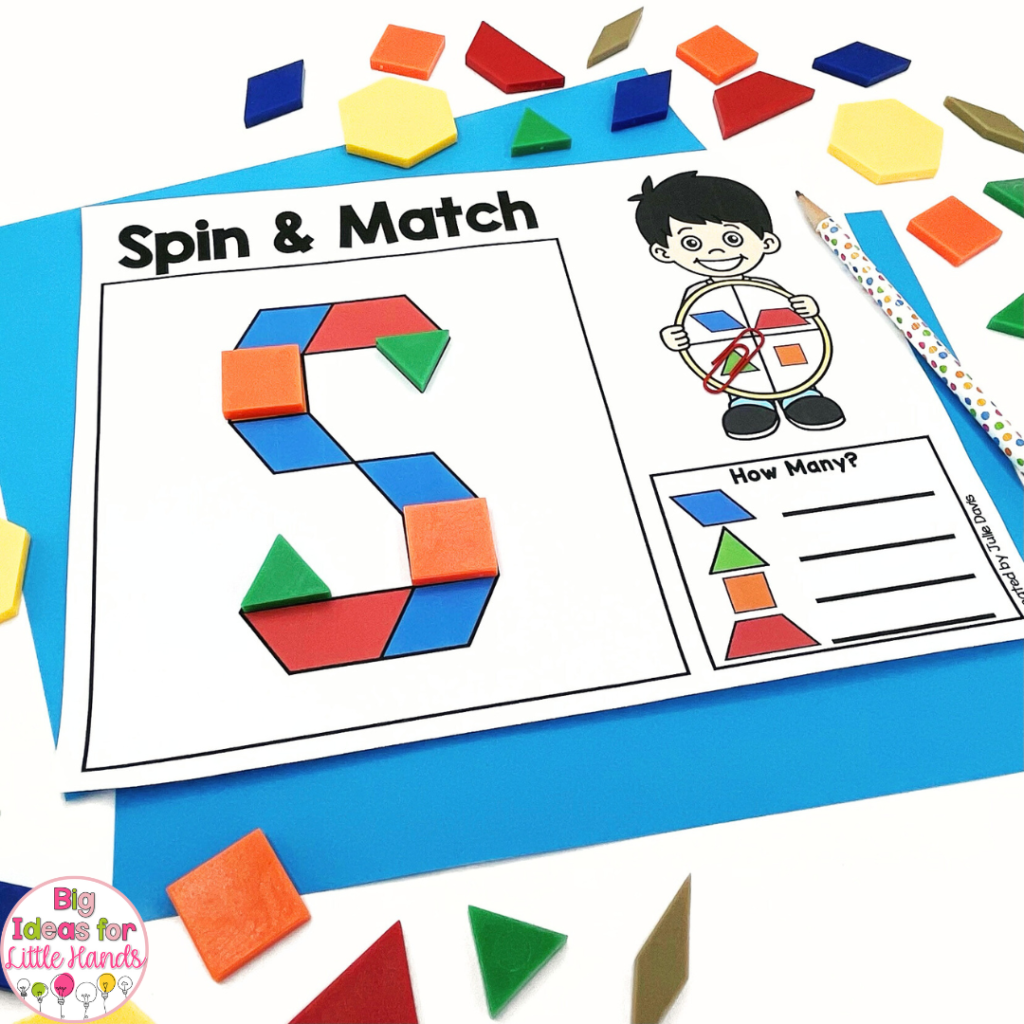
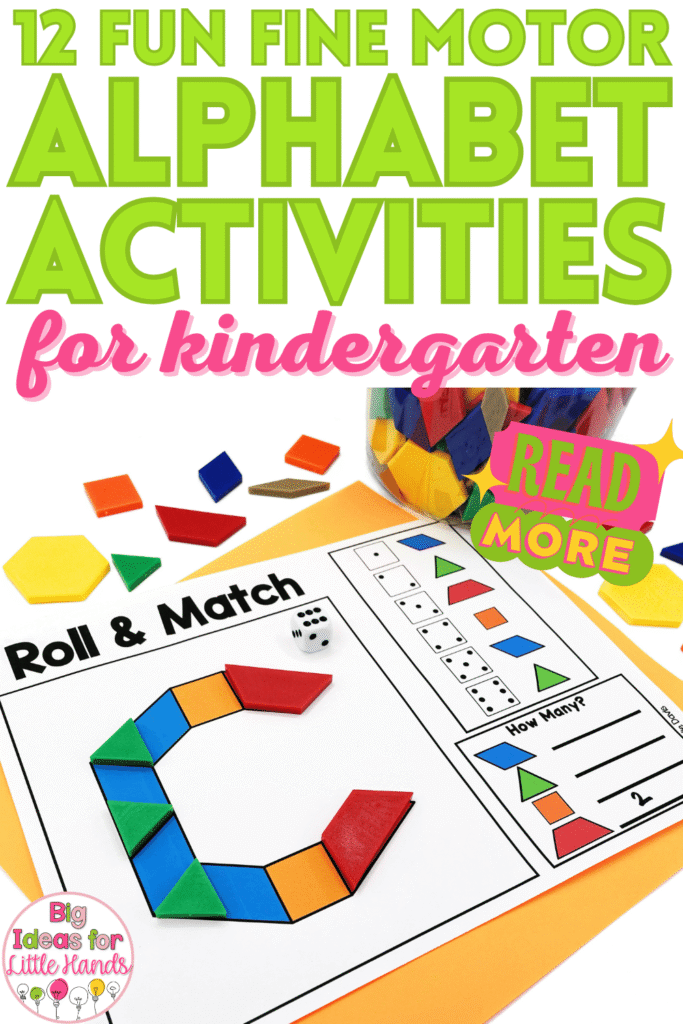
We love creating fun designs with pattern blocks, so why not use them to create letters too? I have some fun pattern block alphabet mats that I use for this activity, and you can easily laminate them to use again and again!
Students spin the spinner to see which pattern block to use next as they build each letter. Then they count the shapes to identify how many of each, adding in an element of math and shape recognition as well! These mats are perfect to keep your morning bins or centers stocked and ready to go!
9. Shaving Cream
The kids’ faces light up every time they see me pull out the shaving cream! They love rubbing it all over the tables and squishing it between their fingers. And who could blame them? This is SO much fun!
This is a great time for them to practice forming and naming letters with their fingers. I start by giving them about one minute of “free exploration” time. Once the shaving cream is all spread out, it becomes a writing surface! When I call out a letter, the students use their fingers to write it in the shaving cream. I usually walk around to see how everyone is doing, and once I’ve checked all the tables, I say erase, and they smooth the shaving cream out to start over.
The best part about this activity is that when you are done, the desks are clean and the classroom smells great!
10. Dab a Letter
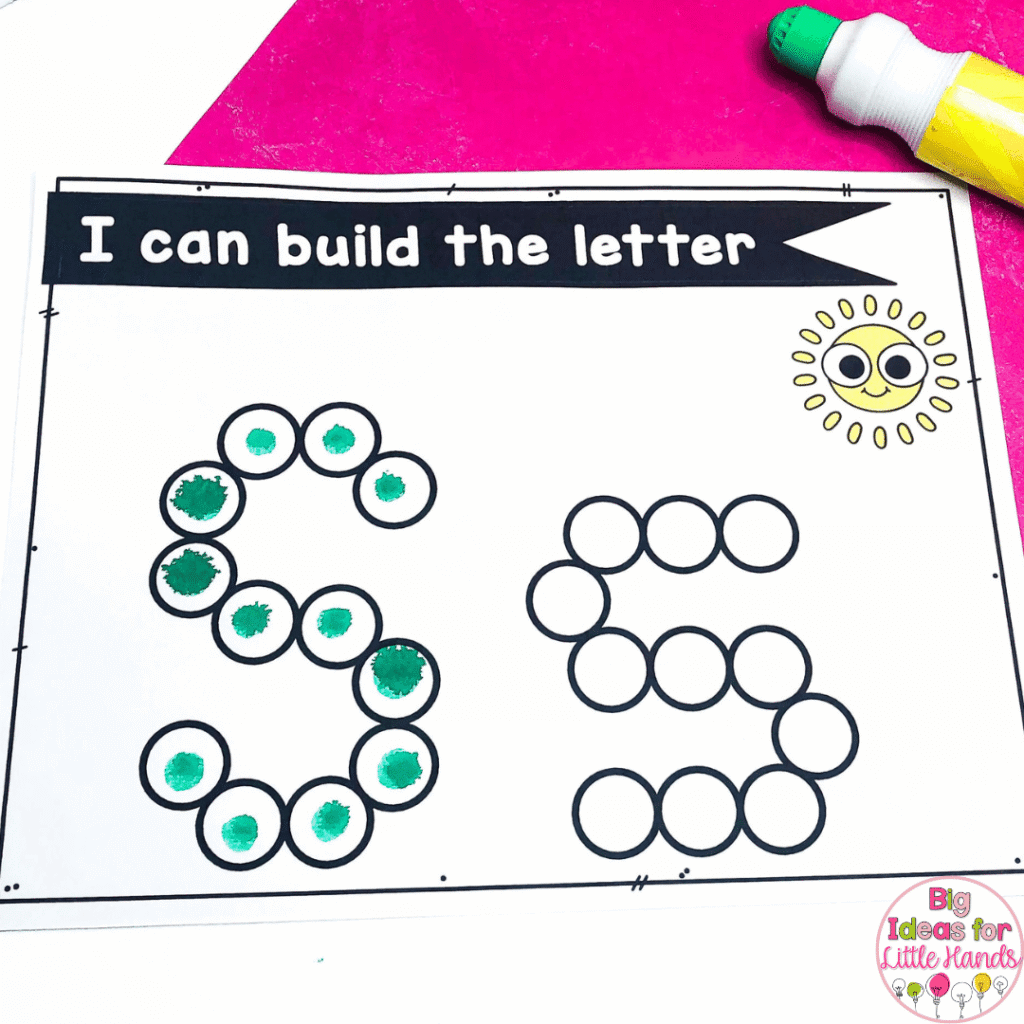
There’s always something fun about using Bingo daubers or dot markers. Kids love being able to “smash” the dauber into the paper. Plus, as a bonus, these are always low prep and easy to pull out at a moment’s notice – which is definitely a win in my book!
We use these alphabet mats for this activity as well. Students use the daubers to “trace” the letter as they say the letter’s name and sound. I ask them to carefully line up the dauber in each circle to help target those fine motor skills and hand control!
11. Hole Punching
Kids always feel special when they get to use “teacher tools,” so being able to use the hole punch is a huge deal! This is a great way for students to strengthen the muscles in their hands by squeezing the hole punch over and over to make holes in the paper.
To complete this activity with a student, grab a small sheet of paper and write various letters all over it. Have the student find the letter you name and punch a hole in it. This is a simple activity that comes together in minutes and provides an informal assessment of a student’s letter recognition!
12. Fill a Letter
Please tell me I’m not the only one who has a slight obsession with mini-erasers?! They are just so darn cute! I am always trying to find fun ways for my kids to use them in different activities throughout the day, and we love using the erasers on these letter mats!
Kids can fill in the letters by picking up the erasers with their fingers, or, for an added fine motor benefit, they can pick up the mini erasers with child tweezers. This activity is great for one-to-one correspondence!
Grab a Fine Motor Freebie!
If you want to try these activities right away, you’re in luck! I’ve put together a set of free printable alphabet mats with both uppercase and lowercase letters that can be filled with stickers, mini erasers, dot markers, and more!
These are simple, reusable, and designed specifically to support letter recognition AND fine motor development. Grab the FREE alphabet mats by filling out the form below, and try a few of these activities in your classroom this week!
And. . . if you are looking for more ways to easily add a fine motor connection to your alphabet activities, make sure to check out my TPT store.
I hope these ideas inspired you to try some new fine motor alphabet activities with your kiddos! Once you try a few from this list, I know you’ll be hooked too!
Save These Fine Motor Activities
Don’t lose track of these fun fine motor activities! Pin this post on your favorite alphabet or fine motor Pinterest board so you can come back to it later!