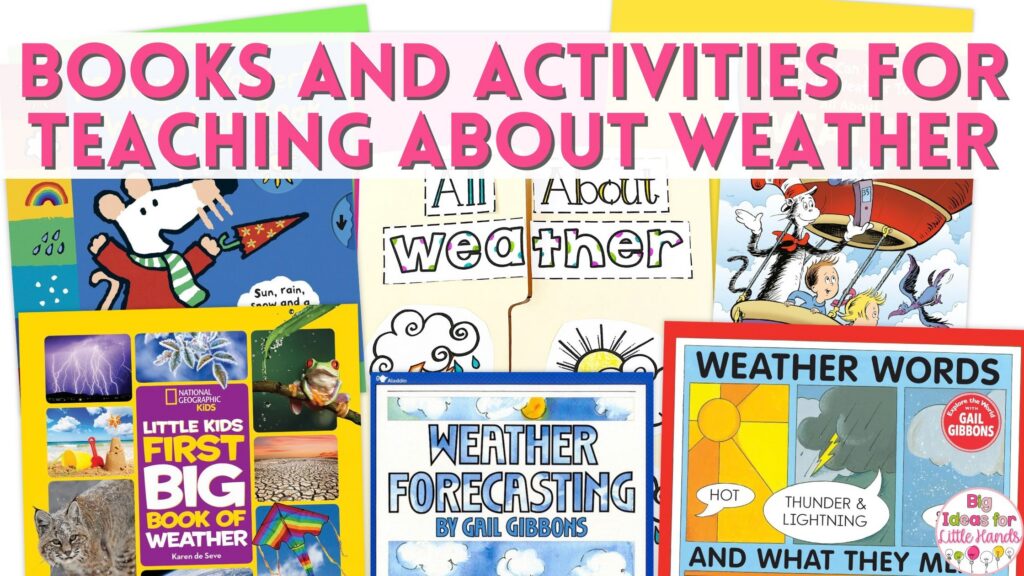
If you’re teaching about weather, you probably know how quickly your students can get excited about it. The minute you start talking about rain, snow, clouds, or sunshine, the stories and questions start coming. But keeping that excitement going while also teaching weather vocabulary and science concepts can take a little planning. That’s where a few good weather books and hands-on activities can make your week so much easier!
Turn Weather Books Into Hands-On Learning
When it comes to teaching weather, I don’t want to stop at just reading a book and answering a few questions. I want my students to observe the weather, learn new vocabulary, ask questions, make comparisons, and record what they’re learning. Because they experience weather every day, there are so many opportunities to make those connections.
That’s why I love pairing weather books with hands-on activities. A book can introduce a new concept or vocabulary word, and then a hands-on activity gives students a chance to use what they’ve learned. The best part? You don’t need to spend your planning time searching for something completely different every day. With a few good weather books and a collection of hands-on activities, you can build an entire week of meaningful learning around the same topic.
Pair Weather Books With a Weather Lapbook
Once your students have learned about weather through books, give them a chance to show what they’ve learned!
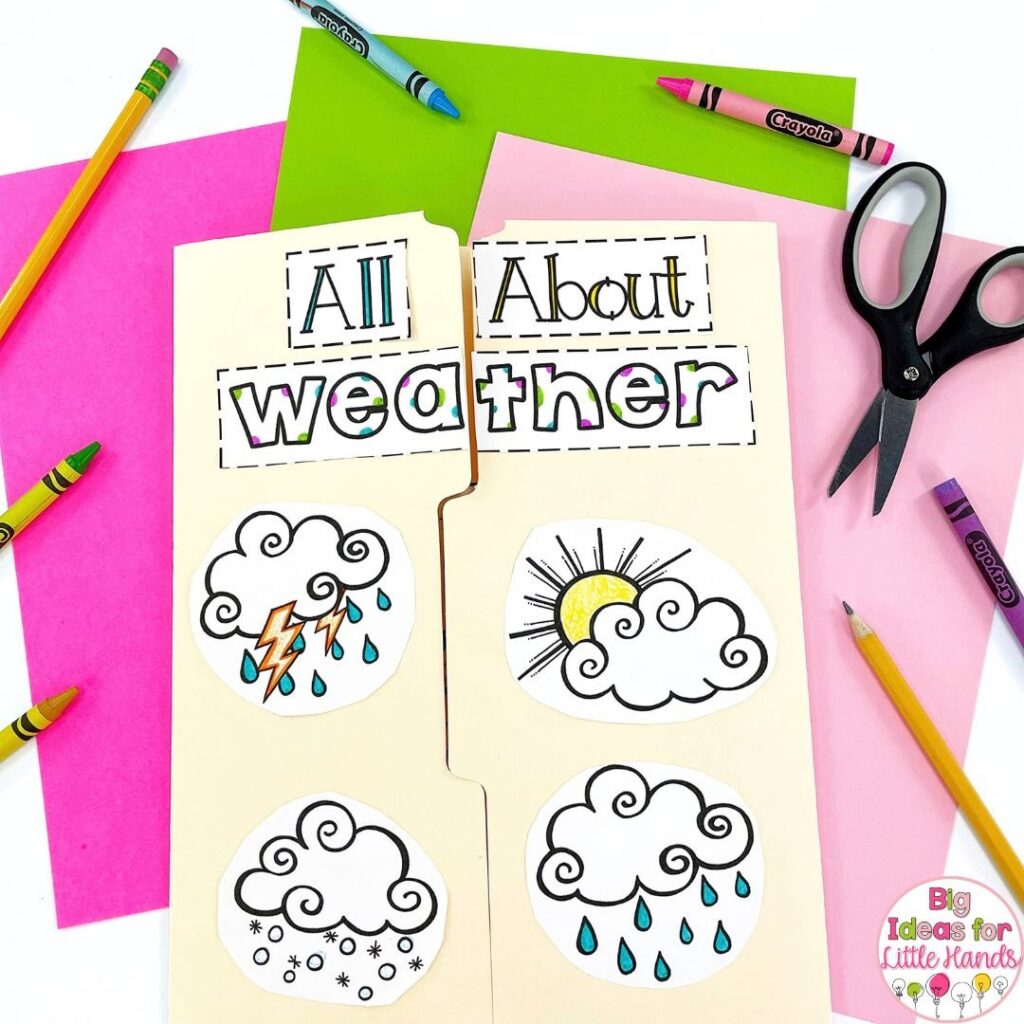
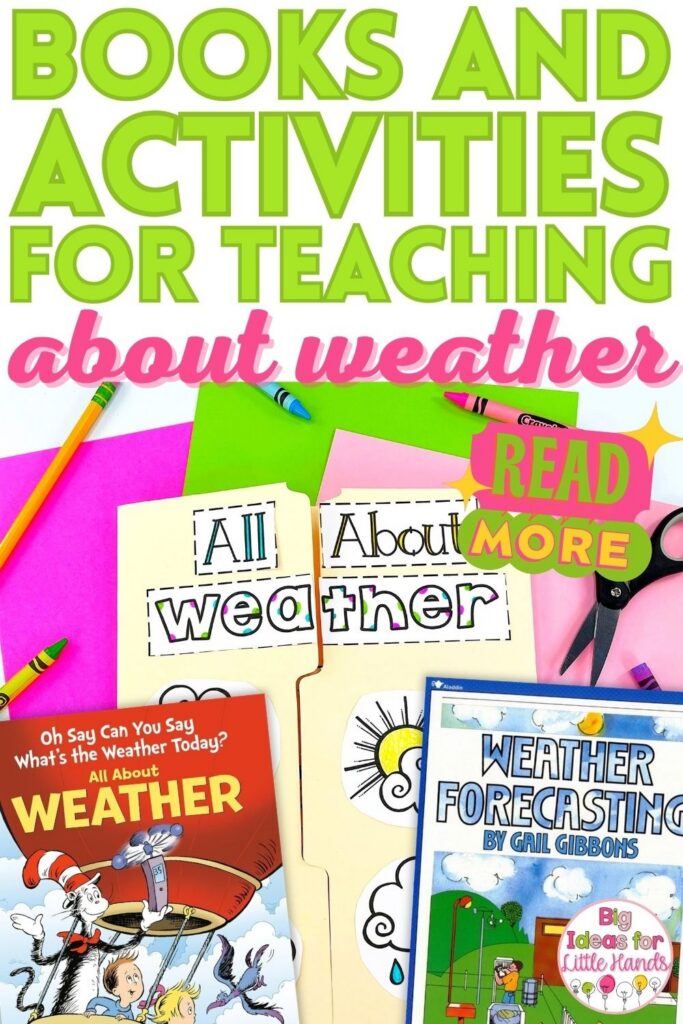
My All About Weather Lapbook gives kindergarteners a hands-on way to research weather, practice vocabulary, record observations, and organize what they’re learning. Instead of completing one worksheet and moving on, students create a collection of interactive activities that they can add to throughout your unit.
You can make the traditional lapbook using a file folder, construction paper, scissors, glue, and markers, crayons, or colored pencils. When you’re finished, students have a keepsake they can take home and share with their families.
You can also use the activities in a notebook if that works better for your classroom. This gives you the flexibility to use the resource in a way that makes sense for your students and your teaching style.
Here are a few of my favorite weather books and lapbook activities that pair well for the best week-long weather experience!
Oh Say Can You Say What’s the Weather Today? All About Weather
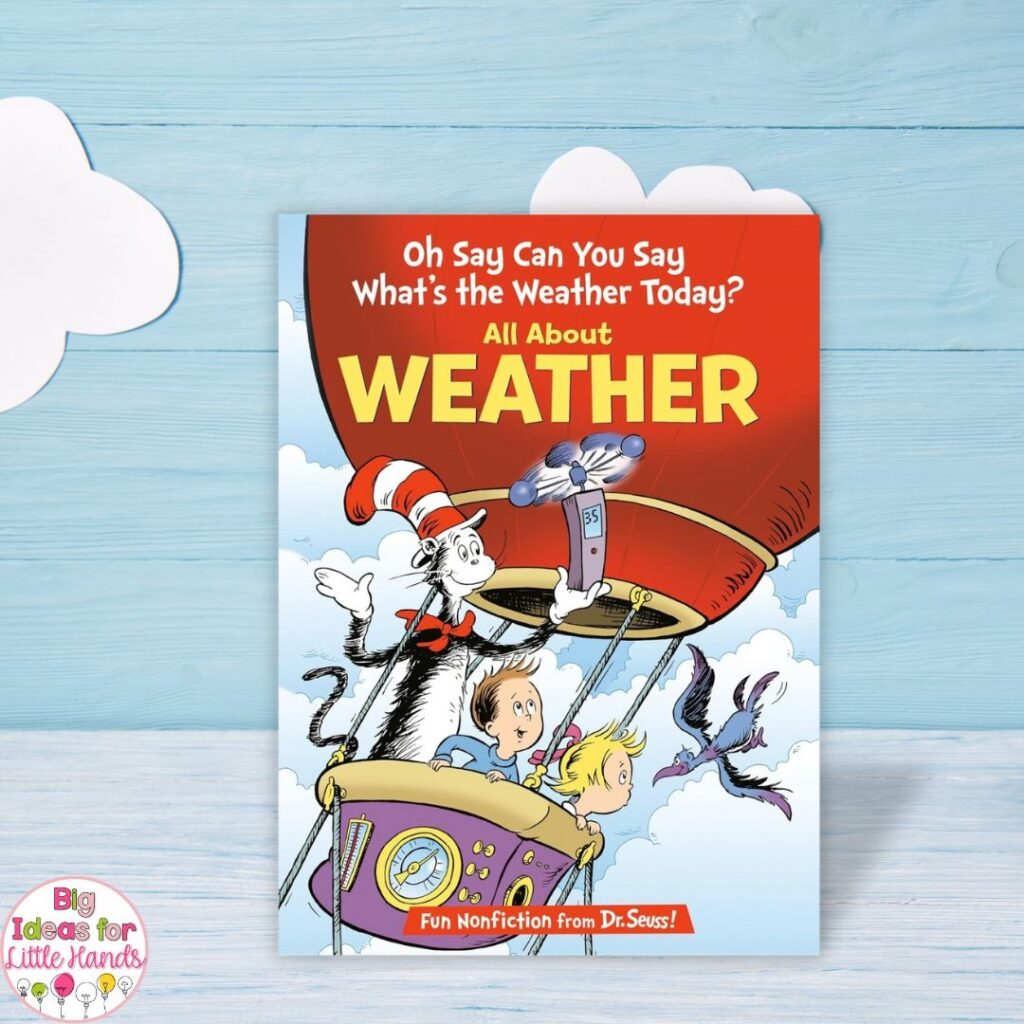
Oh Say Can You Say What’s the Weather Today? All About Weather by Tish Rabe is a fun way to introduce young learners to weather concepts.
Written in the familiar style of the Cat in the Hat Learning Library, the book introduces children to different types of weather while helping them learn more about what causes the weather we experience.
This is a great book to read at the beginning of your unit to build background knowledge and get your students thinking about the weather they see every day.
All About Weather
After introducing weather with The Cat in the Hat, have your students complete the All About Weather mini flip book, which gives them a chance to research different types of weather. Discuss what students learned during your read-aloud, then have them add information to their flip book.
This is a great activity to start during your first read-aloud, then continue to add to it throughout the week. That way, you can revisit the same concepts all week instead of trying to teach everything in one lesson. For example, after reading about rain, ask students what they learned about rainy weather. Record their ideas together before having them complete the corresponding part of the flip book.
Weather Forecasting
Weather Forecasting by Gail Gibbons gives students a closer look at how weather forecasters do their jobs. The book explains how forecasters observe and measure changes in the weather and use that information to make predictions.
This is a great choice when you want to introduce the role of meteorologists and help students understand that predicting weather involves more than simply looking out the window.
Draw Weekly Weather
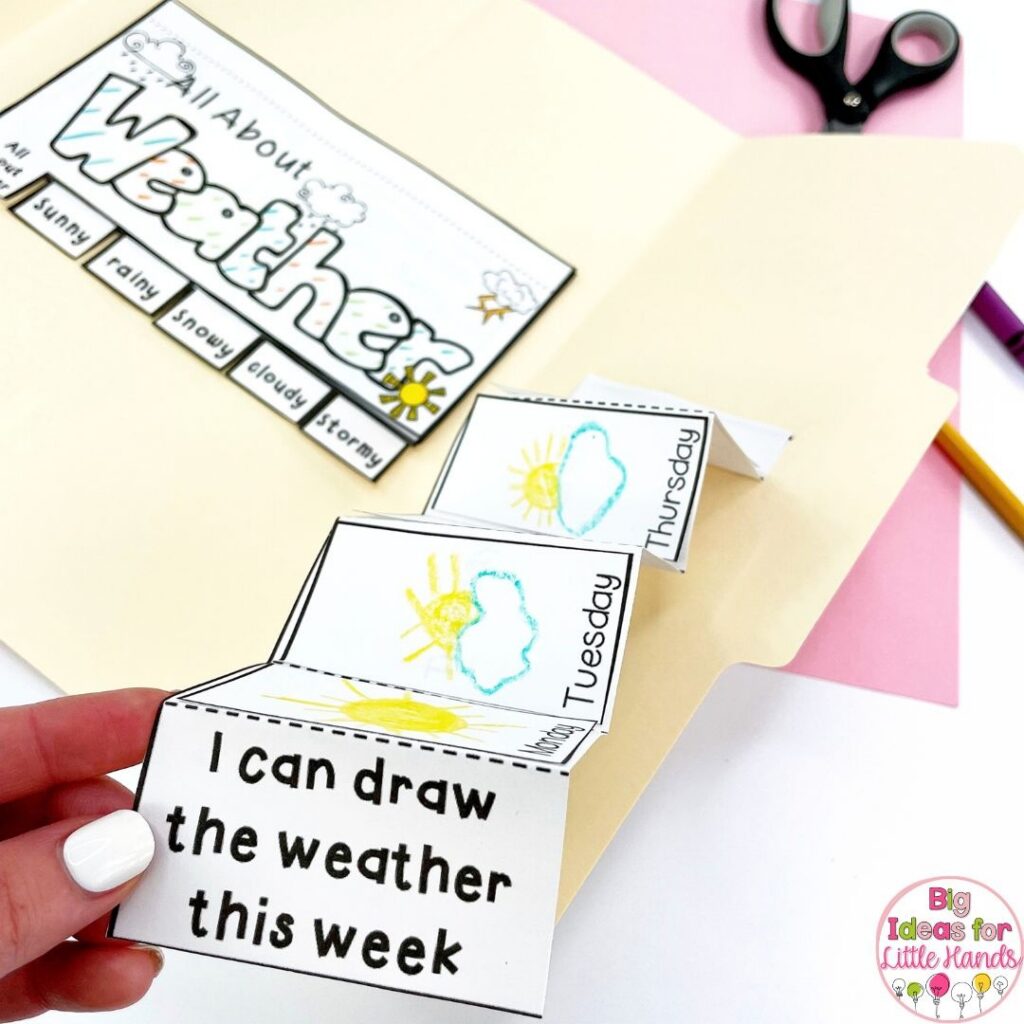
After reading about meteorologists, begin the Draw Weekly Weather activity. This gives students a reason to observe the weather throughout the week and record what they see.
Students record what the weather looks like each day on the weather chart. You might complete it during morning meeting or make it part of your daily routine. At the end of the week, take a few minutes to look back at the chart together.
Ask questions like, “Which type of weather did we see the most?” or “What was the weather like on Monday and Friday?”
A simple daily observation becomes an opportunity to practice vocabulary, compare information, and talk about weather patterns students noticed.
Weather Words and What They Mean
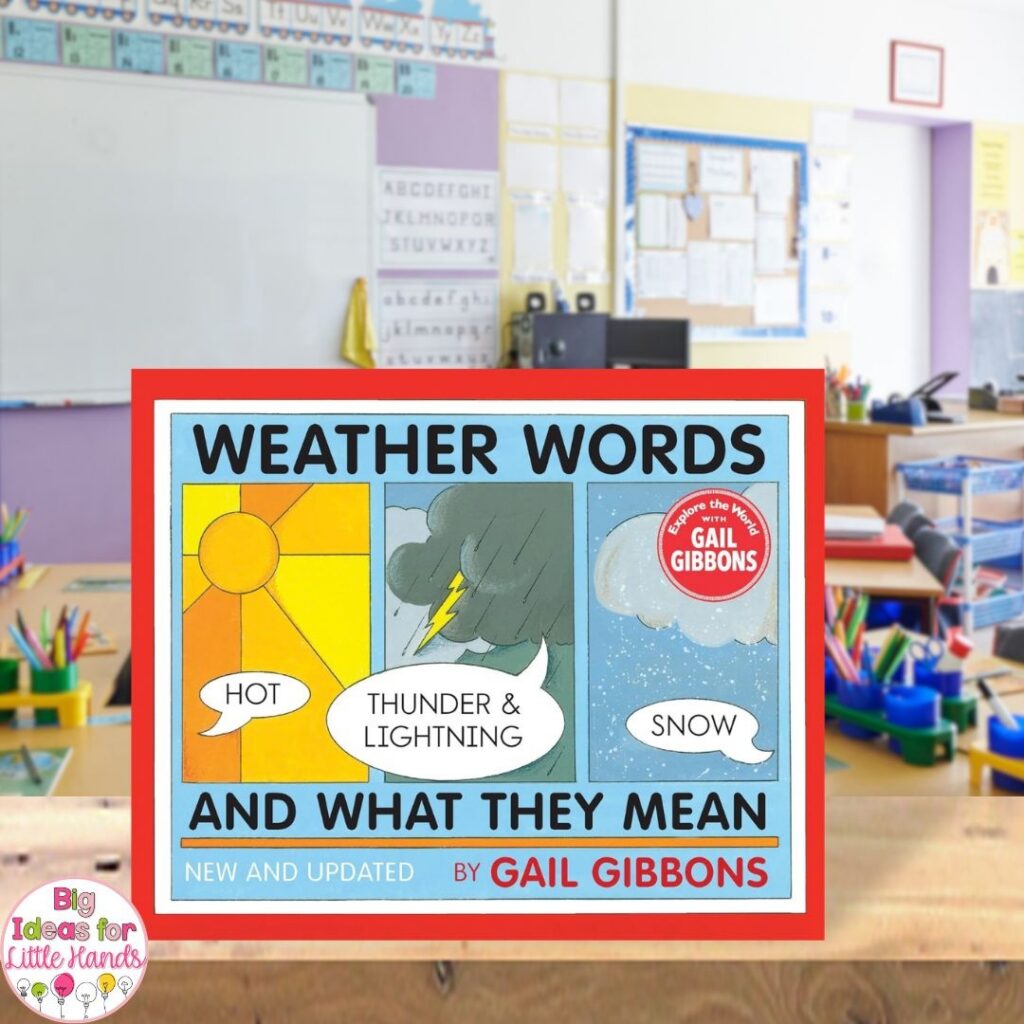
Weather Words and What They Mean by Gail Gibbons is especially helpful when you’re working on weather vocabulary.
Students learn about weather words and concepts such as clouds, fog, frost, thunderstorms, snow, fronts, and hurricanes. The clear illustrations and diagrams make these ideas easier for young learners to understand.
I love using a book like this when students are learning new vocabulary because you can stop throughout the reading and connect the words to what students have actually seen outside.
Weather Vocabulary
After reading all about weather words, have your students complete the Weather Vocabulary activity. Directly apply the information you learned in your read-aloud as you write or match the vocabulary to its definition.
I love going back each day and reading over the vocabulary, so the words stay fresh in my students’ minds. We also use the words intentionally in our other activities to connect the meanings to real experiences. It is always such a treat to hear your students use their new words when talking about the weather they observed on their drive to school or out at recess.
National Geographic Little Kids First Big Book of Weather
If your students love photographs and real-world pictures, National Geographic Little Kids First Big Book of Weather by Karen de Seve is a great addition to your weather book collection.
The book introduces children to many different aspects of weather and answers questions about topics such as rainbows, snow, wind, and weather systems. The colorful photographs give students another way to see the concepts you’re talking about in class.
Weather Tools
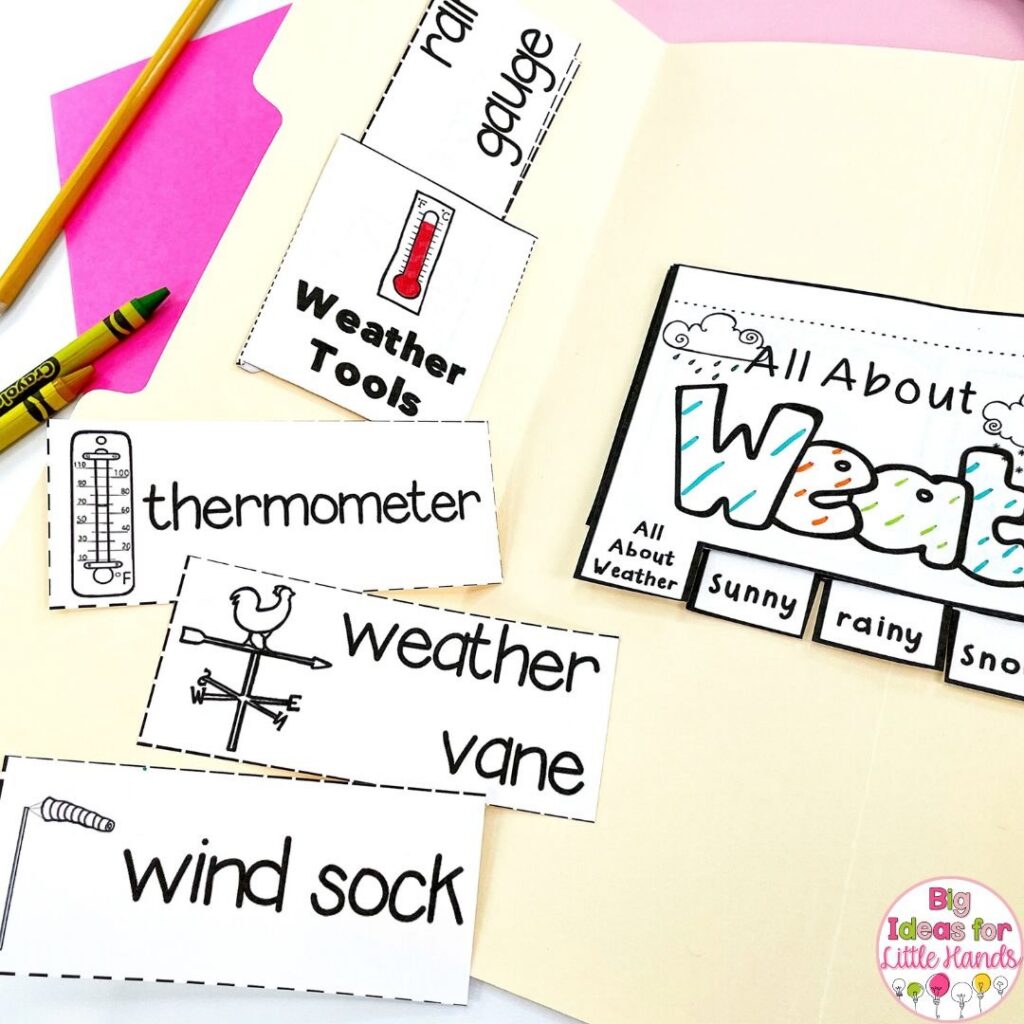
After seeing photographs and real-world examples, students can also learn about the tools meteorologists use to measure and understand weather.
The Weather Tools mini pocket gives students a place to learn about different weather tools and what each one helps us determine.
Before completing the activity, show students pictures of different weather instruments and talk about what each one measures. Then let students use what they’ve learned to complete their activity.
This is a great way to move beyond simply naming types of weather and help students understand how people actually study it.
Maisy’s Wonderful Weather Book
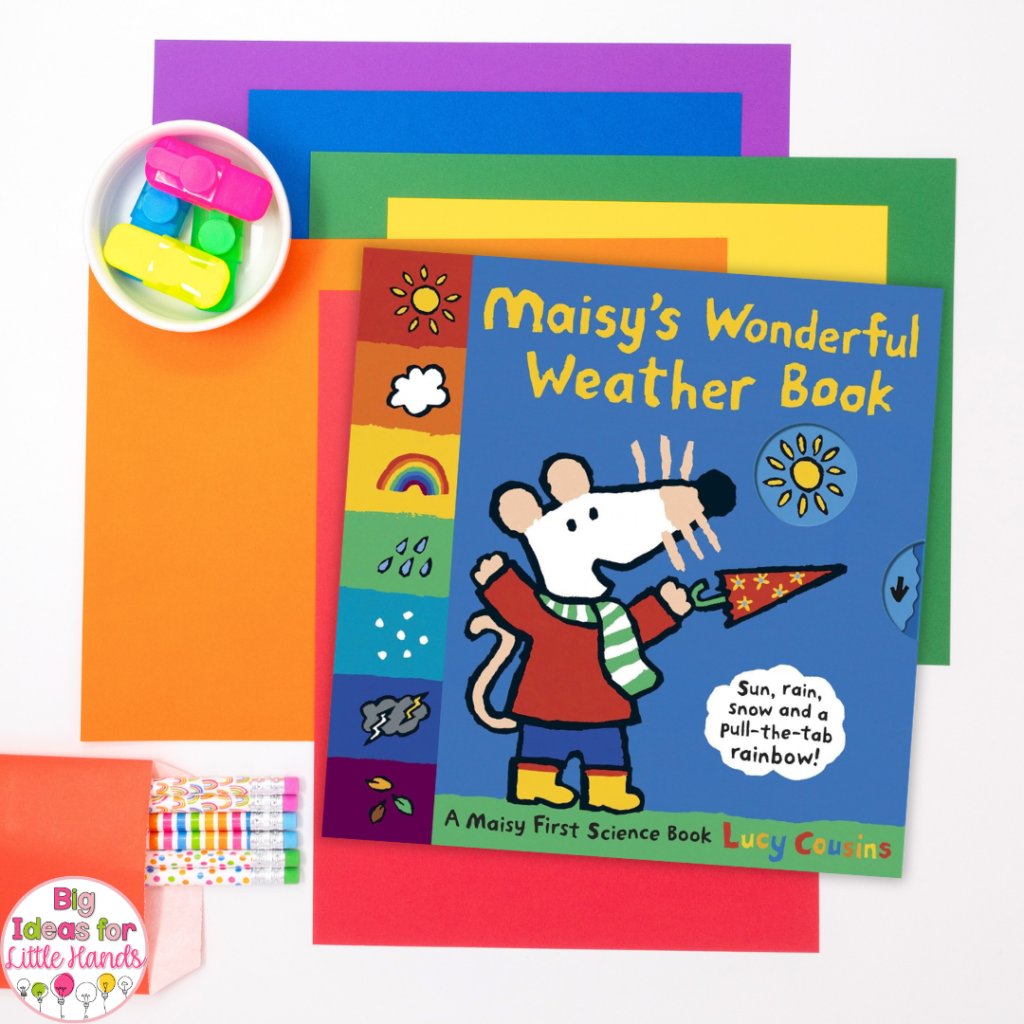
Maisy’s Wonderful Weather Book by Lucy Cousins is a fun, interactive option for younger learners.
Students explore snowy, rainy, and sunny weather through an interactive format that encourages them to look closely at different types of weather.
This would be a particularly good choice for a weather center, small group, or read-aloud with younger kindergarten students.
Make a Cloud Using Cotton Balls
Following this easy read-aloud, I love to do a fun craft to make clouds. Instead of just talking about the cloud types or the weather they produce, students will stretch and shape the cotton balls into their own fluffy or wispy clouds. This hands-on way is great for exploring the shapes and patterns they’ve studied all week.
Before you start the activity, talk about the types of clouds you’ve seen throughout the week and what usually comes from them. Then give students creative freedom to shape their own clouds with the cotton balls. Once they’re done, have them add a certain type of weather, like rain, snow, or even a rainbow, coming from the cloud. This is a fun way for your students to personalize their craft even further. You can glue the craft to the back of their lapbook as a keepsake they can show their families.
Even More Weather Lapbook Activities
Once you’ve introduced the main weather concepts, you can choose additional activities based on what your students are ready to practice. The Weather Lapbook includes:
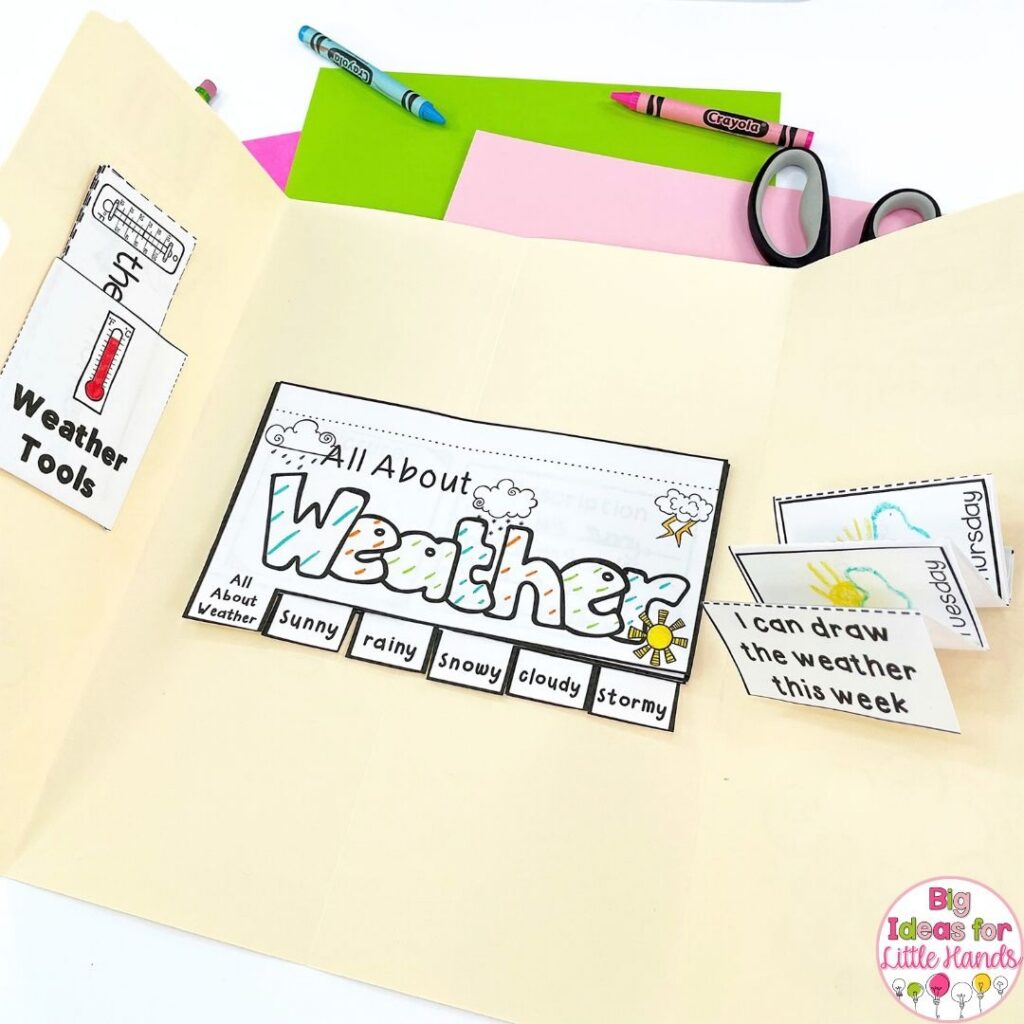
- Weather Word / Picture Match
- Weather KWL
- Clouds Can/Have/Are
- Meteorologists Study/Use/Can
- Describe the Weather
- Weather Facts
- Weather Vocabulary
- Make a Cloud Using Cotton Balls
- My Favorite Type of Weather Is… writing prompt
- Compare Sunny/Snowy
- Compare Rainy/Sunny
- Compare Snowy/Rainy
- Favorite Weather Book
- Graph the Weather
- And more!
The variety makes it easy to connect an activity to what you’re already teaching. After reading a book about clouds, you could complete the Clouds Can/Have/Are activity together. After learning about meteorologists, students can complete the Meteorologists Study/Use/Can activity. Once you’ve talked about several types of weather, students can compare two of them.
With various books and activities, you can reinforce the same concepts without asking students to complete the exact same type of activity every day.
Make Your Weather Unit Easier to Plan
One of the things I love most about pairing books with hands-on activities is that you can create a simple routine without planning an entirely new lesson each day. You could start each morning with a quick weather observation. Then read a weather book during your science block and choose an activity that connects to what you just read.
You’re not starting from scratch every day. You’re taking the concepts students are already learning and giving them another way to practice and apply them.
If you’re looking for a way to make weather research more engaging for your kindergarteners, the Weather Lapbook gives you activities you can use throughout your unit.
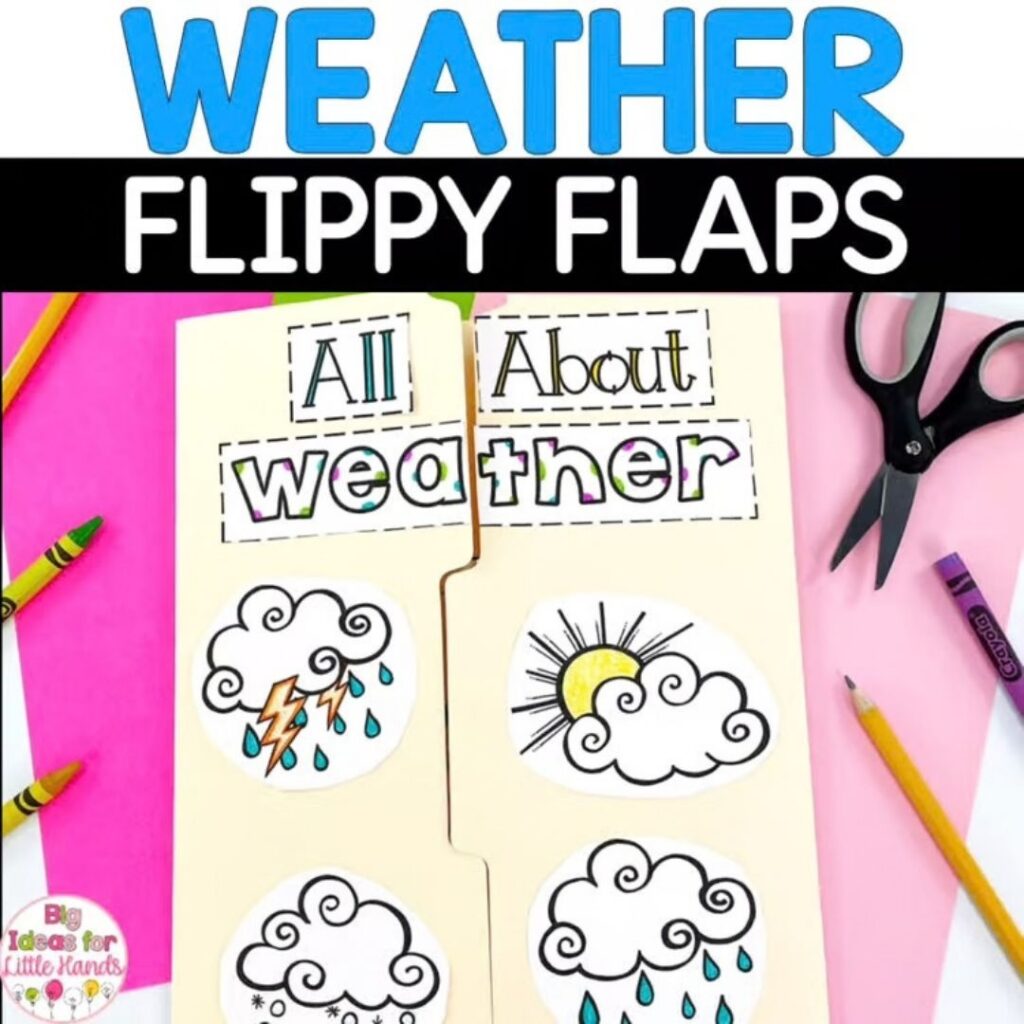
Your students can become little meteorologists as they learn about weather tools, weather charts, weather instruments, different types of weather, and important weather vocabulary. The best part is that activities go beyond a traditional worksheet with interactive flaps, pockets, charts, writing activities, comparisons, and other hands-on pieces.
And because there are so many activities included, you can use the resource throughout your unit rather than having to search for a new weather activity every time you finish a lesson. Grab my All About Weather Lapbook to give your weather lessons a head start!
Dive Deeper with the Digital Lapbook
Sometimes, paper activities aren’t enough, and you want to dive even deeper. This is where my Weather Digital Interactive Notebook comes in handy. You can easily assign individual activities to students on Google Classroom or have them set up as a center activity to complete throughout the week.
Whether you create a traditional file-folder lapbook or use the activities as an interactive notebook, your students will have something they can look through, talk about, and share with their families. If you prefer a digital option, there’s also a digital version that you can use with your students.
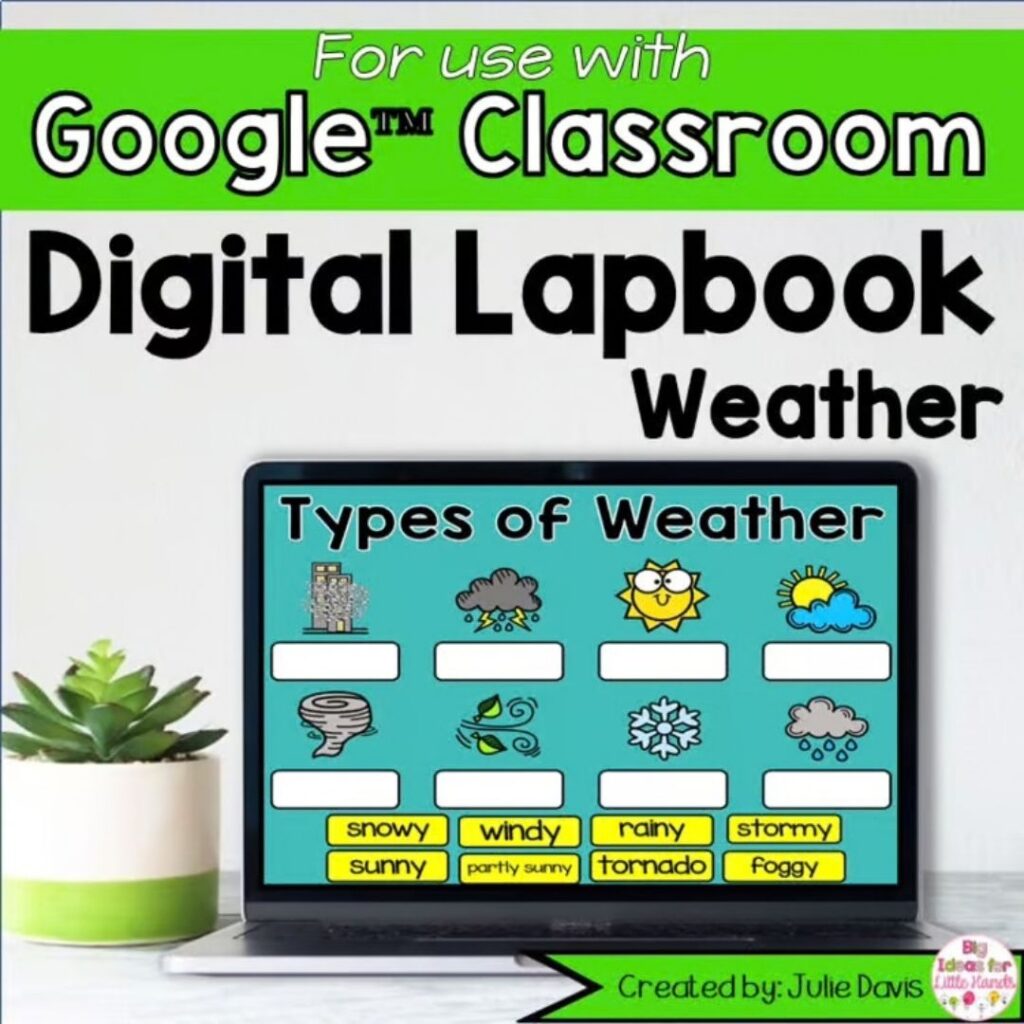
Take a closer look at the Weather Digital Interactive Notebook and choose the format that works best for your classroom.
Looking for More Books and Activities?
Read these posts next for more book-based curriculum ideas to add to your lesson plans!
- 8 Books About Apples for Kindergarten
- 5 Winter Books and Activities for Kindergarten
- Polar Animals Books and Activities for Primary Learners
Save These Weather Books and Activities
Planning a weather unit for kindergarten? Pin this post so you have a collection of weather books and hands-on activity ideas ready when it’s time to teach about clouds, rain, sunshine, snow, meteorologists, and more!